

Fossil Butte National Monument
864 Chicken Creek Rd, Kemmerer, WY
Kemmerer, WY
A high sagebrush butte that was once the floor of a subtropical lake, holding some of the finest fossil fish in the world.
Fossil Butte National Monument protects one of the richest and best preserved fossil lake beds in the world. Around 52 million years ago, in the warm Eocene epoch, this high Wyoming basin held a large, quiet subtropical lake, and the fine mud settling on its bottom buried fish, plants, insects, and animals so gently that they were preserved in astonishing detail.
Split the thin layers of that old lake bed today and you find complete fish laid out like pressed flowers, along with palm fronds, insects, birds, bats, turtles, crocodiles, and early horses. Fossil Butte has been called an aquarium in stone, a snapshot of an entire ancient ecosystem frozen in the rock of a Wyoming hillside.
What Travelers Love
- The visitor center's wall of exquisitely preserved fish, birds, bats, and even a stingray
- Hiking up to the historic quarry where the fossils come out of the rock
- Imagining a warm, palm-fringed lake where the sagebrush now grows
- The quiet, uncrowded high-country trails and big open views
Worth Knowing
- Collecting fossils inside the monument is not allowed; the fossils you see must stay in the rock
- The visitor center hours are seasonal, so check ahead before a shoulder-season trip
- It is high and exposed, so carry water and sun protection on the quarry and nature trails
- Nearby commercial quarries let visitors dig and keep common fish fossils for a fee, a separate experience from the monument
Learn about Fossil Butte National Monument
The story of an ancient lake
Fifty-two million years ago the American West was warm and wet, and a chain of large lakes filled the basins here. The one recorded at Fossil Butte, known to geologists as Fossil Lake, was ringed by palms and lush forest, with crocodiles in the shallows and turtles on the banks.
When plants and animals died and sank, the still, layered bottom waters and the steady rain of fine limy mud buried them before they could rot or scatter. Season after season those layers stacked up, and over millions of years they hardened into the thin sheets of rock that today split apart to reveal what lived and died in the lake.
What the rock remembers
The most common fossils are fish, especially a small herring-like fish called Knightia, which is so abundant and so tied to this place that it is the Wyoming state fossil. Alongside it are perch-like Priscacara, gar, paddlefish, and even freshwater stingrays.
But the lake bed holds far more than fish. Fossil Butte has yielded some of the oldest known bats, early birds, palm leaves the size of a person, insects with the veins still in their wings, and small early horses. Because the preservation is so fine, scientists can read details of soft bodies and life histories that almost never survive elsewhere.
Seeing it: the visitor center and the quarry trail
The monument's visitor center is the place to start, with walls of original fossils, murals of the ancient lake, and often a preparator at work freeing a specimen from its slab. It turns an abstract idea into something you can stand in front of and study.
From there, trails climb the butte itself. The Historic Quarry Trail leads to the site where commercial and scientific digging first revealed the beds, and the Fossil Lake Trail loops through aspen and meadow with wide views. It is a chance to walk the shore of a lake that dried up long before there were people to see it.
The high country today
The world above the fossils is classic high Wyoming: sagebrush steppe and aspen pockets under big skies, home to pronghorn, mule deer, elk, moose in the wetter draws, and the occasional badger or coyote. Raptors hunt the open slopes and the meadows fill with wildflowers in early summer.
Summer is the easiest season, with the visitor center open and the trails clear. Spring and fall are quiet and beautiful but cool, and winter brings snow and a near-empty monument. However you come, the contrast is the whole point: a cool, dry, windswept butte that was once a warm and crowded lake.
Closest Boutels
The closest Boutel™ stays, so you can turn this stop into an overnight. Each is a place we chose through independent editorial review, never a paid placement.
Details
Kemmerer, WY
Frequently asked questions
What is Fossil Butte National Monument?
Fossil Butte National Monument, in the high desert of southwestern Wyoming near the town of Kemmerer, preserves one of the world's richest and best-preserved fossil deposits, the remains of an ancient subtropical lake that existed roughly fifty million years ago. The buttes here hold exquisitely detailed fossils of fish, insects, plants, reptiles, birds, and mammals, capturing a vanished world in extraordinary clarity. The visitor center displays remarkable specimens, and trails lead across the scenic buttes where the fossils are found. With its world-class fossils, informative visitor center, and scenic high-desert trails, Fossil Butte National Monument offers a fascinating destination in southwestern Wyoming.
What can you see at Fossil Butte National Monument?
You can see extraordinary fossils in the visitor center, including beautifully preserved ancient fish, insects, plants, and other creatures from the fifty-million-year-old lake, watch exhibits and sometimes demonstrations about how the fossils formed and are prepared, and hike the scenic trails across the buttes where you can view fossil sites and enjoy the high-desert landscape. The stunningly detailed fossils are the star attraction. The trails combine science with scenery. With its world-class fossil displays, interpretive exhibits, and scenic hiking, Fossil Butte National Monument offers a fascinating and educational experience near Kemmerer in southwestern Wyoming.
Why are the fossils at Fossil Butte so special?
The fossils at Fossil Butte are special because they were formed in the calm, fine sediments of an ancient subtropical lake that existed about fifty million years ago, conditions that preserved the creatures in extraordinary detail, capturing not just bones but delicate features like fish scales, insect wings, leaves, and even soft tissues. This exceptional preservation, combined with the huge variety of species, makes the site one of the finest windows into an ancient ecosystem anywhere in the world. Fossil collecting by the public is not allowed, protecting this treasure. These remarkable fossils make Fossil Butte a scientific wonder in southwestern Wyoming.
When is the best time to visit Fossil Butte National Monument?
Late spring through early fall is the most comfortable time to hike the trails and explore the buttes, when the weather is mildest, while the visitor center offers an enjoyable indoor experience whenever it is open, so checking current days and hours before you go is wise. Summer can be hot and sunny on the exposed high desert, so bring water and sun protection, and winter is cold and snowy. For the best combination of comfortable hiking weather and full access, aim for late spring through early fall at Fossil Butte National Monument near Kemmerer, Wyoming.
What is near Fossil Butte National Monument?
Fossil Butte National Monument is near the town of Kemmerer in southwestern Wyoming, within reach of Fort Bridger State Historic Site, the Bridger Valley, the town of Green River, and the route toward Flaming Gorge and the western part of the state. That makes Fossil Butte a fascinating stop to combine with Fort Bridger, Kemmerer, and the other attractions of southwestern Wyoming on a visit to the state.
Nearby
Bear Lake State Park
32 miles away
Bear Lake is 20 miles long, 8 miles wide, and its unusual turquoise color comes from calcium carbonate particles suspended in the water. The lake has five species of fish found nowhere else on earth.
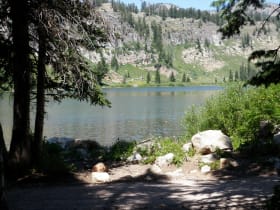
Logan Canyon Scenic Byway
32 miles away
Logan Canyon is a dramatic limestone canyon carved by the Logan River, one of the most scenic mountain drives in northern Utah.

Bear Lake National Wildlife Refuge
35 miles away
Bear Lake National Wildlife Refuge covers the northern marshes of Bear Lake, a glacial lake on the Utah-Idaho border known for its turquoise color caused by calcium carbonate suspended in the water.

Minnetonka Cave
41 miles away
Minnetonka Cave is a cool, easy-to-reach cave tour high in Cache National Forest above St. Charles.