

Bear Lake National Wildlife Refuge
370 Webster St
Montpelier, ID
One of the great bird marshes of the Intermountain West, where ibis wheel over the cattails, cranes bugle across the meadows, and moose wade the sloughs.
Bear Lake National Wildlife Refuge protects a huge freshwater marsh in the high valley just south of Montpelier, a place that looks quiet from the highway but roars with life in the right season. Established in 1968 to safeguard habitat for waterfowl and other migratory birds, it spreads across roughly 18,000 acres of cattail marsh, open water, and flooded meadow at the north end of the Bear Lake basin.
For birdwatchers, it is one of the treasures of the Intermountain West. More than 160 species use its network of sloughs, mudflats, and brushy slopes over the year, from great colonies of nesting water birds in summer to clouds of migrating waterfowl in spring and fall. It is a place to slow down, sit still, and let the marsh reveal itself.
What Travelers Love
- One of the region's richest bird marshes, with more than 160 species through the seasons
- Big colonial nesters like white-faced ibis, herons, egrets, and gulls over the cattails
- Sandhill cranes, waterfowl by the thousands, and the return of trumpeter swans
- The chance to spot moose feeding in the sloughs at dawn and dusk
Worth Knowing
- This is a working wildlife refuge, so parts are closed seasonally to protect nesting birds; check current access
- Bring binoculars or a spotting scope and insect repellent; the marsh means mosquitoes in summer
- Spring through early fall is the prime window; winter freezes the marsh and most birds move on
- Stay on designated routes and give wildlife plenty of room, especially moose
Learn about Bear Lake National Wildlife Refuge
A marsh built for birds
The refuge is mostly emergent marsh, some 16,000 acres of cattail and bulrush laced with open channels, plus hundreds of acres of wet meadow, a band of uplands, and miles of streamside habitat. Managers control water levels to keep the marsh healthy for the birds that depend on it.
That combination of deep water, shallows, mudflat, and meadow is exactly what draws such variety. Different birds need different depths and cover, and the refuge offers all of them side by side, which is why the species list runs so long.
The birds through the seasons
In summer the marsh becomes a nursery. Canada geese, mallards, and redheads nest in the cover, while colonial breeders gather in noisy rookeries: white-faced ibis, snowy egrets, black-crowned night herons, great blue herons, grebes, cormorants, terns, and California and Franklin's gulls. Sandhill cranes stalk the meadows and bugle across the valley.
The refuge is also part of a hopeful story. The trumpeter swan, North America's largest waterfowl, was pushed to the brink a century ago, and it has begun nesting here again, a quiet marker of recovery. Spring and fall bring pulses of migrating ducks and geese moving along the flyway.
More than birds
The marsh supports a wider community too. Moose wade the sloughs to feed on aquatic plants, muskrats build lodges in the cattails, and great horned owls hunt the edges at dusk. Deer and smaller mammals move through the uplands and streamside brush.
Watching here rewards patience. Early morning and evening are the liveliest hours, when the light is soft, the birds are most active, and a moose may materialize at the edge of the reeds.
Closest Boutels
The closest Boutel™ stays, so you can turn this stop into an overnight. Each is a place we chose through independent editorial review, never a paid placement.
Details
Montpelier, ID
Frequently asked questions
What is Bear Lake National Wildlife Refuge?
Bear Lake National Wildlife Refuge, in the Bear Lake Valley of southeastern Idaho near the town of Montpelier, protects a large marsh and wetland complex bordering the beautiful turquoise Bear Lake, providing vital habitat for birds and wildlife. The refuge's extensive marshes, open water, and grasslands host abundant waterfowl, wading birds, sandhill cranes, and other wildlife, making it a wonderful destination for birdwatching and nature viewing, especially during spring and fall migrations. Trails and viewing areas let visitors explore the wetland habitat. With its rich marshes, abundant birdlife, and Bear Lake setting, Bear Lake National Wildlife Refuge offers a rewarding destination in Idaho.
What can you do at Bear Lake National Wildlife Refuge?
You can watch for abundant birds and wildlife, including waterfowl, wading birds, sandhill cranes, and other species, especially during migration, explore the refuge by its roads, trails, and viewing areas, birdwatch and photograph the marshes and wildlife, and enjoy the scenic wetland and Bear Lake setting. Birdwatching is the main draw, best with binoculars, particularly in spring and fall. The rich marsh habitat is a haven for wildlife. With its abundant birdlife, wetlands, and viewing areas, Bear Lake National Wildlife Refuge offers a rewarding nature experience in southeastern Idaho.
When is the best time to visit Bear Lake National Wildlife Refuge?
Spring and fall are the prime times for birdwatching, when migrating waterfowl, cranes, and other birds pass through in abundance, while late spring and summer bring nesting birds and active wildlife. Early morning is best for bird activity. Bring binoculars, water, and insect repellent for the marshes. The turquoise Bear Lake nearby is beautiful in summer. For the richest bird viewing during migration, aim for spring or fall at Bear Lake National Wildlife Refuge in southeastern Idaho, bringing binoculars for the best experience.
What is Bear Lake?
Bear Lake, on the Idaho-Utah border in southeastern Idaho, is a large and strikingly beautiful lake famous for its intense turquoise-blue color, caused by suspended minerals in the water, which has earned it the nickname the Caribbean of the Rockies. The lake is a popular summer destination for swimming, boating, and beaches, and it is surrounded by the scenic Bear Lake Valley, with the national wildlife refuge protecting the marshes at its northern end. The stunning blue waters make it a memorable sight. This beautiful lake and its wildlife refuge make the Bear Lake area a lovely destination in southeastern Idaho.
What is near Bear Lake National Wildlife Refuge?
Bear Lake National Wildlife Refuge is in the Bear Lake Valley of southeastern Idaho near Montpelier, beside the turquoise Bear Lake, within reach of Minnetonka Cave near St. Charles, the Soda Springs and Lava Hot Springs area, and the route toward northern Utah. That makes Bear Lake National Wildlife Refuge a rewarding stop to combine with Minnetonka Cave, the Bear Lake area, and the other attractions of southeastern Idaho on a visit to the state.
Nearby

Minnetonka Cave
14 miles away
Minnetonka Cave is a cool, easy-to-reach cave tour high in Cache National Forest above St. Charles.
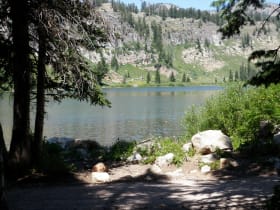
Logan Canyon Scenic Byway
18 miles away
Logan Canyon is a dramatic limestone canyon carved by the Logan River, one of the most scenic mountain drives in northern Utah.
Bear Lake State Park
19 miles away
Bear Lake is 20 miles long, 8 miles wide, and its unusual turquoise color comes from calcium carbonate particles suspended in the water. The lake has five species of fish found nowhere else on earth.

Fossil Butte National Monument
35 miles away
Fossil Butte National Monument west of Kemmerer preserves one of the world's richest Eocene fossil beds from 50 million years ago, when a subtropical lake covered southwest Wyoming.