
Calvert Cliffs State Park
10835 H G Trueman Rd, Lusby, MD
Lusby, MD
A quiet Chesapeake beach at the foot of crumbling million-year-old cliffs, where the sand gives up sharks' teeth and other fossils to anyone willing to look.
Calvert Cliffs State Park protects a stretch of the Chesapeake Bay shore where tall, banded cliffs rise straight from the water, cliffs made of layers of sand and clay laid down millions of years ago when this whole region lay beneath a warm, shallow sea. As the cliffs slowly erode, they release the fossils locked inside them onto the beach below, which is why this quiet park is one of the most famous fossil-hunting spots on the East Coast.
The great prize is fossil sharks' teeth, dark and glossy, which wash out of the cliffs and scatter across the sand and shallows for patient searchers to find. Reaching the fossil beach takes a pleasant walk of a couple of miles through forest and marsh, and the reward is a stretch of bay shore that feels wonderfully wild and far from the crowds, a place where you can walk away with a piece of the deep past in your pocket.
What Travelers Love
- Searching the sand and shallows for fossil sharks' teeth millions of years old
- The dramatic striped cliffs rising above the Chesapeake beach
- The pleasant walk out through forest and marsh to reach the shore
- A quiet, uncrowded stretch of bay far from the busy resort beaches
Worth Knowing
- It is a walk of about two miles each way from the parking area to the fossil beach, so allow time and water
- Do not climb or dig into the cliffs; they are unstable and collapse, and staying back is a safety rule
- Search for fossils in the sand and surf at the base, not by disturbing the cliff face
- Bring a small container for finds and sturdy shoes for the trail and beach
Learn about Calvert Cliffs State Park
A window into an ancient sea
The cliffs at Calvert Cliffs preserve one of the richest fossil records of the Miocene epoch on the Atlantic coast, dating back millions of years to a time when a warm sea covered Southern Maryland. Living in those waters were sharks, rays, whales, dolphins, seabirds, and countless shellfish, and when they died their remains settled into the seafloor sediments that later hardened into the layered cliffs you see today.
Over time, the land rose and the sea retreated, and the Chesapeake Bay began wearing at the exposed cliff face. That erosion continues today, and it is what keeps the fossil supply fresh. Each storm and tide sloughs a little more material off the cliffs and tumbles new fossils down onto the beach, which is why the same shore can be searched again and again and still yield finds.
Hunting for sharks' teeth
The most sought-after fossils here are sharks' teeth, which range from tiny to occasionally large and come in a beautiful range of dark colors after millions of years underground. The trick is not to dig at the cliffs, which is both dangerous and prohibited, but to search the sand and the shallow water at the base of the cliffs and along the beach, where the surf sorts and reveals the teeth naturally.
Alongside the teeth, sharp-eyed searchers turn up fossil shells, bits of ray plates, and other remnants of the ancient sea. Bringing a small container and a bit of patience is all it takes, and the thrill of spotting a glossy black tooth in the wet sand is one that hooks children and adults alike. Because the fossils keep washing out, this is a rare kind of collecting that the park can sustain.
The trail, the marsh, and the shore
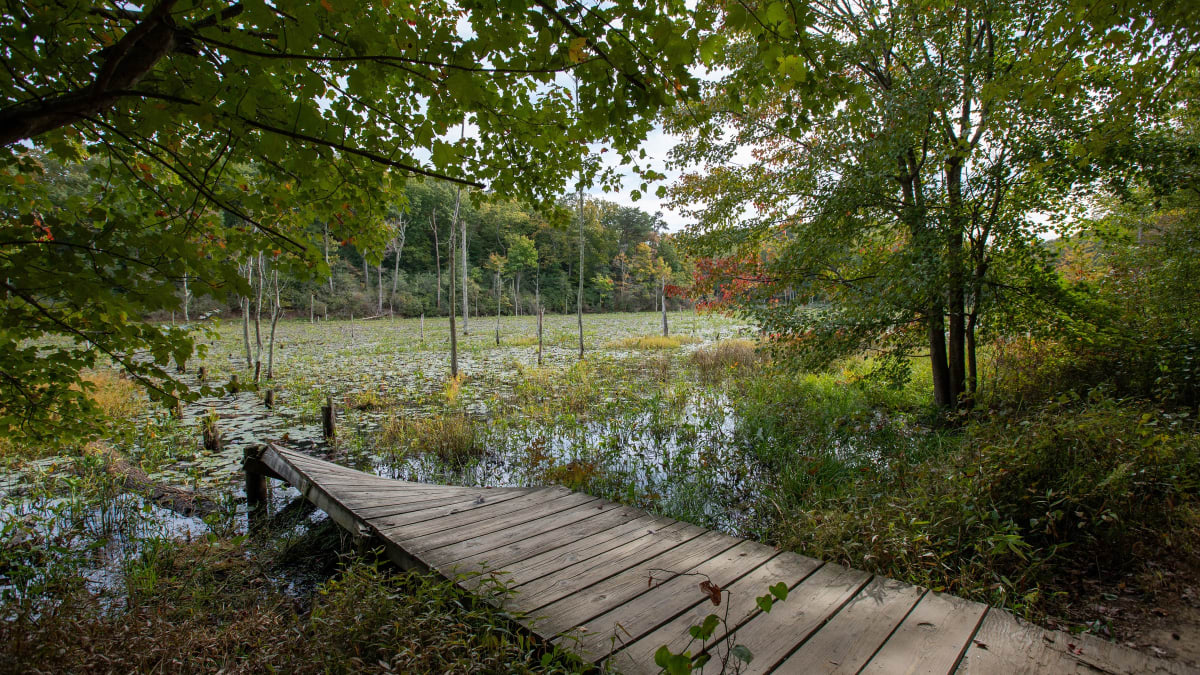
Getting to the fossil beach is part of the pleasure. The main trail leads about two miles out from the trailhead through a mix of forest and past a freshwater marsh, a shaded, gentle walk alive with birds, turtles, and the sounds of the wetland. It is an easy hike for most, but it is a real walk, so bringing water and good shoes matters, especially on a warm day.
At the end, the trees open onto the Chesapeake and the tall striped cliffs, and the beach spreads out below them. Safety is the one firm rule: the cliffs are unstable and pieces do fall, so visitors stay well back from the base and never climb or undercut them. Keeping to the open beach and the surf line is both the safest approach and, conveniently, the best way to find fossils.
Southern Maryland's tidewater country
The park sits in the heart of Southern Maryland's Calvert County, a peninsula of tidewater farms, small towns, and long shorelines along the Chesapeake and the Patuxent River. It is a quieter, more rural corner of the state, well off the main tourist routes, which is part of why the park's beach stays so peaceful even on a fine day.
Just to the south, the little maritime town of Solomons offers waterfront dining, a marine museum, and the historic Drum Point Lighthouse, making an easy pairing with a morning of fossil hunting. Together they make Calvert County a rewarding destination for travelers who like their history deep and their shorelines uncrowded.
Closest Boutels
The closest Boutel™ stays, so you can turn this stop into an overnight. Each is a place we chose through independent editorial review, never a paid placement.
Details
Lusby, MD
Frequently asked questions
What is Calvert Cliffs State Park?
Calvert Cliffs State Park, on Maryland's Chesapeake Bay shore in Calvert County, is famous for the ancient cliffs of sand, clay, and shell that hold fossils from a tropical sea that covered the region some 15 million years ago. As the cliffs erode, they wash prehistoric treasures onto a quiet bay beach reached by a forested trail. Visitors come to hunt for Miocene-era shark teeth, whale bones, and fossilized shells, making it one of the East Coast's premier fossil-hunting destinations.
What fossils can you find at Calvert Cliffs?
The beach is famous for fossilized shark teeth, which are typically dark brown or black and shiny, from species including tiger, hammerhead, and sand sharks, and even the legendary megalodon. You can also find ancient whale bones and Miocene-era shells like Chesapecten scallops and Ecphora snails. Sifting the beach sand and shallows with a sieve turns up the best finds, so bring a mesh bag or container, and know that patience and a sharp eye pay off.
What safety rules apply at Calvert Cliffs?
This is important: do not climb on the cliffs, walk beneath them, or dig into them. The cliffs are actively eroding and prone to dangerous landslides, so approaching or digging into them is both hazardous and prohibited. Search only the open beach and shallow water for fossils, which is where the good finds wash up anyway. Keep children away from the cliff faces, and respect the posted rules to stay safe.
When is the best time to hunt fossils at Calvert Cliffs?
Low tide is best, and especially low tide after a storm, since rough weather and erosion expose fresh fossils on the beach. Counterintuitively, winter can be a prime fossil-hunting season, because stormy weather causes more cliff erosion and delivers more finds to the sand. Spring through fall offers pleasant weather for the hike and beach, so time a fossil-focused trip around a low tide following stormy conditions for the best results.
How do you get to the fossil beach at Calvert Cliffs?
The fossil beach lies at the end of the Red Trail, a walk of about 1.8 miles each way through the forest and past a marsh, so allow at least an hour in each direction. It is a moderate hike, so wear sturdy shoes and bring water, since there are no facilities at the beach itself. Packing a mesh bag for your finds and a sieve or scoop for sifting the sand helps make the trek worthwhile.
Outside the Park
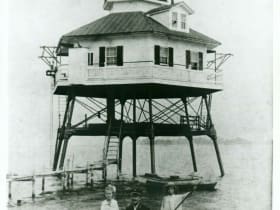
Drum Point Lighthouse
4.5 miles away
The Chesapeake was once dotted with odd little houses on stilts guarding its shoals, and almost all are gone.
Calvert Marine Museum
5.1 miles away
This is the family anchor of southern Maryland. The Calvert Marine Museum in Solomons combines a river-otter habitat kids press up against, a touch tank of Bay creatures, and a hall of giant fossil sh...

Sotterley Plantation
5.8 miles away
Most colonial plantation houses in tidewater Maryland are long gone, which makes Sotterley on the Patuxent rare and worth the detour.

Historic St Mary's City and the Maryland Dove
14 miles away
History lands differently when kids can climb it, and this outdoor museum is built for that.

Blackwater National Wildlife Refuge
18 miles away
Blackwater is the wild heart of the lower Eastern Shore, more than 28,000 acres where the land barely rises above the tide and marsh runs to the horizon.