
Sotterley Plantation
44553 Steer Horn Neck Rd, Hollywood, MD
Hollywood, MD
One of the oldest working plantation landscapes in the country, told honestly through the lives of the people enslaved here and a rare surviving slave cabin above the Patuxent.
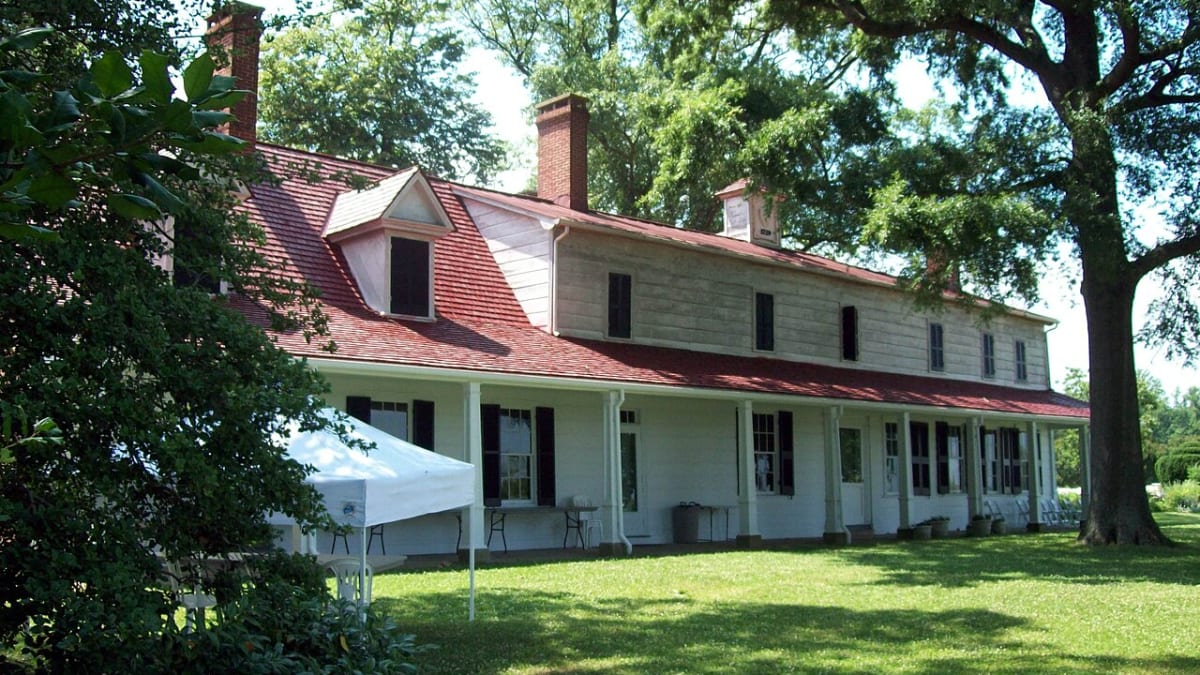
Sotterley is one of the oldest and most complete plantation landscapes left in the United States, a three-century-old estate on a bluff above the Patuxent River in Southern Maryland. Its manor house began as a modest dwelling in the early 1700s and grew over generations into a rambling home filled with hand-carved colonial woodwork, surrounded by fields, gardens, and outbuildings that still trace the shape of a working tobacco plantation.
What sets Sotterley apart today is its honesty. This was a place built and worked by enslaved people, and the site refuses to hide that. A rare original slave cabin still stands on the grounds, one of very few surviving anywhere in the country, and the plantation's mission has become the telling of its whole story, the lives of the enslaved alongside the lives of the families who held them, so that the truth of the place is not softened or erased.
What Travelers Love
- A rare surviving slave cabin, one of few left standing in the country
- An honest, people-centered telling of both the enslaved and the enslavers
- The manor house and its hand-crafted colonial woodwork
- A high, quiet bluff with wide views over the Patuxent River
Worth Knowing
- House tours run on a schedule while the grounds are open more broadly, so check ahead
- The site is a donation-supported nonprofit, not a state park
- The story here includes slavery told with care, and is well suited to older children and adults
- Wear comfortable shoes for the grounds, gardens, and walk to the river
Learn about Sotterley Plantation
Three centuries on the river
The land that became Sotterley had long been part of the world of the Piscataway and other Native peoples of Southern Maryland before English colonists claimed it in the early 1700s. The estate grew up as a tobacco plantation, its fortunes rising and falling with the crop, and passed through several prominent families over the generations, each leaving a mark on the house and grounds.
The manor house tells that layered history in its very structure, a building that started small and was added onto again and again, so that walking through it is like reading tree rings. Inside are some of the finest surviving examples of colonial craftsmanship in the region, including an elaborately carved Chinese Chippendale staircase and paneling shaped by the hands of enslaved and hired artisans whose skill is written into the woodwork.
The people who were enslaved here
For most of its history, Sotterley depended entirely on the forced labor of enslaved men, women, and children who grew the tobacco, built the buildings, and ran the household. The plantation has worked to recover their names and stories from records long overlooked, and their descendants remain connected to the site, taking part in its programs and helping shape how the history is told.
The most powerful survivor of that history is an original slave cabin, a small wooden dwelling that still stands where it was built. Very few such structures remain anywhere in the nation, and this one gives visitors a rare, unflinching look at the conditions of enslaved life. Sotterley presents it not as a curiosity but as sacred ground, a place to reckon with the human cost on which the plantation was built.
The grounds, gardens, and the Patuxent
Beyond the house, Sotterley's grounds spread across a bluff high above the Patuxent River, with a restored colonial revival garden, orchards, meadows, and paths that lead down toward the water. The setting has changed remarkably little in three centuries, and the view over the wide river is among the finest in Southern Maryland.
The land is also a living landscape of native life, with fields and woods that draw songbirds, deer, and raptors, and a riverbank alive with herons and ospreys. Walking the grounds gives a sense of the plantation as a whole world unto itself, fields and dwellings and river landing all connected, the way it functioned for generations.
A visit that reckons honestly
Sotterley has become a national model for how a historic plantation can tell the truth. Its tours and programs weave together the stories of the enslaved and the enslavers, refusing the old habit of admiring the great house while ignoring the people who built and served it. The experience asks something of the visitor and rewards it with a fuller, more human understanding of the American past.
It sits in the quiet farm and river country of St. Mary's County, close to Leonardtown and the deep colonial history of Southern Maryland. A visit pairs naturally with the region's other landmarks and makes for a day that is thoughtful, beautiful, and lasting.
Closest Boutels
The closest Boutel™ stays, so you can turn this stop into an overnight. Each is a place we chose through independent editorial review, never a paid placement.
Details
Hollywood, MD
Frequently asked questions
What is Sotterley Plantation?
Sotterley Plantation is a colonial-era tidewater estate on the Patuxent River in St. Mary's County, southern Maryland. A National Historic Landmark, it centers on a rare early-1700s manor house, one of the oldest surviving colonial plantation homes in the country, surrounded by gardens, historic outbuildings, and grounds overlooking the river. Sotterley offers a powerful, honest look at plantation life, including the lives of the enslaved people who lived and labored there, making it a meaningful historical destination.
What can you see at Sotterley Plantation?
You can tour the historic manor house, walk the gardens and grounds with their beautiful river views, and, importantly, visit a rare surviving slave cabin along with exhibits that tell the full and difficult story of the enslaved people who were central to the plantation's history. This honest interpretation of both the landowners' and the enslaved community's experiences gives Sotterley depth and significance beyond a typical historic house, and special events and programs add to a visit.
When is the best time to visit Sotterley Plantation?
Spring through fall is ideal for enjoying the gardens, grounds, and river setting in pleasant weather, and it is generally when house tours and programs are offered, so checking current hours and tour availability before you go is wise. The riverside landscape is especially lovely in the warmer months. Special events throughout the season can add to a visit, so it is worth looking at the calendar when planning your trip.
Why is Sotterley Plantation historically significant?
Beyond its remarkably preserved early-eighteenth-century manor house, Sotterley is significant for its honest interpretation of the entire plantation community, including the enslaved men, women, and children whose forced labor sustained it. The rare surviving slave cabin and the site's thoughtful exhibits confront this difficult history directly, offering visitors a fuller, more truthful understanding of the past. That commitment to telling the whole story makes Sotterley an important and reflective place to visit.
What is near Sotterley Plantation?
Sotterley sits in St. Mary's County in southern Maryland, near Historic St. Mary's City, the state's first capital and a living-history museum, and within reach of Point Lookout State Park at the tip of the peninsula. The scenic Patuxent and Potomac river country and the region's small towns surround it. That makes Sotterley an easy and enriching stop on a broader exploration of southern Maryland's deep colonial and Chesapeake history.
Nearby
Drum Point Lighthouse
5.4 miles away
The Chesapeake was once dotted with odd little houses on stilts guarding its shoals, and almost all are gone.
Calvert Marine Museum
5.4 miles away
This is the family anchor of southern Maryland. The Calvert Marine Museum in Solomons combines a river-otter habitat kids press up against, a touch tank of Bay creatures, and a hall of giant fossil sh...
Calvert Cliffs State Park
5.8 miles away
These Chesapeake cliffs are a window straight into the Miocene, 10 to 20 million years ago, when a warm sea covered southern Maryland.
Historic St Mary's City and the Maryland Dove
14 miles away
History lands differently when kids can climb it, and this outdoor museum is built for that.