

Historic St Mary's City and the Maryland Dove
47414 Old State House Rd, St Marys City, MD
St Marys City, MD
The place where Maryland began, an open-air museum of the colony's first capital, complete with a full-size seventeenth-century sailing ship moored at the river.
Historic St Mary's City is where Maryland began. In 1634 English colonists sailing under a charter from the Calvert family landed near here and founded St Mary's City, which served as the colony's first capital for the rest of the century. Today the site is a sprawling outdoor living-history museum, its fields and woods holding reconstructed buildings, working plantations, and a full-size seventeenth-century ship at anchor on the river.
The star of the waterfront is the Maryland Dove, a reconstruction of one of the two small ships that carried the first settlers across the Atlantic. Costumed interpreters work the ship, the State House, the chapel, and a colonial farm, while archaeologists continue to unearth the buried foundations of the vanished city. It is one of the most immersive windows into early colonial America anywhere on the Chesapeake.
What Travelers Love
- Stepping aboard the Maryland Dove, a full-size reconstruction of a seventeenth-century sailing ship
- Costumed interpreters bringing the colony's first years to life across the fields and buildings
- The reconstructed State House, chapel, and plantation set in a beautiful riverside landscape
- Working archaeology that keeps uncovering the buried story of Maryland's founding
Worth Knowing
- This is a large outdoor museum, so wear comfortable shoes and plan for time in the sun and open fields
- Living-history programs and the ship follow a seasonal schedule, so check before you go
- The site is an active archaeological dig, and interpreters share what the ground reveals
- It sits next to a college campus, giving the peninsula a quiet, scholarly feel
Learn about Historic St Mary's City and the Maryland Dove
Maryland's founding
In November 1633 two small ships, the Ark and the Dove, set sail from England carrying colonists under a charter granted to the Calverts, the Lords Baltimore. They reached the Chesapeake and, in the spring of 1634, established a settlement they named St Mary's City near the mouth of the St Mary's River. It became the fourth permanent English settlement in what is now the United States and the capital of the new colony of Maryland.
The Calverts intended Maryland in part as a refuge where Catholics and Protestants might live together, and the colony became known for an early experiment in religious toleration, enshrined in a famous 1649 act. St Mary's City remained the seat of government until the capital moved to Annapolis at the end of the century, after which the old town gradually faded and its buildings vanished into fields.
The Maryland Dove
Moored at the museum's waterfront is the Maryland Dove, a full-size reconstruction of the type of small square-rigged trading ship that accompanied the first settlers as the smaller of the two founding vessels. Visitors can step aboard, explore the cramped decks and hold, and hear from costumed crew about the perilous Atlantic crossing and the coastal trade these little ships carried on.
Standing on her deck gives a vivid sense of just how small and vulnerable the founding expedition was, a handful of ships crossing an ocean to plant a colony in an unknown land. The Dove is a centerpiece of the site and one of the finest reconstructions of a seventeenth-century vessel to be found anywhere.
A living-history landscape
Beyond the ship, the museum recreates the world of the early colony across its grounds. A reconstructed State House recalls the seat of Maryland's early government, a rebuilt brick chapel evokes the colony's religious life, and a working tobacco plantation shows the labor and crops on which the colony's economy rested. Costumed interpreters plant, cook, and work the trades of the period.
The interpretation does not shy away from the harder truths of the era, including the indentured servitude and, over time, the enslavement of people that underpinned the tobacco economy, and the presence of the Native peoples whose land this was. The result is a fuller, more honest portrait of early colonial life than a simple pageant would give.
Archaeology and the land it stands on
Because the old city disappeared into farmland, much of what is known about St Mary's City has been recovered from the ground, and the site remains an active archaeological project. Digs continue to reveal building foundations, graves, and artifacts, and interpreters share the ongoing detective work of piecing the vanished town back together.
This land was long the home of the Yaocomaco people, from whom the arriving colonists obtained the ground for their settlement, and whose presence shaped the colony's earliest years. The peninsula today is a quiet, beautiful stretch of Southern Maryland where the museum shares the ground with St Mary's College, giving the whole tip of land a reflective, historic calm.
Closest Boutels
The closest Boutel™ stays, so you can turn this stop into an overnight. Each is a place we chose through independent editorial review, never a paid placement.
Details
St Marys City, MD
Frequently asked questions
What is Historic St. Mary's City?
Historic St. Mary's City, in southern Maryland, is a living-history museum on the site of Maryland's first colonial capital, founded in 1634 as the fourth permanent English settlement in the Americas. Spread across a beautiful tidewater landscape, it features reconstructed seventeenth-century buildings, a working tobacco plantation, a Woodland Indian hamlet, and a reconstruction of the State House, plus an active archaeological site. Costumed interpreters bring colonial and Native life vividly to life across the expansive grounds.
What is the Maryland Dove?
The Maryland Dove is a reconstruction of a seventeenth-century sailing ship representing one of the two vessels that carried Maryland's first English settlers across the Atlantic in 1634. Docked at Historic St. Mary's City along the St. Mary's River, this tall ship lets visitors climb aboard, explore the deck, and talk with costumed crew about the perilous ocean voyage and the small ship's role in supplying and defending the young colony. It is a highlight of a visit and a favorite with families.
What can you do at Historic St. Mary's City?
You can board the Maryland Dove tall ship, explore reconstructed colonial buildings and the State House, visit a working tobacco plantation and a Woodland Indian hamlet, and chat with costumed interpreters who portray settlers, sailors, and Native people. Walking trails wind through the scenic riverside grounds past archaeological digs where the colony's history is still being uncovered. The expansive, hands-on setting makes for an immersive and educational day outdoors.
When is the best time to visit Historic St. Mary's City?
Spring through fall is ideal, when the outdoor exhibits, the tall ship, and costumed interpreters are in full operation and the riverside grounds are most pleasant, since much of the experience is outdoors and involves considerable walking. Hours and the level of living-history activity are more limited in the off-season, so checking the current schedule before you go is wise. Comfortable shoes and sun protection help you enjoy the expansive site.
What is near Historic St. Mary's City?
The site sits near the southern tip of St. Mary's County in southern Maryland, within reach of Point Lookout State Park at the end of the peninsula and the colonial-era Sotterley Plantation on the Patuxent River. The scenic Chesapeake and Potomac river country and the region's small waterfront towns surround it. That makes Historic St. Mary's City an easy centerpiece for a trip exploring southern Maryland's deep colonial history and Chesapeake landscapes.
Nearby
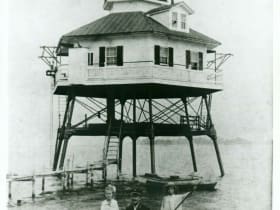
Drum Point Lighthouse
9.2 miles away
The Chesapeake was once dotted with odd little houses on stilts guarding its shoals, and almost all are gone.
Calvert Marine Museum
9.3 miles away
This is the family anchor of southern Maryland. The Calvert Marine Museum in Solomons combines a river-otter habitat kids press up against, a touch tank of Bay creatures, and a hall of giant fossil sh...
Point Lookout State Park
12 miles away
Point Lookout State Park occupies the southern tip of Maryland's western shore, where the Potomac River pours into the Chesapeake Bay.

Sotterley Plantation
14 miles away
Most colonial plantation houses in tidewater Maryland are long gone, which makes Sotterley on the Patuxent rare and worth the detour.
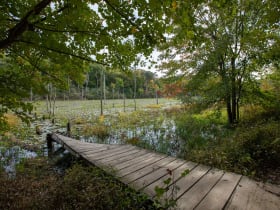
Calvert Cliffs State Park
14 miles away
These Chesapeake cliffs are a window straight into the Miocene, 10 to 20 million years ago, when a warm sea covered southern Maryland.