
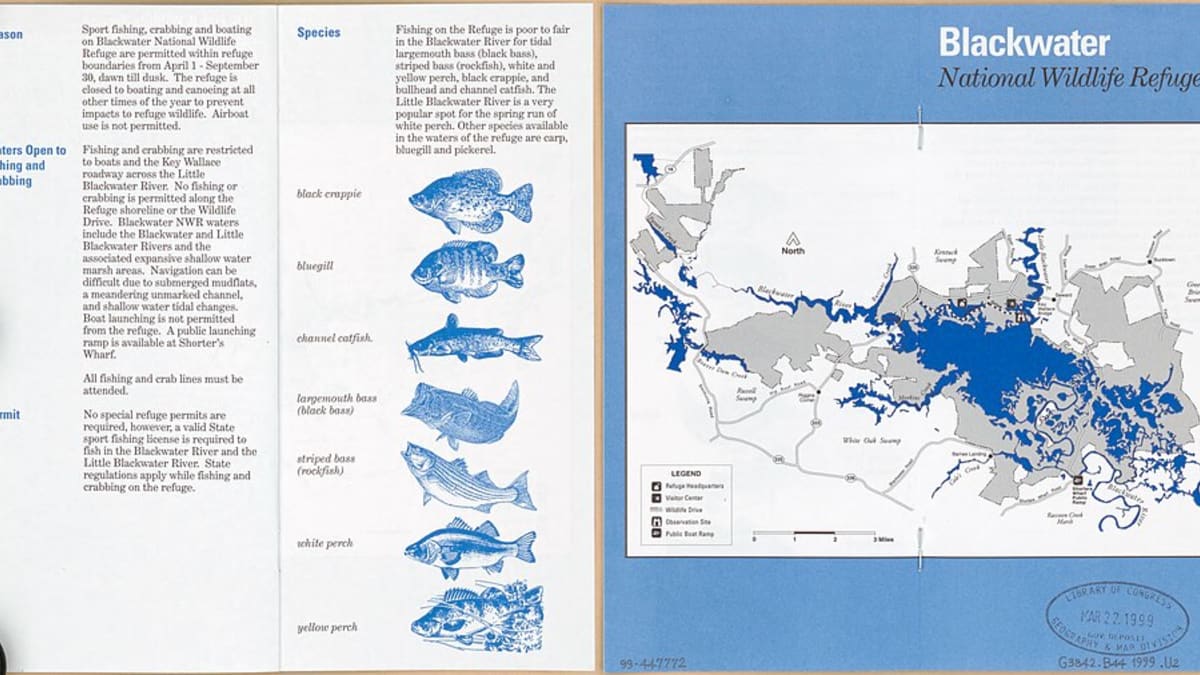
Blackwater National Wildlife Refuge
2145 Key Wallace Dr, Church Creek, MD
Church Creek, MD
A quiet expanse of tidal marsh and open water on the Eastern Shore, one of the great gatherings of bald eagles and wintering waterfowl on the Atlantic coast.
Blackwater National Wildlife Refuge is one of the great wild places of the Chesapeake, a sweeping expanse of tidal marsh, freshwater ponds, forest, and open water on Maryland's Eastern Shore. Established in the 1930s as a haven for migratory birds along the Atlantic Flyway, it draws enormous numbers of waterfowl each winter and is famous for hosting one of the largest concentrations of bald eagles anywhere on the East Coast.
The refuge is sometimes called the Everglades of the North for its rich, watery landscape, and it is beloved by birders, photographers, paddlers, and anyone who wants to watch the seasons turn over a marsh. It also sits in country of deep historical weight: this is the landscape where Harriet Tubman was born into slavery and came to know the woods and waterways she would later use to guide others to freedom.
What Travelers Love
- One of the largest gatherings of bald eagles on the East Coast
- Vast flocks of geese and ducks that fill the marsh in winter
- The scenic Wildlife Drive, an easy loop past prime viewing spots
- Sunrise and sunset over the water, when the marsh glows and the birds move
Worth Knowing
- Winter is the peak season for eagles and waterfowl; summer is quieter and buggier
- Bring binoculars or a spotting scope, and go early or late for the best light and activity
- The Wildlife Drive can be done by car, bicycle, or on foot, at your own pace
- Insect protection is essential in the warm months in these marshes
Learn about Blackwater National Wildlife Refuge
Eagles, geese, and the Atlantic Flyway
Blackwater is a wildlife spectacle, especially in the colder months. The refuge lies on the Atlantic Flyway, the great highway that migrating birds follow along the coast, and each autumn and winter its marshes fill with tens of thousands of Canada geese, snow geese, and ducks of many kinds. The sound and sight of these flocks lifting off the water at dawn is unforgettable.
The refuge is best known, though, for its bald eagles, which gather here in numbers rarely matched on the East Coast. Eagles perch in the tall loblolly pines along the water and soar over the marsh year-round, with winter bringing the largest concentrations. Ospreys, herons, egrets, and a host of shorebirds round out a bird list that makes Blackwater a destination for serious birders and casual visitors alike.
The Wildlife Drive and getting out on the marsh
The heart of a visit for most travelers is the refuge's Wildlife Drive, a scenic loop road that winds past marsh, impoundments, and forest edge, with pullouts and overlooks positioned at the best viewing spots. You can drive it slowly with the windows down, cycle it, or walk sections of it, stopping whenever a raft of ducks or a perched eagle catches your eye.
Beyond the drive, walking trails lead through pine woods and along the marsh, and the refuge's waters are open to paddling, letting kayakers and canoeists slip quietly into the heart of the wetland. However you explore, going at first light or toward sunset rewards you with the best light, the fewest people, and the most active wildlife.
Harriet Tubman's landscape
The country around Blackwater is inseparable from the story of Harriet Tubman, who was born into slavery in Dorchester County in the early 1820s and grew up laboring in these marshes, fields, and forests. The waterways, woods, and stars she learned here became the knowledge that let her escape north and then return again and again to lead others to freedom on the Underground Railroad.
The Harriet Tubman Underground Railroad National Historical Park and its visitor center sit close to the refuge, interpreting her life and the wider network of resistance to slavery across this landscape. Visiting the two together deepens both: the natural refuge and the human history that unfolded across the same low, watery ground carry each other's meaning.
A marsh in transition
Blackwater is also a place where the changing coast is unusually visible. Rising water and sinking land have turned large areas of former marsh into open water over the past century, and the refuge is a focus for scientists and land managers working to understand and slow the loss of tidal wetlands. Standing at an overlook, you can see stands of drowned trees and shifting shorelines that tell that story.
For a visitor, this makes the refuge not only beautiful but meaningful, a living example of a Chesapeake landscape in motion. The best times to take it in are the shoulder seasons and winter, when the birds are abundant and the biting insects have faded, and the low sun turns the marsh to gold.
Closest Boutels
The closest Boutel™ stays, so you can turn this stop into an overnight. Each is a place we chose through independent editorial review, never a paid placement.
Details
Church Creek, MD
Frequently asked questions
What is Blackwater National Wildlife Refuge?
Blackwater National Wildlife Refuge, on Maryland's Eastern Shore near Cambridge, protects more than 28,000 acres of tidal marsh, forest, and wetlands that provide a vital haven for migratory birds and other wildlife. Established in the 1930s, it is renowned for its bald eagles, boasting one of the highest concentrations on the Atlantic coast, and for its huge wintering flocks of snow geese. With over 250 bird species and abundant wildlife, it is one of the region's premier destinations for birding and nature.
How do you see wildlife at Blackwater refuge?
The easiest way is the roughly 3.6-mile Wildlife Drive, a scenic auto-tour route where most of the refuge's wildlife can be viewed from or near your car, making it popular with photographers and accessible for those with limited mobility. You can also walk short trails or paddle water trails. Bring binoculars or a spotting scope, drive slowly, and watch the marshes, water, and treetops for eagles, herons, waterfowl, and more.
When is the best time to visit Blackwater refuge?
Winter is spectacular, when bald eagles gather in large numbers and enormous flocks of snow geese fill the marshes, while spring and fall migrations bring the greatest variety of birds. The wetlands are birdiest when water levels are low and mud is exposed. Early morning and evening are best for wildlife activity. In the warmer months, bring insect repellent, since the marshes can be buggy, and a clear, calm day rewards you with the best viewing.
What should I know before visiting Blackwater refuge?
There is a small entrance or vehicle fee, and a visitor center helps you get oriented. Bring binoculars or a scope, drive slowly on the Wildlife Drive, and stay in your vehicle or on designated trails to avoid disturbing wildlife. For eagles, a good spot is where the road crosses the Blackwater River, where nests and birds are often visible. Come prepared for sun, and in warm months, mosquitoes, on this open marshland refuge.
What is near Blackwater National Wildlife Refuge?
The refuge lies near Cambridge on the Eastern Shore, in the landscape where Harriet Tubman was born and guided others to freedom, so it pairs naturally with the Harriet Tubman Underground Railroad National Historical Park and its visitor center nearby. The scenic Chesapeake countryside, waterfront towns, and other Eastern Shore attractions are within reach, making Blackwater an easy and rewarding stop on a broader exploration of the region's nature and history.
Nearby
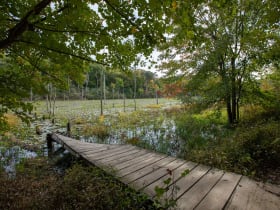
Calvert Cliffs State Park
18 miles away
These Chesapeake cliffs are a window straight into the Miocene, 10 to 20 million years ago, when a warm sea covered southern Maryland.
Calvert Marine Museum
20 miles away
This is the family anchor of southern Maryland. The Calvert Marine Museum in Solomons combines a river-otter habitat kids press up against, a touch tank of Bay creatures, and a hall of giant fossil sh...
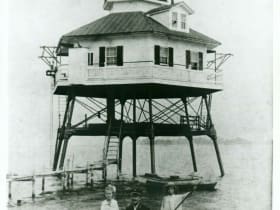
Drum Point Lighthouse
20 miles away
The Chesapeake was once dotted with odd little houses on stilts guarding its shoals, and almost all are gone.