

Zwaanendael Museum
134 W Market St, Lewes, DE
Lewes, DE
An ornate little Dutch Renaissance building in old Lewes, marking the spot where Delaware's first settlement rose in 1631, and was wiped out within a year.
Zwaanendael, meaning valley of the swans in old Dutch, was the name of the first European settlement in what would become Delaware. In 1631 a group of Dutch colonists established a small whaling and trading outpost near the mouth of the bay, planting the seed of the future town of Lewes. Within about a year the entire colony had been destroyed, and the story of what happened is one of the more sobering chapters in the state's early history.
The museum that bears the name was built three centuries later, in 1931, to mark the settlement's anniversary, and it is a landmark in its own right, a fanciful Dutch Renaissance building modeled on a historic town hall in the Netherlands. Inside, it tells the tale of Zwaanendael and gathers the maritime and local history of Lewes, Delaware's first town, into one intimate space at the town's heart.
What Travelers Love
- A striking Dutch Renaissance building, ornate and unmistakable, modeled on a town hall in the Netherlands
- The dramatic story of the doomed 1631 Dutch colony that gave the museum its name
- Maritime curiosities and local history packed into an intimate space
- A perfect anchor for exploring walkable historic Lewes on foot
Worth Knowing
- The museum is donation-based and run by the state's historical agency, with hours that follow the season
- It is small and best paired with a walk through historic Lewes and its other sites
- The building itself is a landmark, built in the 1930s to honor the town's Dutch founding
- Exhibits rotate, and the collection leans toward maritime and local history
Learn about Zwaanendael Museum
The doomed colony of 1631
In 1631 a party of Dutch settlers landed near the mouth of Delaware Bay and built a small fortified outpost they called Zwaanendael, meant to profit from whaling and trade. It was among the very first European footholds on this coast, decades before Delaware as a colony took shape, and it staked a Dutch claim to the region.
The colony did not last a year. A dispute arose between the settlers and the local Lenape people, and the outpost was destroyed, with the loss of everyone there. The accounts that survive come largely from the Dutch side and are shaped by their perspective, so the fuller truth of the clash is not simple. What is certain is that the first attempt to settle here ended in violence and ruin, and the Dutch claim it represented would echo through the region's later contests among the Dutch, Swedes, and English.
The building and the anniversary
The museum was raised in 1931 to mark the three hundredth anniversary of the ill-fated colony, and Delaware chose to honor the Dutch founding with an eye-catching building. It was modeled on the old town hall of Hoorn in the Netherlands, an ornate Dutch Renaissance design of stepped gables and decorative stonework that stands out vividly among the town's American architecture.
That the building is a twentieth-century tribute rather than an actual relic does not lessen its charm. It fixed the memory of Zwaanendael in stone and gave Lewes a signature landmark, a piece of the Old World set down to remind visitors of the town's very first, and very brief, European chapter.
Inside the collection
The museum is small and packed with local color, telling the story of Zwaanendael and gathering the maritime and social history of Lewes across the centuries that followed. Exhibits touch on the town's whaling and trading past, its role guarding the bay, and the curiosities that wash up in any old seaport.
Displays rotate over time, and the collection leans toward the sea, fitting for a town that has always faced the water. As a donation-based site run by the state's historical agency, it welcomes visitors and serves as a fine introduction to the deeper history of Delaware's first town before you set out to explore the rest of it on foot.
Historic Lewes around it
Lewes calls itself the first town in the first state, and the museum sits at the center of a walkable historic district well worth a wander. Colonial and early American homes, a canal, shops, and the Lightship Overfalls are all within an easy stroll, and Cape Henlopen's beaches and dunes lie just beyond.
Summer is the busy season, when the Cape Region fills with beachgoers and the town hums, but the shoulder seasons of spring and fall are quieter and lovely for walking, the ornate old building bright against clear skies. Winter settles the town into a hush, and the museum's Dutch gables stand serene in the cold light off the bay.
Closest Boutels
The closest Boutel™ stays, so you can turn this stop into an overnight. Each is a place we chose through independent editorial review, never a paid placement.
Details
Lewes, DE
Frequently asked questions
What is the Zwaanendael Museum?
The Zwaanendael Museum, in the historic town of Lewes, Delaware, is a charming local history museum housed in a distinctive Dutch-style building, telling the story of Lewes and the region's early history, including its Dutch colonial origins. The striking building, modeled on a historic town hall in the Netherlands, honors the Dutch settlers who established an early colony here, and the museum's exhibits cover the town's Dutch colonial roots, its maritime and military history, the Native peoples of the region, and local curiosities and lore. Its distinctive architecture and rich local history make it a delightful destination. A charming and distinctive museum, it educates visitors. With its history, the museum offers a compelling destination in Delaware.
What is the history behind the Zwaanendael Museum?
The Zwaanendael Museum honors the early Dutch colony established in this area of Delaware, one of the region's first European settlements, whose name meant Valley of the Swans, and the museum building itself is modeled on a historic town hall in the Netherlands to reflect that heritage. The area's history includes the Native peoples who lived here long before, the Dutch settlers, and later English and American history, and the museum interprets this layered past. Understanding this history enriches a visit to the Zwaanendael Museum in Lewes, Delaware.
What can you see at the Zwaanendael Museum?
You can admire the distinctive Dutch-style building, and see exhibits on the town of Lewes and the region's history, including its Dutch colonial origins, the Native peoples of the region, its maritime and military heritage, and local curiosities and lore. The distinctive architecture, the local and colonial history, and the museum's curiosities are the draws, making it a charming and educational stop in historic Lewes. The building itself and the local history are highlights. With its exhibits, the Zwaanendael Museum offers a rewarding visit in Delaware.
When is the best time to visit the Zwaanendael Museum?
As an indoor museum, the Zwaanendael Museum is enjoyable year-round in any weather, making it a great stop in any season and a welcome option on a rainy or off-beach day, and it pairs naturally with a stroll through the historic streets of Lewes in the milder months. Because hours can vary, checking current information before you go is wise. Because it is indoors, the Zwaanendael Museum makes a rewarding stop any time of year in Lewes, Delaware.
What is near the Zwaanendael Museum?
The Zwaanendael Museum is in the historic town of Lewes, Delaware, within reach of the Lightship Overfalls, Cape Henlopen State Park, Rehoboth Beach to the south, and the other attractions of the Delaware beaches. That makes the Zwaanendael Museum a compelling stop to combine with the historic town of Lewes and Cape Henlopen on a visit to Delaware.
Nearby
Lightship Overfalls
0.6 miles away
People expect a lighthouse on the coast, not a lightship parked in town, which is exactly what makes this one worth finding.

Cape Henlopen State Park
2.6 miles away
Cape Henlopen is where Delaware Bay meets the ocean, and the land itself is alive and moving, a great hook of sand that shifts a little every year.
Nassau Valley Vineyards
3.5 miles away
A few miles from the boardwalk crowds, down a quiet farm road, sits the winery that started Delaware wine.
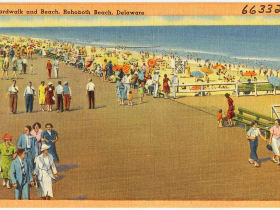
Rehoboth Beach and Boardwalk
5.0 miles away
The grand old resort of the Delaware coast, with a classic mile-long wooden boardwalk of amusements, food stands, and a free-concert bandstand backed by a wide public beach.
Funland
5.4 miles away
This is the heart of a Rehoboth beach day for families. Funland has run on the boardwalk since 1962, still owned by the same family, and it is built for younger kids: gentle rides, a carousel, bumper...

Cape May Lighthouse
15 miles away
An 1859 seacoast tower at the very tip of New Jersey, still lit and open to climb: 199 steps of the original spiral stair lead to a view over the Atlantic, Delaware Bay, and the beach towns.
Sunset Beach and the Cape May Diamonds
15 miles away
Two oddities meet on one small beach at the end of New Jersey.
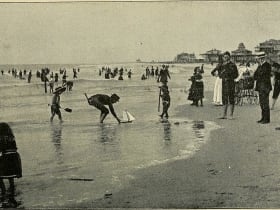
Cape May Beach and Promenade
16 miles away
America's oldest seaside resort skips the wooden boardwalk for a smooth, paved Promenade that runs nearly two miles along a seawall above a wide, gently sloping beach.
Emlen Physick Estate
17 miles away
This one house is the reason Cape May still looks like Cape May.