

Cape Henlopen State Park
34596 Dune Rd, Lewes, DE
Lewes, DE
Where Delaware Bay meets the Atlantic, a cape of shifting dunes, wide beaches, and old wartime towers watching the sea.
Cape Henlopen is the great sandy point where Delaware Bay swings open into the Atlantic Ocean, a landscape of wide beaches, high dunes, pine woods, and salt marsh just beyond the old town of Lewes. It is one of Delaware's largest and most varied state parks, offering ocean swimming, miles of trails, and a shoreline that is constantly being reshaped by wind and tide.
The cape has long guarded the mouth of the bay, and its history is written on the land: a towering walking dune slowly burying the forest in its path, and concrete observation towers built during World War II to watch for enemy ships. Today it is a place to swim, cycle, fish, and walk, with a sense of open space rare on the crowded mid-Atlantic coast.
What Travelers Love
- Wide, uncrowded Atlantic beaches with room to spread out
- The Great Dune and the walking dune slowly burying the forest behind it
- Climbing the World War II observation tower for a sweeping view of the coast
- Cycling and walking trails through pine woods, dunes, and along the shore
Worth Knowing
- The park welcomes visitors year-round; summer is busiest and quieter shoulder seasons are lovely
- Dunes are fragile and protected, so stay on marked paths and boardwalks
- Bring sun protection and water; the open beach and dunes offer little shade
- The old wartime bunkers and towers are a highlight, but respect closures and posted signs
Learn about Cape Henlopen State Park
A cape guarding the bay
Cape Henlopen marks the southern jaw of the entrance to Delaware Bay, and for centuries it has been strategically important to anyone sailing in and out. Its position made it a natural place to watch the sea, and over the years it carried lighthouses, a pilot station, and eventually military defenses.
The land became a coastal artillery post during World War II, when the country feared attack along the Atlantic seaboard. Gun batteries and tall concrete observation towers were built into the dunes to spot enemy ships offshore. When the war passed and the guns were removed, much of the land was turned over to the state, and Cape Henlopen became a park, its wartime bones still standing among the sand.
The Great Dune and the walking dune
The cape's most striking natural feature is its dunes. The Great Dune rises well above the surrounding land, one of the tallest on the Atlantic coast between two distant capes, and from it visitors can look out over a vast sweep of ocean and bay.
Even more remarkable is the walking dune, a mountain of sand that the wind pushes slowly inland, burying the pine forest in its path and, in places, revealing the ghostly remains of trees it passed over long ago. It is a living lesson in how coastlines move, a landscape that is quite literally on the march, reshaping itself year by year.
Beaches, trails, and the water
The park's Atlantic beaches are broad and, by mid-Atlantic standards, uncrowded, with room to swim, fish from the surf, or simply walk the sand for what feels like miles. On the bay side, calmer waters and a fishing pier draw anglers and families. Paved and sandy trails thread the park for cyclists and walkers, winding through pine woods and past the old bunkers.
For those who want to understand what they are seeing, a nature center interprets the cape's ecology, and the wartime towers, where open, offer a climb to a view that takes in the whole meeting of bay and ocean. It is a park that rewards both the active and the curious.
Wildlife and the seasons
The cape's mix of beach, dune, forest, and marsh supports a rich variety of life. Horseshoe crabs come ashore to spawn along the bay in late spring, drawing migrating shorebirds that time their arrival to feed on the eggs, one of the great wildlife spectacles of the Delaware Bay. Ospreys nest on platforms over the marsh, and seabirds work the surf line year-round.
Summer is the busy season, warm and bright and made for the beach, while spring and fall bring migrating birds, milder air, and thinner crowds. Winter is stark and windswept, the beach empty and the dunes shaped by cold gales, a quieter time to have the cape nearly to yourself.
Closest Boutels
The closest Boutel™ stays, so you can turn this stop into an overnight. Each is a place we chose through independent editorial review, never a paid placement.
Details
Lewes, DE
Frequently asked questions
What is Cape Henlopen State Park?
Cape Henlopen State Park, near Lewes on the Atlantic coast of Delaware, is a beautiful and expansive coastal park where Delaware Bay meets the ocean, offering wide beaches, dunes, trails, historic military sites, and abundant wildlife. Set on the cape where the bay and ocean meet, the park features long sandy beaches, towering dunes, pine woods, nature trails, a fishing pier, historic World War Two observation towers and fortifications, and a nature center, along with rich birdlife and coastal scenery. Its beaches, dunes, history, and nature make it a delightful destination. A gorgeous and varied coastal park, it delights visitors. With its beaches and history, Cape Henlopen offers a compelling destination in Delaware.
What can you do at Cape Henlopen State Park?
You can relax and swim at the beaches, walk or bike the trails through dunes and pine woods, fish from the pier, climb the historic World War Two observation tower, watch for birds and wildlife, visit the nature center, and take in the scenery where bay meets ocean. The beaches, the trails, the historic military towers, the fishing, and the wildlife are the draws, making it a wonderful destination for a full day outdoors. The beaches and the historic towers are highlights. With its beaches and trails, Cape Henlopen offers a rewarding experience in Delaware.
Is it safe to swim at Cape Henlopen State Park?
The ocean at Cape Henlopen can have rip currents and changing surf, so it is safest to swim only in designated areas when lifeguards are on duty, swim near a lifeguard, heed all posted flags and warnings, keep a close watch on children, and never swim alone or in rough conditions. If caught in a rip current, the guidance is to stay calm, not fight the current, and swim parallel to shore to escape it. Swimming near lifeguards and respecting the surf and flags keep a visit to Cape Henlopen State Park in Delaware safe and enjoyable.
When is the best time to visit Cape Henlopen State Park?
The warm months of late spring through early fall are the classic time for the beaches and swimming, with lifeguards on duty in the peak season, while spring and fall are wonderful for the trails, birdwatching, and history with fewer crowds and pleasant weather, and the park rewards visits year-round. Because beach services are seasonal, checking current information before you go is wise. For beaches aim for summer, or visit spring or fall for trails and quiet, at Cape Henlopen State Park in Delaware.
What is near Cape Henlopen State Park?
Cape Henlopen State Park is near Lewes on the Atlantic coast of Delaware, within reach of the historic town of Lewes with the Zwaanendael Museum and Lightship Overfalls, Rehoboth Beach to the south, and the other attractions of the Delaware beaches. That makes Cape Henlopen a compelling stop to combine with Lewes and Rehoboth Beach on a visit to Delaware.
Outside the Park

Zwaanendael Museum
2.6 miles away
Most people walk past this little building without realizing it is one of the more unusual pieces of architecture in Delaware.
Lightship Overfalls
2.9 miles away
People expect a lighthouse on the coast, not a lightship parked in town, which is exactly what makes this one worth finding.
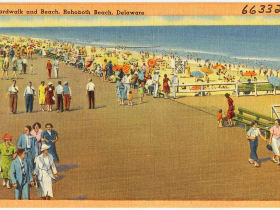
Rehoboth Beach and Boardwalk
3.7 miles away
The grand old resort of the Delaware coast, with a classic mile-long wooden boardwalk of amusements, food stands, and a free-concert bandstand backed by a wide public beach.
Funland
4.2 miles away
This is the heart of a Rehoboth beach day for families. Funland has run on the boardwalk since 1962, still owned by the same family, and it is built for younger kids: gentle rides, a carousel, bumper...
Nassau Valley Vineyards
5.0 miles away
A few miles from the boardwalk crowds, down a quiet farm road, sits the winery that started Delaware wine.

Cape May Lighthouse
13 miles away
An 1859 seacoast tower at the very tip of New Jersey, still lit and open to climb: 199 steps of the original spiral stair lead to a view over the Atlantic, Delaware Bay, and the beach towns.
Sunset Beach and the Cape May Diamonds
14 miles away
Two oddities meet on one small beach at the end of New Jersey.
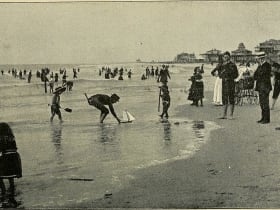
Cape May Beach and Promenade
14 miles away
America's oldest seaside resort skips the wooden boardwalk for a smooth, paved Promenade that runs nearly two miles along a seawall above a wide, gently sloping beach.
Emlen Physick Estate
15 miles away
This one house is the reason Cape May still looks like Cape May.

Wildwood Crest Beach
20 miles away
One of the very few free beaches on the Jersey Shore, and the widest on the Cape, a soft white expanse that keeps quietly growing while other shore beaches shrink.

The Doo Wop Motel District
20 miles away
Most people speed past not realizing they are driving through a protected architectural district.