
Watkins Glen State Park
1009 N Franklin St
Watkins Glen, NY
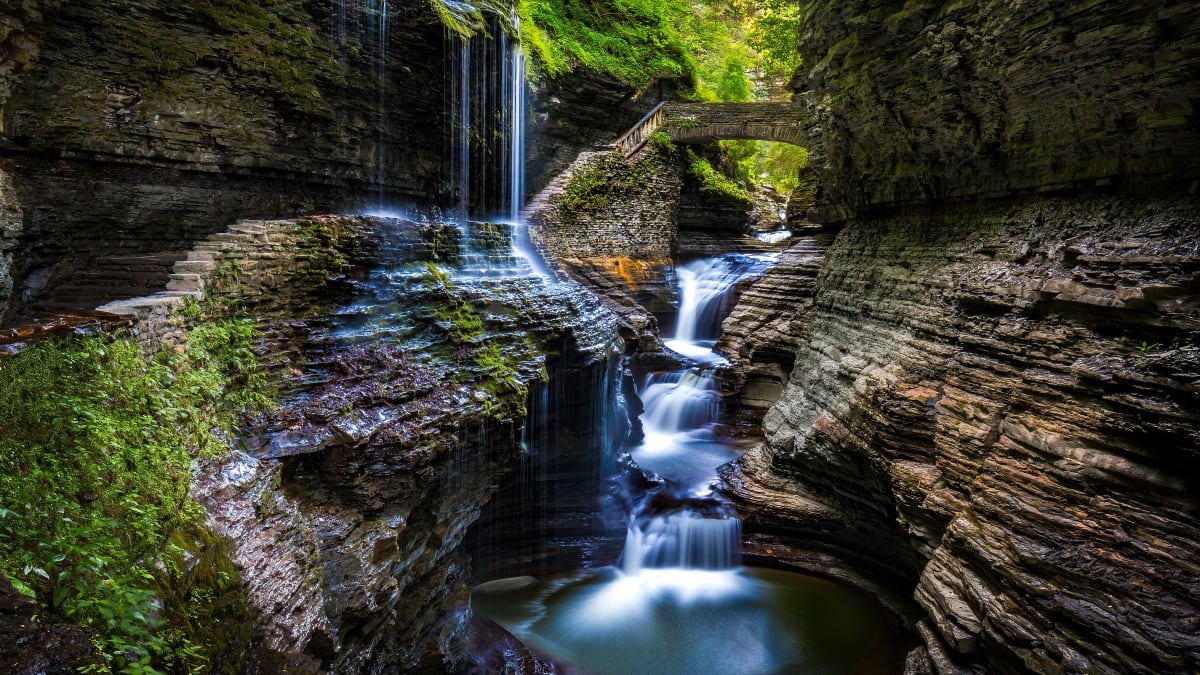
A narrow, twisting gorge where a stone path threads past nineteen waterfalls, over bridges, behind curtains of water, and up flights of steps carved into rock.
Watkins Glen State Park is the most famous of the Finger Lakes gorges, a narrow, twisting canyon where a stone path leads past nineteen waterfalls in less than two miles. The trail threads over arched bridges, through tunnels blasted in rock, up flights of stone steps, and even behind a curtain of falling water, following a stream that has carved the rock into smooth walls, plunge pools, and sculpted potholes.
The gorge drops steeply from the hills down to the village at the head of Seneca Lake, and the whole descent is a wonder of both nature and old craftsmanship, the natural gorge laced with stonework built more than a century ago. It is among the most beloved of all New York's state parks, drawing walkers from around the world to one of the most spectacular short hikes in the East.
What Travelers Love
- The gorge trail winding past nineteen waterfalls in under two miles
- Walking behind the sheet of water at Cavern Cascade
- Stone stairways, tunnels, and bridges carved into the gorge over a century ago
- The narrow, sculpted rock walls that make each turn a new scene
Worth Knowing
- The gorge trail is steep with many stone steps and stays wet, so wear grippy shoes
- The gorge trail is seasonal and closes in winter, though rim trails may stay open
- It is a very popular park, so early mornings and weekdays are calmest
- Spring runs highest and loudest; the falls can thin in a dry late summer
Learn about Watkins Glen State Park
The gorge and its nineteen falls
The heart of the park is the gorge trail, which follows Glen Creek up through the canyon and past nineteen distinct waterfalls, each with its own character, from broad cascades to slender chutes to plunge pools ringed by smooth stone. The path crosses the stream again and again on stone bridges and tucks under overhangs, so the water is never far.
The trail's most memorable moment comes at Cavern Cascade, where the path leads behind the falling water and through a passage cut in the rock, so hikers actually walk beneath and behind the falls. Elsewhere it climbs the Jacob's Ladder stairway and passes sculpted formations with names earned over generations of visitors, making the walk a steady succession of surprises.
How the canyon was carved
The rock of the gorge is sedimentary shale and sandstone, laid down hundreds of millions of years ago when a shallow sea covered the region. After the last glaciers retreated, they left the land reshaped, and Glen Creek began cutting down through the soft rock toward the newly deepened basin of Seneca Lake below.
Because the creek dropped steeply toward the lake, it cut fast and deep, carving the narrow, twisting slot canyon rather than a wide valley. The rushing water swirled stones that drilled round potholes into the rock, undercut the softer layers to form the falls, and polished the walls smooth, creating over thousands of years the sculpted gorge visitors walk today.
The stonework and the park's making
The gorge became a private tourist attraction in the mid-nineteenth century, when it was opened to visitors and its first trails and stairways were built, drawing sightseers to marvel at the falls. The state acquired it in the 1900s and made it a state park, preserving both the natural gorge and its growing reputation.
Much of the stonework hikers use today, the stairways, bridges, tunnels, and paved paths, was built in the 1930s by the Civilian Conservation Corps during the Great Depression, part of the same nationwide effort that shaped many American parks. Their skilled masonry blends so well into the rock that the trail feels almost as old as the gorge itself, a lasting monument to Depression-era craft.
Wildlife, seasons, and a visit
The shaded, damp gorge is a cool world of ferns, moss, and hemlock clinging to the walls, with birds flitting along the stream and hawks riding the air above the rim. The cool microclimate makes it a refreshing retreat even on hot summer days.
Spring runs highest, when snowmelt sends the falls thundering, and the gorge is at its most dramatic. Summer is warm and busy, fall lights the surrounding hills with color, and the gorge trail closes in winter when ice makes it dangerous, though rim trails may stay open. Because it is so popular, an early start on a weekday brings the quietest, most magical walk through the canyon.
Closest Boutels
The closest Boutel™ stays, so you can turn this stop into an overnight. Each is a place we chose through independent editorial review, never a paid placement.
Details
Watkins Glen, NY
Frequently asked questions
What makes Watkins Glen State Park special?
Its famous Gorge Trail winds past nineteen waterfalls in only about two miles, threading a narrow stone canyon where the path takes you over, alongside, and even behind cascading water. Highlights include the multi-tiered Rainbow Falls and graceful stone bridges built into the rock. One of the most beloved and most-visited state parks in the country, it delivers an astonishing amount of waterfall scenery in a short, dramatic walk.
How hard is the Gorge Trail and its stairs?
It is rated moderate, mainly because of roughly eight hundred uneven stone steps built into the gorge back in the 1930s, which make for a real climb and can be slippery when wet. Walking to Rainbow Falls and back typically takes about two hours. Wear sturdy shoes with grip, take your time on the steps, and if stairs are a concern, the Rim and Indian trails offer a gentler alternative route.
When is the Gorge Trail open, and when should I go?
The Gorge Trail is seasonal, generally open from around late May through late October and closed in winter for ice and safety. Because it is hugely popular, arrive early in the morning to beat the crowds, since it grows packed by midday in summer. Spring and fall offer fuller water and lovely conditions with somewhat thinner crowds. Always check that the trail is open before you go.
Is the Gorge Trail safe?
It is safe with care, but the narrow stone path is often wet and slippery from spray, so hold the railings, watch your footing, and keep children close, especially on the steps and near drop-offs. After heavy rain or in thick fog, the park may close the gorge for safety, so heed any closures and posted warnings. Take it slow, and do not climb over barriers or onto wet rocks.
How does parking work at Watkins Glen?
The park has several parking lots and multiple entrances, with a per-vehicle fee in the busy season. The main entrance offers the most direct access to the Gorge Trail but fills first on summer days, so an early arrival helps. Many visitors walk the gorge one way and catch the seasonal shuttle back rather than retracing all the steps. The town and Seneca Lake wineries are a short hop away.
Outside the Park
Robert H. Treman State Park
15 miles away
A mile-long gorge of about a dozen waterfalls just south of Ithaca, led by 115-foot Lucifer Falls, which you can view from both the canyon floor and the rim above.

Buttermilk Falls State Park
18 miles away
A Finger Lakes gorge that drops six hundred feet past ten waterfalls, with a rare natural swimming hole right at the base of the main cascade, deepened each summer by a removable dam.
Taughannock Falls State Park
18 miles away
At 215 feet, Taughannock drops farther in one plunge than Niagara, and it does it into a quiet stone bowl rather than a tourist crush.
Corning Museum of Glass
18 miles away
People expect a display of pretty vases and find something far bigger.
Sciencenter
20 miles away
Ithaca made its science museum part of the city itself. Inside the Sciencenter, kids work more than 250 hands-on exhibits, from a water table to a walk-in camera, plus an outdoor science playground in...

Cayuga Lake
20 miles away
The longest of New York's Finger Lakes, a glacier-carved ribbon of water nearly forty miles long stretching north from Ithaca, deep, cold, and ringed by gorges and waterfalls.