
Buttermilk Falls State Park
112 E Buttermilk Falls Rd
Ithaca, NY
A gorge that drops six hundred feet past ten waterfalls, with a natural swimming hole right at the base, one of Ithaca's great gorges.
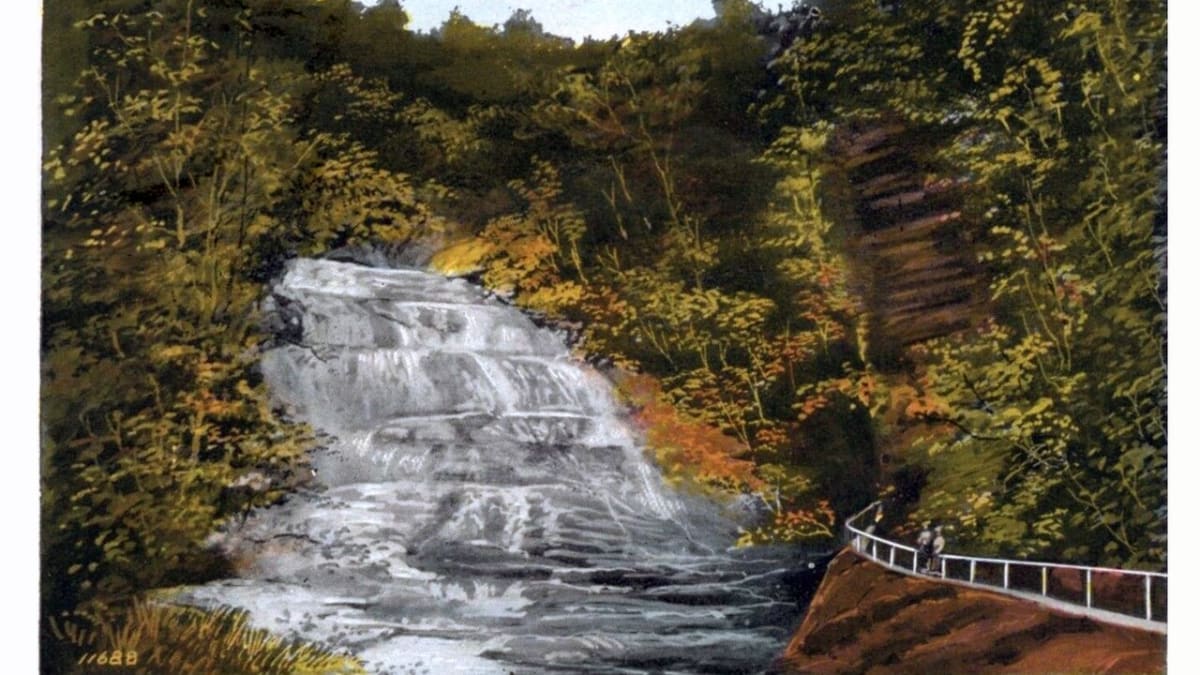
Buttermilk Falls State Park packs an astonishing amount of scenery into a small space at the southern edge of Ithaca. As Buttermilk Creek drops roughly six hundred feet toward Cayuga Lake it stages a chain of ten waterfalls through a narrow gorge, and the grand finale sits right at the entrance: a tall, wide cascade spilling into a natural pool that the park turns into one of the most scenic swimming holes in the Northeast.
That combination, a real gorge hike and a swim at the bottom of a waterfall, is what sets the park apart. You can climb the Gorge Trail on stone stairways past cascade after cascade, then cool off in the pool at the base, all within minutes of downtown Ithaca. It is a Finger Lakes classic, and one of the best of the many gorges that make Ithaca famous.
What Travelers Love
- A natural swimming hole right at the base of the main falls, deepened by a seasonal dam
- The Gorge Trail climbing past ten waterfalls on stone steps built in the 1930s
- The tall main cascade, a wide sheet of white water at the mouth of the gorge
- The quieter upper park with a small lake, woodland trails, and a wetland nature walk
Worth Knowing
- The Gorge Trail is steep and can be wet and slippery, and it typically closes in the cold months, so check ahead in the off-season
- Swimming at the base is seasonal and staffed by lifeguards only during set hours, so go when the pool is open and supervised
- The lower park by the falls and the upper park by the lake have separate entrances, so pick the one that matches your plan
- It is only minutes from downtown Ithaca, so parking can fill on hot summer weekends; arrive early
Learn about Buttermilk Falls State Park
Ten falls in one gorge
The main falls at the park entrance is the showpiece, a broad sheet of water that gives the park its name from the churning, buttermilk-white foam at its foot. But it is only the beginning. Follow the creek upstream and the Gorge Trail climbs alongside a whole staircase of cascades, ten in all, cut into the shale and sandstone as the water works its way down toward Cayuga Lake.
The trail itself is part of the story. Its stone steps and walls were built in the 1930s by the Civilian Conservation Corps, the Depression-era work program that shaped so many American parks, and they let hikers climb roughly six hundred feet through the gorge past pools, chutes, and rock formations. Paired with the Rim Trail up top, the route makes a loop of about a mile and a half through some of the most dramatic scenery in the Finger Lakes.
A swim at the bottom of a waterfall
What most visitors remember is the swimming. At the base of the main falls the park maintains a natural pool, and in the warm season it drops a removable dam that raises the water several feet, creating a deep, clear basin directly beneath the tumbling cascade. Swimming under a waterfall in a rock gorge is a genuinely rare experience, and it draws families and students all summer long.
The pool is seasonal and supervised by lifeguards only during set hours, so it pays to time a visit for when it is open and staffed. Even when the water is closed, the sight of the falls plunging into the basin is worth the short walk from the parking area, and the lower park's lawns and picnic spots make an easy place to spend an afternoon.
The quiet upper park
Above the gorge lies a second, gentler half of the park that many day-trippers miss. Here Buttermilk Creek widens into small Lake Treman, ringed by woodland and rim trails, playing fields, and picnic areas, a calmer counterpoint to the dramatic gorge below. The Bear Trail follows the creek up to Lake Treman Falls and the lake itself.
Beyond the lower park stretches Larch Meadows, a wetland threaded by a nature trail, where the noise of the falls gives way to marsh birds and quiet water. Between the roaring gorge, the swimming hole, the woodland lake, and the meadow, Buttermilk Falls offers far more than the single waterfall its name suggests.
Visiting Buttermilk Falls State Park
The park entered the New York state system in 1924, seeded by a gift of land from Robert and Laura Treman, whose name is attached to nearby parks as well. It sits just south of downtown Ithaca, so close that it makes an easy stop on any Finger Lakes trip, with separate entrances for the lower park at the falls and the upper park at the lake.
The Gorge Trail is steep and can be slick when wet, and it usually closes for the colder months, so check conditions before an off-season visit. On hot summer weekends the lots fill early, so come in the morning if you want to swim, and pair the park with Ithaca's other famous gorges for a full day of Finger Lakes waterfalls.
Closest Boutels
The closest Boutel™ stays, so you can turn this stop into an overnight. Each is a place we chose through independent editorial review, never a paid placement.
Details
Ithaca, NY
Frequently asked questions
What is Buttermilk Falls State Park known for?
Just outside Ithaca in the Finger Lakes, this park is famous for a stream that tumbles down a long series of cascades and waterfalls through a rocky gorge, with the tall, frothy main falls, said to resemble churning buttermilk, giving the park its name. A natural swimming hole sits at the base of the main falls, and trails climb alongside the cascades, making it a beloved spot for both a cool swim and a scenic waterfall hike.
Can you swim at Buttermilk Falls?
Yes, one of the park's biggest draws is the natural swimming area in the pool at the base of the main falls, a classic Ithaca summer experience. Swimming is allowed only in the designated area and typically only when lifeguards are on duty during the warm season, so go when it is open and staffed, obey posted rules, keep children close, and never swim above the falls or climb on the wet, slippery rocks.
What are the hiking trails like at Buttermilk Falls?
The Gorge Trail climbs steeply beside the cascades on stone steps for close-up waterfall views, and the Rim Trail offers a return route with overlooks, together making a rewarding loop. The upper part of the park holds quieter woods, a small lake, and wetland trails. The gorge steps get slick with spray, so wear good shoes, watch your footing, and hold railings, especially with kids along.
When is the best time to visit Buttermilk Falls State Park?
Late spring through early fall is ideal, with summer best for swimming and the falls flowing well after spring rains and snowmelt. The gorge trails are seasonal and typically close in winter due to ice, so check current status in the colder months. Weekends and hot summer days draw crowds to the swimming hole, so arrive early for parking and a calmer visit.
What other gorges and falls are near Buttermilk Falls?
Ithaca is famously 'gorges,' and Buttermilk is one of a cluster of spectacular waterfall parks. Nearby Robert H. Treman State Park has its own dramatic gorge and swimming hole, and Taughannock Falls, one of the tallest single-drop waterfalls in the Northeast, is a short drive away. Together they make an easy multi-stop waterfall tour around Ithaca and the southern Finger Lakes.
Outside the Park
Robert H. Treman State Park
2.4 miles away
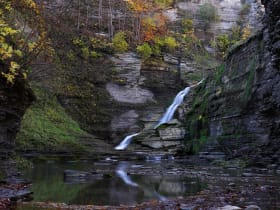
A mile-long gorge of about a dozen waterfalls just south of Ithaca, led by 115-foot Lucifer Falls, which you can view from both the canyon floor and the rim above.
Sciencenter
3.1 miles away
Ithaca made its science museum part of the city itself. Inside the Sciencenter, kids work more than 250 hands-on exhibits, from a water table to a walk-in camera, plus an outdoor science playground in...

Cayuga Lake
3.9 miles away
The longest of New York's Finger Lakes, a glacier-carved ribbon of water nearly forty miles long stretching north from Ithaca, deep, cold, and ringed by gorges and waterfalls.
Taughannock Falls State Park
10 miles away
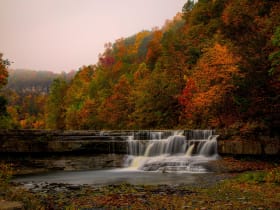
At 215 feet, Taughannock drops farther in one plunge than Niagara, and it does it into a quiet stone bowl rather than a tourist crush.

Watkins Glen State Park
18 miles away
This is the gorge that defines the region. Glen Creek carved a slot canyon into layered shale and sandstone at the south end of Seneca Lake, and the Gorge Trail runs right through it, up stone stairs...