

Tumacacori National Historical Park
1891 I-19 Frontage Rd, Tumacacori, AZ
Tumacacori, AZ
The weathered adobe shell of a mission church rising from a desert grove, its bell tower unfinished and its story reaching back to the first missionary in this valley.
Tumacacori National Historical Park preserves the ruins of a Spanish colonial mission in the Santa Cruz River valley, a soft-edged adobe church whose weathered walls and unfinished bell tower have become one of the most photographed images in southern Arizona. The mission traces its origins to 1691, when the Jesuit missionary Father Eusebio Kino first visited the O'odham village here, making it one of the oldest mission sites in what is now the United States.
The great church you see today was built later, begun around 1800 under Franciscan direction and never fully completed, its bell tower left unfinished when the mission was finally abandoned in 1848. Rather than restore it to a polished state, the National Park Service has stabilized the ruin and left it much as time made it, so visitors walk through a dim, cool nave of bare adobe and faded paint that speaks of both the ambition and the hardship of this frontier.
What Travelers Love
- The soft, weathered beauty of the adobe church, its plaster worn to bare earth in places
- The cool, dim interior and the unfinished bell tower left just as it was
- The mission garden and orchard of quince, pomegranate, and heritage crops
- The shaded Anza trail along the Santa Cruz River linking the mission to Tubac
Worth Knowing
- The church is a preserved ruin, not a working parish, so treat it as the quiet historic place it is
- Summer afternoons are hot; mornings and the cooler months are far more comfortable
- The two other mission sites in the park, Guevavi and Calabazas, are more fragile and open only on limited guided visits
- Pair a visit with Tubac village and the Santa Cruz riverside trail for a fuller day
Learn about Tumacacori National Historical Park
A mission in the O'odham valley
This valley was the homeland of the O'odham people, whose village of Tumacacori stood here when Father Kino rode through in 1691. Kino, a Jesuit, established a chain of missions across the Sonoran Desert borderlands, and Tumacacori was among the first. The missions brought Christianity, European crops, and livestock, but also disease and profound disruption to O'odham life, and the descendants of these communities remain part of the region today, including the Tohono O'odham Nation.
The Jesuits were expelled from Spanish territory in 1767, and the Franciscans took over the missions. It was under the Franciscans, around 1800, that construction began on the large church whose ruins now define the site. The mission endured Apache raids, the shifting of borders, and the withdrawal of Mexican support, and by 1848 it was abandoned, the villagers carrying the mission's statues north to San Xavier near Tucson. The church slowly weathered into the evocative ruin it is now, protected as a national monument in 1908.
The church and its unfinished tower
The church is a study in worn grandeur. Built of adobe brick and lime plaster, it has lost much of its outer skin, so bare earthen walls show through the surviving painted plaster, and the dome over the sanctuary rises against the desert sky. Inside, the nave is dim and cool, with traces of original color on the walls and the quiet dignity of a space that was once the center of a whole community's life.
The bell tower on the front was never finished. Work stopped as money and support ran out, and the tower stands today with its top left incomplete, a frozen record of the mission's decline. This deliberate preservation of the ruin, rather than a full reconstruction, is what gives Tumacacori its particular power. You are not looking at a restored monument but at the genuine, weathered fabric of a frontier mission, held in place against further decay but otherwise left to speak for itself.
The garden, the orchard, and the crafts
Behind the church the park keeps a mission garden and orchard planted with the kinds of crops the missions introduced and grew: quince, pomegranate, figs, and heritage grains, along with native plants the O'odham cultivated. It is a living illustration of how these communities fed themselves, blending indigenous and Spanish agriculture in the desert. The grounds are shaded by old mesquite and cottonwood, cool and green even in the heat.
The visitor center, itself a handsome adobe building, tells the fuller story of the three missions the park protects, Tumacacori and the more fragile sites at Guevavi and Calabazas nearby. On some days craftspeople demonstrate the traditional skills of the mission era, from tortilla making to weaving, and the museum holds artifacts and models that bring the vanished community back to life.
The river, the birds, and the seasons
The Santa Cruz River runs near the mission, sustaining a corridor of cottonwoods and mesquite that is a haven for wildlife in the surrounding desert. The Anza National Historic Trail follows the river between Tumacacori and Tubac, a shaded walk that is a favorite of birders. Vermilion flycatchers, gray hawks, and a wealth of migrating songbirds fill the trees, and deer and javelina move through the brush along the water.
The best months run from fall through spring, when the valley is mild and the light on the adobe walls is golden and low. Summer brings the monsoon storms that green the desert and swell the river, though the afternoons turn hot. In any season the mission has a stillness to it, a sense of long time passing, that makes it feel less like a monument to visit than a place to sit quietly and take in.
Closest Boutels
The closest Boutel™ stays, so you can turn this stop into an overnight. Each is a place we chose through independent editorial review, never a paid placement.
Details
Tumacacori, AZ
Frequently asked questions
What is Tumacacori National Historical Park?
Tumacacori National Historical Park, in the Santa Cruz River valley south of Tucson, Arizona, preserves the beautiful, weathered ruins of an early Spanish colonial mission church and the story of the Native O'odham and Spanish peoples who shaped the region. The graceful, partially restored mission of San Jose de Tumacacori, with its adobe church, courtyard, and grounds, evokes the area's deep and layered history of Native inhabitants, Spanish missionaries, and cultural exchange. Peaceful and evocative, it offers a moving glimpse into the borderlands' colonial and Native past.
What can you see at Tumacacori National Historical Park?
You can explore the atmospheric adobe mission church with its faded interior, walk the peaceful grounds, courtyard garden, and cemetery, visit a museum with exhibits on the mission's history and the Native and Spanish cultures that met here, and at times see demonstrations of traditional crafts and foods. A river trail connects to the nearby town of Tubac. Interpretive signs tell the story of the O'odham people, the missionaries, and the hardships of frontier life, making for a reflective and educational visit.
What is the history of Tumacacori?
The mission traces its roots to the late seventeenth century, when a Jesuit missionary first visited the O'odham community here, and over the following decades Spanish missionaries established and built up the mission, with the striking church constructed later under Franciscan direction. The community endured hardship, conflict, and eventually abandonment before the ruins were preserved as a national monument. The site reflects the complex, often difficult history of Native peoples and Spanish colonization in the borderlands, offering an honest look at that layered and consequential past.
When is the best time to visit Tumacacori National Historical Park?
The cooler months from fall through spring are most comfortable for exploring the grounds and church, since much of a visit is outdoors, while summer in this southern desert valley is hot, so morning visits are best then. Checking the schedule for special cultural events, craft demonstrations, or the annual fiesta can enrich a visit. Mornings offer softer light and cooler air for the grounds. The milder months provide the most pleasant experience of this peaceful and historic mission site.
What is near Tumacacori National Historical Park?
The park is near the charming artist colony of Tubac with its galleries and the Tubac Presidio, the wine country and border town of Nogales to the south, and the attractions of Tucson to the north, including Saguaro National Park and the Titan Missile Museum. That makes Tumacacori an easy and enriching stop to combine with Tubac's art and history, the region's wineries, and the natural and cultural attractions of the Tucson area and the Santa Cruz valley in southern Arizona.
Nearby
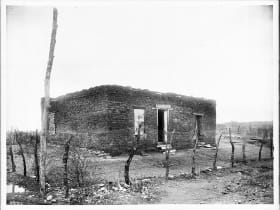
Tubac Presidio State Historic Park
8.4 miles away
Tubac was founded as a Spanish presidio in 1752, making it the oldest permanent European settlement in Arizona. The state park has partially excavated the original 1752 adobe foundations.
Titan Missile Museum
23 miles away
Titan Missile Museum is the only preserved Titan II ICBM launch facility open to the public in the United States. Guided tours descend into the concrete launch control room and silo.

Sky Islands
40 miles away
The term "sky islands" describes the 27 mountain ranges of southeastern Arizona that rise above 8,000 feet from a matrix of desert grassland at 4,000 feet.

Gates Pass
45 miles away
Gates Pass cuts through the Tucson Mountains on Gates Pass Road west of Tucson on the approach to Saguaro National Park West and the Arizona-Sonora Desert Museum.

Saguaro National Park
46 miles away
Forests of the giant saguaro cactus, symbol of the American West, on both sides of Tucson.