
Saguaro National Park
Rincon Mountain Visitor Center, Tucson, AZ
Tucson
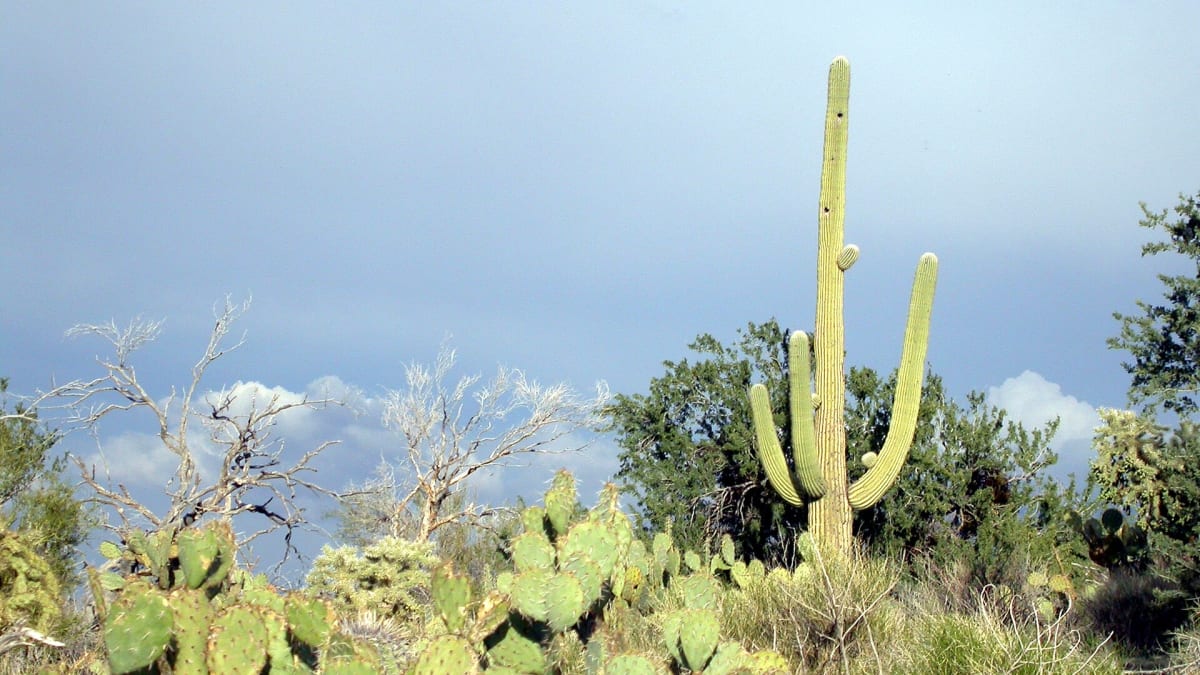
There is one plant that means the American West more than almost any other, and this is the place to meet it up close. The giant saguaro is the tall, ribbed, many-armed cactus you have seen in a hundred cowboy movies, and here it grows by the thousands, standing shoulder to shoulder across the desert hills around Tucson. Some tower more than forty feet over your head. Others are little green thumbs poking up from the gravel, saguaros so young they will not sprout a single arm for another fifty years. Walk among them at sunset, when the whole forest glows orange and the arms throw long shadows, and it is hard to imagine a more perfect picture of the Sonoran Desert.
Saguaro is a national park, and one with a split personality. It comes in two separate pieces, one on the west side of Tucson and one on the east, with the city sitting in the gap between them. The land was first protected as a national monument in 1933, and Congress made it a full national park in 1994. Between the two districts you get dense cactus forests, quiet desert trails, ancient rock carvings, and mountains that climb from cactus country into cool pine forest, all within a short drive of a friendly city.
Learn about Saguaro National Park
The Park
Saguaro National Park protects the northern edge of the Sonoran Desert, one of the few deserts on Earth green enough and wet enough to grow a forest of giant cactus. The star of the show is the saguaro itself, a slow, patient giant that can live 150 to 200 years and grow past forty feet tall. A saguaro spends its first decades as a small green spike and usually does not grow its first arm until it is somewhere between fifty and seventy-five years old, so a big many-armed cactus is often older than the country around it. In late spring the tips crown with creamy white flowers, the state flower of Arizona, which open at night and feed bats, birds, and bees before the summer heat arrives.
The park comes in two districts on either side of Tucson, and they have different characters. The West, the Tucson Mountain District, holds some of the densest saguaro forests anywhere on Earth, thousands of the giant cacti reaching fifty feet tall and crowding the sloping desert flats, called bajadas, below the Tucson Mountains. At sunset the saguaros glow orange and the Sonoran Desert reveals its full improbable beauty. The East, the Rincon Mountain District, is the wilder and larger of the two. It climbs from the desert floor all the way up to 8,666-foot Mica Mountain, passing through five different ecological zones on the way, and the Cactus Forest Loop Drive there is one of the most dramatic paved desert drives in the Sonoran Desert.
Below the cactus, the desert is busier than it looks. Gila woodpeckers hammer nest holes into the tall saguaros, and once they move out, elf owls, purple martins, and other tenants move in, so a single cactus can be an apartment building for the desert. Javelina, which are furry pig-like animals that travel in family groups, root through the brush at dusk. Roadrunners dash across the trails, and in the cooler hours you may spot a bobcat or the tracks of a coyote. Wildflowers splash the ground gold and purple after a wet winter, and the whole scene shifts hour by hour as the light moves across the mountains.
How to Enter
- Rincon Mountain District East Entrance, off Old Spanish Trail on the east side of Tucson, is open year-round and leads to the Rincon Mountain Visitor Center and the paved Cactus Forest Loop Drive.
- Tucson Mountain District West Entrance, off Kinney Road on the west side of Tucson, is open year-round and reaches the Red Hills Visitor Center, the Bajada Loop Drive, and the densest cactus forests in the park.
- Both districts sit right on the edge of Tucson, which is easy to reach by way of Interstate 10. From downtown Tucson the east district is a short drive out Speedway or Broadway to Old Spanish Trail, and the west district is reached through Gates Pass or by way of Ina and Kinney roads. Phoenix is about two hours to the northwest along Interstate 10.
Park Areas
- West, Tucson Mountain District: The Tucson Mountain District has some of the densest saguaro forests on Earth, thousands of the giant cacti reaching fifty feet tall crowd the bajada slopes of the Tucson Mountains. At sunset the saguaros glow orange and the Sonoran Desert reveals its full improbable beauty.
- East, Rincon Mountain District: The Rincon Mountain District is the wilder, larger section of Saguaro National Park, climbing from desert floor to 8,666-foot Mica Mountain through five distinct ecological zones. The Cactus Forest Loop Drive is one of the most dramatic paved desert drives in the Sonoran Desert.
Things to Do
- The Valley View Overlook trail in the west district is a 0.8-mile walk to sweeping views across the bajada, best at sunrise when the saguaros cast long shadows over the desert.
- The Signal Hill Trail is a short 0.5-mile loop in the west district that climbs to a hilltop covered in petroglyphs, rock carvings left by the Hohokam people roughly between 900 and 1200 CE.
- The Arizona-Sonora Desert Museum, just outside the west district, is a living desert zoo and botanical garden with hundreds of animal species, more than a thousand kinds of plants, and a walk-through aviary.
- Picture Rocks Road is a six-mile scenic drive that runs through stands of saguaro between the park and the Tucson foothills.
- The Cactus Forest Loop Drive in the east district is an eight-mile one-way paved loop through the saguaro forest, with trailheads along the way for short nature walks.
- The Freeman Homestead Trail in the east district is a one-mile loop that passes the site of an old pioneer homestead set right in the heart of the cactus forest.
- The Tanque Verde Ridge Trail is a longer 7.5-mile round trip that climbs to a ridgeline with wide panoramic views over the valley.
- The Douglas Spring Trail is a six-mile round trip into the foothills of the east district, passing seasonal waterfalls and open saguaro woodland after a wet season.
History
People have lived alongside these cactus forests for thousands of years, and the saguaro has been central to that life. To the Tohono O'odham, whose homeland spreads across this part of the Sonoran Desert, the giant saguaro is far more than a plant. In their tradition the saguaros are respected as living relatives, and the tall cacti are treated with the same care given to people. Each early summer, families gather the sweet red fruit from the top of the saguaro using long poles made from the cactus ribs, and that harvest marks the beginning of the traditional O'odham new year. The petroglyphs pecked into the rocks at Signal Hill are older still, left by the Hohokam people who farmed and lived in these valleys roughly a thousand years ago.
Newcomers arrived slowly. Ranchers and homesteaders settled the desert around Tucson in the 1800s, running cattle and cutting wood, and the University of Arizona took a scientific interest in the strange and beautiful cactus forest at its doorstep. As Tucson grew, people worried that the great saguaro stands might be lost, and in 1933 President Herbert Hoover set aside the eastern district as Saguaro National Monument to protect them.
In the years that followed, the Civilian Conservation Corps, a Depression-era work program, built roads, trails, and buildings in the young monument, some of which are still in use today. The western district near the Tucson Mountains was added in 1961 to protect its even denser cactus forest. For decades the place remained a national monument, quietly beloved by the people of Tucson, until Congress recognized its full importance and redesignated it as Saguaro National Park in 1994.
Scientists have watched these cactus forests closely for more than a century, and their long records make Saguaro one of the best-studied deserts in the world. Researchers have learned that saguaros need a lucky combination of shade, gentle rain, and mild winters to survive their first fragile years, which is why the park works to protect not just the towering old giants but the tiny young cacti coming up beneath them.
Little-Known Facts
- A giant saguaro can live 150 to 200 years and grow more than forty feet tall, weighing several tons when its ribbed trunk is swollen with water after a good rain.
- Saguaros grow very slowly. A young one may take a decade to reach an inch or two, and it usually does not sprout its first arm until it is somewhere between fifty and seventy-five years old.
- The creamy white saguaro blossom is the state flower of Arizona. The flowers open at night and close by the following afternoon, and long-nosed bats help pollinate them under the stars.
- Gila woodpeckers carve nest holes into the tall cacti, and the saguaro heals the wound with a hard woody shell. When the birds move out, elf owls and other creatures move in, so one cactus can house many tenants over its long life.
- The petroglyphs at Signal Hill in the west district were carved by the Hohokam people roughly a thousand years ago, and no one is entirely certain what all of the spirals and figures mean.
- The park comes in two separate pieces on opposite sides of Tucson, so you can stand in dense cactus forest in the morning on the west side and hike toward cool pine forest on the east side the same day.
- The east district climbs so high, up to 8,666-foot Mica Mountain, that it passes through five different life zones, from hot desert at the bottom to shady evergreen forest near the top.
- Saguaros store enormous amounts of water in their pleated, accordion-like trunks, which swell out after rain and shrink back during the long dry stretches of the year.
Plan Your Visit
- An entrance fee applies (per vehicle, good for seven days), and interagency annual passes are accepted. Check the park website for current rates.
- The Bajada Loop Drive in the west district is a six-mile unpaved loop through the heart of the saguaro forest, and a higher-clearance vehicle is recommended for the gravel.
- The Cactus Forest Loop Drive in the east district is an eight-mile one-way paved loop through the saguaro forest, and it is open to bicycles as well as cars.
- The Arizona-Sonora Desert Museum sits just a couple of miles from the west district and is a world-class desert zoo and botanical garden. Plan a full half-day if you want to see it well.
- Both districts have a visitor center. The Rincon Mountain Visitor Center is near the east entrance off Old Spanish Trail, and the Red Hills Visitor Center serves the west district near the Kinney Road entrance.
- Tucson wraps around the park and offers full services, food, fuel, and lodging, and it is only about fifteen or sixteen miles from either district, so it makes an easy base for visiting both sides.
Outside the Park
Sabino Canyon Recreation Area
Tucked into the Santa Catalina Mountains northeast of Tucson, Sabino Canyon is closed to cars beyond the tram stage, which makes it a rare quiet desert canyon so close to a city. A narrated tram runs through saguaro and cottonwood to pools along the creek, and javelina, coatis, and Gila woodpeckers are common along the way.
Colossal Cave Mountain Park
Southeast of Tucson in the Rincon Mountains, Colossal Cave is a large dry limestone cavern that has drawn visitors since the 1920s. Guided tours wind about forty-five minutes through chambers big enough to walk upright in, past stalactites, flowstone, and cave popcorn. The cave holds a steady 72 degrees all year, a welcome escape on a hot Tucson afternoon.
Hotel Congress and Club Congress
This 1919 landmark in downtown Tucson has been running continuously ever since, and it is where the outlaw John Dillinger was arrested in 1934 after a hotel fire gave him away. The lobby and bar welcome visitors, and Club Congress downstairs is one of the best live music venues in town.
Fourth Avenue
Fourth Avenue is Tucson's free-spirited main street, a dozen blocks of vintage clothing, used bookshops, tattoo parlors, and bars that have been around since the 1950s. The Saturday farmers market in the cooler months is one of the best in the Southwest and an easy, colorful stop between park districts.
Tohono Chul
Tohono Chul, whose name means desert corner in the O'odham language, is a 49-acre botanical garden on the northwest side of Tucson devoted to the plants used by the Tohono O'odham, Yaqui, and other Indigenous peoples. Its tearoom serves a well-loved brunch under a shady ramada with desert views.
Mount Lemmon
The Catalina Highway climbs from the desert floor near Tucson all the way to the 9,157-foot summit of Mount Lemmon, crossing five life zones and cooling off by twenty or thirty degrees along the way. The little village of Summerhaven at the top has a bakery and cabin rentals, a green pine-scented world above the cactus.
Details
Tucson
Frequently asked questions
Is there an entrance fee?
Yes. Saguaro charges a per-vehicle entrance fee that is good for seven days and covers both districts, and interagency annual passes are accepted. Check the National Park Service website for the current rate before you go.
Why is the park in two separate pieces?
Saguaro National Park comes in two districts with the city of Tucson between them. The eastern piece, the Rincon Mountain District, was protected first, in 1933, and the western piece, the Tucson Mountain District, was added later to protect its especially dense cactus forest. You drive through Tucson to get from one to the other, and each side has its own entrance and visitor center.
When is the park open?
Both districts are open year-round, and their entrance roads and visitor centers are open every day. The park does not close for winter the way high-mountain parks do, though individual trails or the unpaved Bajada Loop Drive can close after storms or flooding. Timed entry or reservations are not usually required, but always check the park website before you go in case anything has changed.
What is the best time of year to visit?
Late fall, winter, and early spring are the most comfortable, with mild days that are perfect for hiking. Spring is a highlight because the wildflowers bloom and the saguaros crown with their white flowers, usually in May and June. Summer brings extreme heat, so if you come then, plan to be out only in the early morning.
Which district should I visit if I only have time for one?
Both are wonderful, but they differ. The West, Tucson Mountain District, has the densest, most postcard-perfect saguaro forests and sits next to the Arizona-Sonora Desert Museum, which makes it great for a first visit. The East, Rincon Mountain District, is larger and wilder, with the paved Cactus Forest Loop Drive and trails that climb toward the mountains. If you can, try to see both.
How much time do you need at Saguaro?
You can drive a scenic loop, stop at a few overlooks, and take a short walk in one district in about a half day. To see both districts, or to pair the west side with the Desert Museum next door, give it a full day. Longer hikes into the Rincon foothills can easily fill another day.
How hot does it get, and how do I stay safe in the heat?
Summer temperatures here regularly climb above 100 degrees, and the desert sun is intense. If you visit in the warm months, hike in the early morning, turn back well before midday, wear a hat and sunscreen, and rest in the shade. Carry far more water than you think you need and drink it steadily, since the dry air pulls moisture from you faster than you notice. When in doubt, save the longer trails for cooler months.
Is there water available on the trails?
Do not count on it. Any springs or seasonal waterfalls in the park can be dry for much of the year, and the water they hold is not treated for drinking. Bring all the water you plan to drink, and bring extra. Running short on water in this desert is a real risk, so plan your hike around the water you can carry.
Can you touch or take the cactus?
Please look but do not touch. Saguaro spines are sharp and can carry a nasty poke, and many other Sonoran plants have hidden barbs. It is also against the law to cut, carve, dig up, or take any cactus or plant in the park, even a fallen one. The saguaros are protected, and some are older than a century, so give them room and enjoy them with your eyes and your camera.
Are pets allowed in the park?
Pets are welcome in parking areas, along paved and unpaved roads, and in picnic areas, but they are not allowed on the hiking trails or in the backcountry. Keep them leashed, never leave a pet in a vehicle in the desert heat, and bring plenty of water for them too. Check the park website for the current pet rules.
Is there lodging or camping inside the park?
There is no hotel, lodge, or drive-up campground inside either district, so most visitors stay in Tucson, which surrounds the park and offers a full range of places to stay just fifteen or sixteen miles from either entrance. The east district does have a few backcountry campsites reached only on foot by permit, for experienced hikers heading up into the Rincon Mountains.