
Titan Missile Museum
1580 W Duval Mine Rd
Green Valley, AZ
The last standing Titan II silo, an underground fortress that once held a city-destroying weapon on a moment's notice, frozen exactly as it stood.
The Titan Missile Museum is one of the most extraordinary Cold War sites in the country, the only one of its kind preserved and open to the public. Hidden beneath the desert south of Tucson is a complete Titan II intercontinental ballistic missile complex, kept just as it stood when it was on alert, from the towering missile in its silo to the underground control room where crews stood ready around the clock to launch it. Everywhere else, these sites were dismantled and destroyed under arms-control treaties, but this one was saved as a museum.
Walking through it is a sobering experience. This was a weapon of almost unimaginable destructive power, aimed and ready during the tense decades when the United States and the Soviet Union held the world under the threat of nuclear war. To descend the stairs, pass through the massive blast doors, and stand in the launch control room is to come face to face with that history in a way no book or film can match. It is history you can reach out and touch.
What Travelers Love
- Descending into a real underground launch complex, preserved as it was during the Cold War
- Standing beside an actual Titan II missile in its silo, viewed through a glass window
- The gripping guided tour through the blast doors and control room, run partly by veterans
- The sobering, unforgettable sense of what the Cold War meant, told in one intact place
Worth Knowing
- The underground tour involves stairs down into the silo, so ask about access if stairs are difficult for you
- It stays cool underground year-round, so bring a light layer even on a hot desert day
- Popular tours can fill up, so it is wise to plan ahead, especially in the busy winter season
- Photography is generally welcome, but follow your guide's instructions inside the complex
Learn about Titan Missile Museum
A weapon on constant alert
During the Cold War, the United States built a fleet of Titan II missiles, the largest missiles the country ever deployed, each capable of carrying a single warhead over great distances to strike targets thousands of miles away. Rings of these silos were buried in the desert around a few American cities, including Tucson, hidden underground and hardened to survive a first strike so they could launch in return. This site was one of them.
For years, crews worked in shifts deep underground, living for days at a time in the sealed complex, always ready to carry out a launch order if it ever came. The whole system was built around procedures meant to ensure that no single person could act alone and that a launch would happen only on a valid order. The tension of that mission, standing constant guard over a weapon everyone hoped would never be used, hangs over the whole place.
Inside the silo
The heart of the tour is the descent underground into the launch complex itself. Visitors pass through the immense blast doors, each many tons of steel and concrete designed to seal the crew off from a nuclear blast, and into the control center, where the original equipment, consoles, and switches remain. Guides walk visitors through a simulated launch sequence, a demonstration that is both fascinating and chilling.
Through a heavy glass window, and from a viewing platform above, visitors can see the actual Titan II missile still standing in its silo. Rendered permanently harmless as part of the museum's preservation, it remains an awesome sight, a slender giant rising through the concrete shaft toward the surface. The whole complex was engineered to survive and function through catastrophe, and seeing it intact makes the scale and seriousness of the Cold War suddenly, viscerally real.
From weapon to museum
The Titan II missiles were retired in the 1980s as arms-control agreements between the superpowers took effect, and nearly all of the silos were destroyed, their structures demolished and buried so that satellites could confirm the weapons were gone. This one site was spared through a special arrangement, preserved as a museum so that future generations could understand this chapter of history firsthand.
Today the museum is run as a place of education and reflection, its tours often led by knowledgeable volunteers, some of them veterans who once served in the missile program. Rather than glorifying the weapon, the museum aims to help visitors grasp the reality of the Cold War, the doctrine of deterrence, and the terrible stakes of the nuclear age. It stands as both an artifact and a warning, a piece of history preserved so it need never be repeated.
Season by season
Because the main attraction is underground, the Titan Missile Museum is a comfortable visit in any season, staying cool below ground even when the desert above is blazing. That makes it an especially welcome stop in the heat of summer, when a shaded, cool tour is a relief.
Winter and spring are the busiest times, when mild desert weather draws travelers to southern Arizona and tours can fill quickly, so planning ahead pays off. The surrounding grassland and the Santa Rita Mountains are lovely in spring, and the low-desert light through the cooler months makes the drive out from Tucson a pleasant one in its own right.
Closest Boutels
The closest Boutel™ stays, so you can turn this stop into an overnight. Each is a place we chose through independent editorial review, never a paid placement.
Details
Green Valley, AZ
Frequently asked questions
What is the Titan Missile Museum?
The Titan Missile Museum, in Sahuarita south of Tucson, Arizona, preserves the only remaining Titan II intercontinental ballistic missile site open to the public, offering a chilling and fascinating look at Cold War history. Once part of America's nuclear deterrent, this underground silo still holds a Titan II missile, and guided tours take visitors deep into the launch control center and the silo itself. A National Historic Landmark, it provides a sobering, powerful window into the era of nuclear standoff and the people who staffed these facilities.
What can you see at the Titan Missile Museum?
You can descend into the preserved underground missile complex on a guided tour, seeing the launch control center where crews stood ready, the long cableways, and the silo containing an actual deactivated Titan II missile viewed up close. Tours include a simulated launch sequence and explanations of how the system worked and the tense realities of Cold War deterrence. Above ground, exhibits and artifacts add context. The combination of authentic hardware and firsthand history makes for a gripping, unforgettable experience of a pivotal era.
Do you need a tour or reservations for the Titan Missile Museum?
The underground portions of the museum are seen only by guided tour, and because these are popular and space is limited, especially for the longer and more in-depth tours, it is wise to check availability and reserve in advance rather than relying on walking in. Standard tours descend into the complex, while specialty tours offer deeper access. Note the underground tour involves stairs. Checking current tour options, times, and any reservation requirements before you go ensures you get the experience you want.
When is the best time to visit the Titan Missile Museum?
Because much of the experience is underground and indoors, the museum is comfortable year-round and makes a great option even during Tucson's hot summers. Weekdays and earlier tours tend to be less crowded, and reserving popular or specialty tours ahead is wise in any season. A visit takes a couple of hours including the tour. Checking current hours and tour schedules before you go helps you plan, and the climate-controlled underground makes it an appealing stop regardless of the outside weather.
What is near the Titan Missile Museum?
The museum is in Sahuarita, south of Tucson, within reach of the historic mission at Tumacacori, the artist colony of Tubac, and the attractions of Tucson including Saguaro National Park and the Arizona-Sonora Desert Museum, with the border towns and wine country of Santa Cruz County to the south. That makes the Titan Missile Museum a compelling and unusual stop to combine with the missions, history, and natural attractions of the Tucson area and southern Arizona.
Nearby
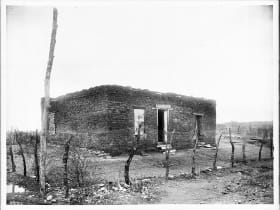
Tubac Presidio State Historic Park
15 miles away
Tubac was founded as a Spanish presidio in 1752, making it the oldest permanent European settlement in Arizona. The state park has partially excavated the original 1752 adobe foundations.
Hotel Congress and Club Congress
22 miles away
Hotel Congress (1919) was the site of John Dillinger's 1934 arrest.
Colossal Cave Mountain Park
23 miles away
Colossal Cave is a large dry limestone cavern in the Rincon Mountains southeast of Tucson and has been a tourist destination since the 1920s.

Gates Pass
23 miles away
Gates Pass cuts through the Tucson Mountains on Gates Pass Road west of Tucson on the approach to Saguaro National Park West and the Arizona-Sonora Desert Museum.

Saguaro National Park
25 miles away
Forests of the giant saguaro cactus, symbol of the American West, on both sides of Tucson.