
Tryon Creek State Natural Area
11321 SW Terwilliger Blvd
Portland, OR
A deep, mossy creek canyon of second-growth forest tucked inside the city, the only Oregon state park within a major metropolitan area, and in spring it fills with a carpet of white trillium.
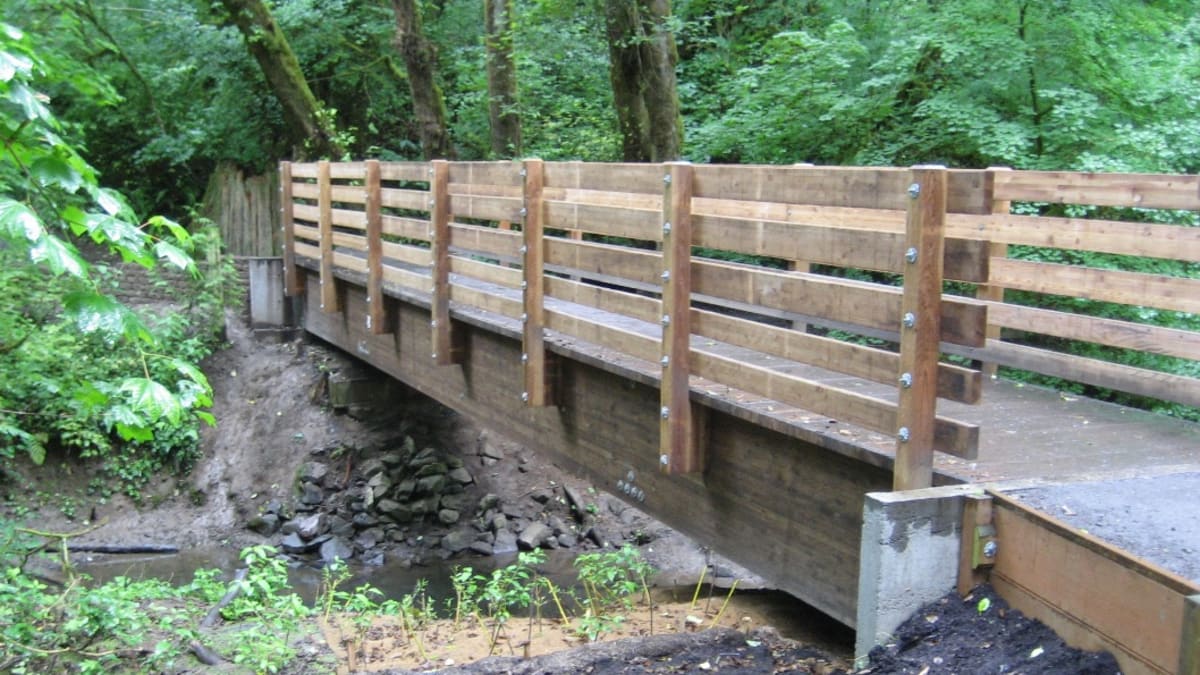
Tryon Creek State Natural Area is a forested stream ravine folded into the edge of Portland, and it holds a distinction no other Oregon state park can claim: it is the only one inside a major metropolitan area. Tryon Creek runs down through the canyon under a canopy of Douglas fir, western red cedar, and bigleaf maple, crossed by footbridges and threaded with miles of trail. Step a few minutes down from the trailhead and the city noise fades into birdsong and the sound of moving water.
What most visitors never guess is that this green, old-feeling forest is entirely a comeback. The canyon was logged hard in the 1800s to feed a nearby iron industry, then burned and cut again, so the trees you walk among today are second growth. That the ravine survived at all is the work of ordinary neighbors who organized in the late 1960s to buy it and hand it to the state, one of the first grassroots park campaigns Oregon had ever seen.
What Travelers Love
- A wild, mossy creek ravine that feels remote even though the city is all around it
- The spring trillium bloom, when the forest floor fills with white flowers
- Miles of soft forest trails, plus a short paved loop that is fully accessible
- The Nature Center and ranger-led walks at the Terwilliger entrance
Worth Knowing
- This is a rainy Pacific Northwest forest, so trails stay soft and muddy much of the year and good footwear helps
- The park is day-use only, open from morning to sunset, with the Nature Center keeping shorter hours
- It is a beloved neighborhood park, so trails and the parking area can fill on fair-weather weekends
- Trillium blooms are a short window in early spring, so timing matters if that is what you have come for
Learn about Tryon Creek State Natural Area
The story of Tryon Creek
The land lies within the traditional territory of the Clackamas Chinook and the Tualatin Kalapuya, among other peoples of the lower Willamette and Clackamas country. The Friends of Tryon Creek land acknowledgement also names the Wasco-Wishram, Willamette Tumwater, Multnomah, Cayuse, and Molalla peoples with ties to this region. The 1855 Kalapuya Treaty forced the Kalapuya, Clackamas, Molalla, and neighboring tribes to cede their homelands, and within a year many were removed to the Grand Ronde Reservation. Their descendants remain today, and Tryon Creek's stewards state that they prioritize partnerships with Indigenous tribes and governments.
The creek takes its name from Socrates Hotchkiss Tryon, an early settler who staked a donation land claim over much of the canyon in 1850 and built a home and a sawmill there. After his death, his family held the property until 1874, when it was sold to the Oregon Iron Company. For nearly a quarter century the company logged the canyon's cedar and fir, prized because the big old trees made the best charcoal, and that charcoal fueled the iron smelter at nearby Oswego.
Later logging cut the ravine again, and by around 1900 a forest fire had taken most of what old timber remained, which is why the forest today is second growth. The Columbus Day Storm of 1962 flattened many of the trees that were left. Local efforts to save the canyon from development gathered through the 1950s and 1960s, and in 1969 a group called the Friends of Tryon Creek formed to raise money, remembered as the first such friends group in Oregon state park history. In 1970 Governor Tom McCall announced the park's creation, hundreds of volunteers built its trails, and it was dedicated in 1975.
The ravine and its forest
The heart of the park is the canyon itself, a steep-sided ravine where Tryon Creek winds down toward the Willamette. The trails drop from the rim into the forest and follow the water past bridges and a wetland boardwalk, giving the place a layered, enclosed feeling that is unusual so close to a city. The dominant trees are Douglas fir, western red cedar, western hemlock, bigleaf maple, and red alder, over a floor thick with fern and moss.
At the Terwilliger Boulevard entrance, the Nature Center serves as the park's hub, with interpretive exhibits, a small nature store, and rangers who lead guided walks and programs. It is the starting point for most visits and the anchor of the park's seasonal events.
For visitors who want a shorter, gentler outing, the paved Trillium Trail loops through the forest as a fully accessible path with interpretive signs. It is a good way to sample the canyon without committing to the longer trail network that runs deeper into the ravine.
Wildlife and the trillium bloom
The park's signature wildflower is the white trillium, whose three-petaled blooms open white in late winter and early spring and slowly age to a reddish purple. In a good year the flowers carpet whole slopes of the forest floor, and the park celebrates the bloom with an annual Trillium Festival of guided walks, talks, and a native plant sale.
Tryon Creek is also one of the few streams in the Portland metro area with a run of winter steelhead, and coho salmon spawn in it as well. Restoration work over the years has removed invasive plants, replanted natives, and reopened fish passage where road culverts once blocked the way, all aimed at helping salmon and steelhead recover.
The forest is home to blacktail deer, beaver, coyotes, foxes, and a long list of birds, from pileated woodpeckers to great horned owls. For a park inside a city, it holds a genuinely wild cast of animals, most of them easiest to notice if you slow down and keep quiet.
Season by season
Spring is the marquee season, when the trillium bloom peaks and the canyon turns vivid green. The Trillium Festival falls in this window, and the bloom itself is a short run, so it rewards paying attention to timing.
Summer brings the driest, most comfortable walking, with dappled shade under the canopy and the creek running lower. It is an easy season for families and for the accessible paved loop.
Fall cools the air and thins the crowds, with the bigleaf maples turning gold as the autumn rains return and the creek rises again. Winter is quiet and often wet, the forest at its mossiest, and the return of the steelhead gives the creek a reason to watch even in the gray months. Trails stay open year-round but turn soft and muddy, so sure footing matters.
Closest Boutels
The closest Boutel™ stays, so you can turn this stop into an overnight. Each is a place we chose through independent editorial review, never a paid placement.
Details
Portland, OR
Frequently asked questions
What is Tryon Creek State Natural Area?
It is a forested ravine park on the edge of Portland and Lake Oswego, notable as a large state natural area right within a metropolitan area. A creek winds through second-growth forest of Douglas fir and bigleaf maple, laced with miles of walking, biking, and horse trails and anchored by a nature center. It offers a genuine woodland escape and quiet wildlife watching just minutes from the city.
What is there to do at Tryon Creek?
You can wander a network of soft forest trails past the creek and its footbridges, watch for birds and other wildlife, learn at the nature center, or ride the paved path that parallels the park. The trails are mostly gentle and well maintained, making it welcoming for families, casual walkers, and trail runners alike. It is the kind of place to slow down and enjoy the quiet of the woods.
When is the best time to visit Tryon Creek?
Early spring is a highlight, when trilliums and other woodland wildflowers bloom across the forest floor and the park celebrates them, drawing many visitors. Fall brings lovely leaf color, and the evergreen forest is pleasant year-round. Mornings and weekdays are quietest. The wooded trails can be muddy in the rainy months, so wear proper shoes and expect some soft, damp footing after rain.
Is Tryon Creek good for families and dogs?
Yes on both counts. The gentle trails, footbridges, and nature center make it a favorite family outing, with easy loops well suited to children. Dogs are welcome on leash, which protects the wildlife and other visitors, so bring a leash and clean up after your pet. Bikes belong on the paved path rather than the soft forest trails, helping keep the woodland paths in good shape.
Do I need a pass to visit Tryon Creek?
Parking at the main entrance and nature center is generally free, making it an easy, low-cost outing. Facilities and restrooms are available near the nature center, which is a good place to start and orient yourself with a trail map. Stay on the marked trails to protect the sensitive forest habitat, and you have a rewarding, accessible bit of nature right at the city's edge.
Outside the Park
Oaks Bottom Wildlife Refuge
2.0 miles away
The refuge occupies a floodplain terrace between the Willamette River and the Springwater Corridor. The shallow wetland pools were restored after years of industrial fill.

Pittock Mansion
5.2 miles away
A grand French Renaissance-style chateau on a hilltop in Portland's forested West Hills, built in the early twentieth century by Henry Pittock, the pioneering publisher of The Oregonian, and his wife...

Witch's Castle, Forest Park
7.1 miles away
The Lower Macleay Trail follows Balch Creek into the canyon below Thurman Street and reaches the Witch's Castle at about one mile.
Willamette Falls Overlook, West Linn
7.4 miles away
People rushing between Portland and Salem blow past one of the largest waterfalls in North America without knowing it is there.
Rocky Butte Natural Area
8.3 miles away
Five Cascade volcanoes visible from one overlook inside a major city is not common.

Cathedral Park
10 miles away
The St. Johns Bridge was completed in 1931, designed by David Steinman, and is one of only a handful of Gothic-styled suspension bridges ever built in the United States.
Fort Vancouver National Historic Site
12 miles away
Fort Vancouver National Historic Site is in Vancouver, Washington, directly across the Columbia River from Portland, Oregon.