

Tombstone
11 S 4th St
Tombstone, AZ
The town too tough to die, where the most famous gunfight of the Old West still echoes down a boardwalk-lined street.
Tombstone is the most famous Old West town in America, a silver-mining boomtown that exploded to life in the Arizona desert in the late 1870s and became the setting for the most legendary gunfight in Western history. It earned its nickname, the town too tough to die, by surviving fires, floods, and the collapse of its mines, and today it survives still, its historic core preserved as a living monument to the frontier era. Wooden boardwalks, false-front saloons, and stagecoaches line its central street.
The town's fame rests above all on the Gunfight at the O.K. Corral, the thirty-second burst of violence in 1881 that pitted the lawmen Wyatt Earp, his brothers, and Doc Holliday against a group of local outlaws. That single event, retold in countless books and films, turned Tombstone into a symbol of the Wild West. But there is far more to the place, a real town with a rich and rowdy history that boomed and busted in the desert in the space of a few dramatic years.
What Travelers Love
- Walking the wooden boardwalks of historic Allen Street, lined with saloons and shops
- The story of the O.K. Corral gunfight, retold on the very ground where it happened
- Boothill Graveyard, with its blunt and famous old headstone epitaphs
- The whole town's frontier atmosphere, from stagecoaches to period-dressed locals
Worth Knowing
- It is an authentic historic town wrapped in Old West tourism, so expect a mix of real history and staged fun
- Allen Street's core is walkable, but wear comfortable shoes for the boardwalks and dusty side streets
- It sits at high desert elevation, so it can be cool or windy even when the low desert is hot
- Reenactments and events draw crowds on weekends and during festivals, so plan around them
Learn about Tombstone
A silver boomtown is born
Tombstone owes its existence to a prospector named Ed Schieffelin, who went hunting for silver in this dangerous Apache country in the 1870s despite warnings that all he would find was his tombstone. When he struck a rich vein of silver instead, he named his claim Tombstone in wry defiance, and the name stuck to the boomtown that erupted around it. Almost overnight, thousands of miners, merchants, gamblers, and fortune-seekers poured into the desert.
For a few dazzling years Tombstone was one of the fastest-growing and richest towns in the West, with saloons, theaters, restaurants, newspapers, and every vice a mining camp could offer. But like most boomtowns, it burned bright and briefly. Fires swept the town more than once, and when the mines flooded with groundwater that proved too costly to pump out, the boom collapsed. The town shrank drastically, yet, true to its nickname, it refused to vanish entirely.
The gunfight that made it legend
On an October afternoon in 1881, long-simmering tensions between the town's lawmen and a loose group of local outlaws known as the Cowboys boiled over into gunfire in a vacant lot near the O.K. Corral. On one side stood the assistant marshal Virgil Earp with his brothers Wyatt and Morgan and their friend Doc Holliday; on the other, several of the Cowboys. In about thirty seconds of shooting, three of the Cowboys were killed and several men wounded.
The gunfight settled little in its own moment and set off a spiral of revenge that shaped the following months, but over time it grew into the defining legend of the American frontier. Retold and reshaped in countless books and films, it made household names of the Earps and Doc Holliday and turned Tombstone into shorthand for the Wild West itself. Today the site of the fight is preserved, and daily reenactments bring those famous thirty seconds back to life for visitors.
The town too tough to die
Beyond the gunfight, Tombstone preserves a remarkable slice of frontier life. The historic Allen Street runs through the heart of town, its boardwalks lined with restored saloons, shops, and buildings from the boom years. The old Bird Cage Theatre, once a notorious hall of gambling and entertainment, and the offices of the Tombstone Epitaph, the newspaper that still bears the town's darkly humorous spirit, are among the landmarks that survive.
On the edge of town lies Boothill Graveyard, the resting place of many who died in Tombstone's violent early days, famous for the blunt, sometimes grimly funny epitaphs on its wooden markers. This was rough country, taken from the Apache whose homeland it was, and the town's story is bound up with the wider frontier history of mining, ranching, and conflict in southeastern Arizona. To walk Tombstone today is to step into that whole boom-and-bust world.
Season by season
Fall through spring is the most comfortable time to visit Tombstone, when the high desert is mild and sunny and the boardwalks are pleasant to stroll. These cooler months are also when the town's festivals and reenactment events are liveliest, drawing crowds to Allen Street.
Summer is hot, though the town's elevation keeps it cooler than the low desert, and mornings and evenings can be quite pleasant. Winter brings crisp, clear days and cool nights, with the surrounding grasslands golden and the Sky Island mountains often capped with snow, a striking backdrop to the old Western town.
Closest Boutels
The closest Boutel™ stays, so you can turn this stop into an overnight. Each is a place we chose through independent editorial review, never a paid placement.
Details
Tombstone, AZ
Frequently asked questions
What is Tombstone, Arizona?
Tombstone is a famous historic silver-mining town in southeastern Arizona, celebrated as one of the last great boomtowns of the Old West and nicknamed The Town Too Tough to Die. Home to the legendary Gunfight at the O.K. Corral and figures like Wyatt Earp and Doc Holliday, it preserves its Wild West heritage with historic buildings, wooden boardwalks, saloons, and daily gunfight reenactments. A National Historic Landmark district, Tombstone offers visitors an immersive, entertaining, and atmospheric step back into the storied days of the American frontier.
What can you do in Tombstone?
You can watch gunfight reenactments including shows recreating the famous O.K. Corral shootout, stroll historic Allen Street with its saloons, shops, and boardwalks, tour landmarks like the Bird Cage Theatre and the Tombstone Courthouse, visit the Boothill Graveyard, take a stagecoach ride, and explore museums and the town's silver-mining history. Costumed characters and Old West atmosphere fill the streets. The blend of genuine history and lively Wild West entertainment makes Tombstone a fun, family-friendly destination that brings the frontier era vividly to life.
What is the Gunfight at the O.K. Corral?
The Gunfight at the O.K. Corral was a brief but legendary 1881 shootout in Tombstone between lawmen, including Wyatt Earp and Doc Holliday, and a group of outlaw cowboys, which left several men dead and became one of the most famous events of the Old West. Though it lasted only about thirty seconds, it has been immortalized in countless books and films. Today visitors can see the historic site and watch daily reenactments of the gunfight, making it the centerpiece of Tombstone's Wild West legacy.
When is the best time to visit Tombstone?
The cooler months from fall through spring offer the most comfortable weather for walking the town's streets and enjoying outdoor reenactments, while summer in southeastern Arizona is hot, so morning visits and sun protection are wise then. Weekends and special events like the town's Wild West festivals bring extra activities but larger crowds. Checking the schedule of gunfight shows and events before you go helps you plan. The milder months provide the most pleasant experience of Tombstone's outdoor attractions and history.
What is near Tombstone?
Tombstone is in Cochise County in southeastern Arizona, near the historic copper-mining town of Bisbee with its mine tours and museums, the birdwatching haven of Ramsey Canyon, the spires of Chiricahua National Monument, and the wine country around Sonoita and Willcox, with Tucson to the northwest. That makes Tombstone a highlight to combine with Bisbee, the region's Wild West and mining history, birding canyons, and wineries on a road trip through the scenic and storied landscapes of southern Arizona.
Nearby
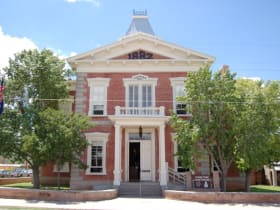
Tombstone Courthouse State Historic Park
0.2 miles away
The 1882 Victorian brick courthouse anchored Tombstone's law-and-order side during the silver boom, and it now holds the town's history in one compact, self-guided building.
Boothill Graveyard
0.3 miles away
The most famous Old West cemetery in the world, where the O.K. Corral dead lie under wooden markers and blunt, dark-humored epitaphs.
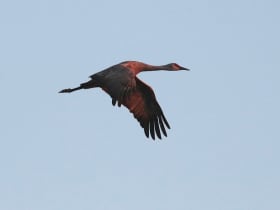
Whitewater Draw Wildlife Area
15 miles away
Whitewater Draw is a shallow alkali marsh that winters 20,000+ sandhill cranes from October through February.
Cochise Stronghold
16 miles away
Cochise used this natural rock fortress in the Dragoon Mountains to evade US Army forces for 11 years. The 4-mile round-trip canyon trail passes near his burial site.
Kartchner Caverns State Park
18 miles away
Kartchner Caverns near Benson is a living cave with formations still growing, because water still seeps through the limestone above and deposits calcium carbonate on the existing structures.

Saguaro National Park
51 miles away
Forests of the giant saguaro cactus, symbol of the American West, on both sides of Tucson.