
The High Line
820 Washington St
New York, NY
A ribbon of garden and walkway floating above the West Side streets, built on the tracks of an old freight railway saved from demolition.
The High Line is a public park built in the sky, running along an abandoned elevated freight railway on Manhattan's West Side. For decades the old steel viaduct sat rusting and overgrown above the streets, slated for demolition, until neighbors fought to save it and turn it into something new. Today it is a narrow ribbon of garden and walkway floating above the traffic, one of the most influential parks built anywhere in a generation.
The design kept the spirit of the ruin it replaced. The plantings are wild and naturalistic, drawn from the hardy grasses and wildflowers that had colonized the tracks on their own, and the old rails still surface here and there through the paths. Walking it, you drift above the city among galleries and rooftops, with sudden framed views of the Hudson River and the streets below.
What Travelers Love
- Walking a garden path high above the traffic, level with second-story windows
- Wild, naturalistic plantings inspired by the weeds that once grew on the old tracks
- Framed views of the streets, the Hudson River, and the city skyline
- Rotating public art, seating nooks, and a peek at the working railway bones underfoot
Worth Knowing
- It runs one direction as a linear path, so plan a walk from one end to the other
- It gets crowded on warm weekends; early mornings and weekdays are calmer
- The plantings change dramatically with the seasons, worth a return visit
- Access is by stairs and elevators at points along its length, and it connects to nearby museums and markets
Learn about The High Line
From freight line to ruin
The railway was built in the 1930s to lift dangerous freight trains off the crowded West Side streets, where so many people had been killed by trains at grade that the avenue earned a grim nickname. Elevated tracks carried boxcars right into the upper floors of factories and warehouses, delivering meat, produce, and goods without ever crossing traffic.
As trucking took over, rail traffic dwindled, and the last train ran in 1980. The viaduct was left abandoned, and over the following years nature reclaimed it, with grasses, wildflowers, and even small trees taking root in the gravel between the rails. For a time it was a hidden, overgrown ruin known mostly to a few urban explorers, and the city moved toward tearing it down.
The fight to save it
In the late 1990s two neighborhood residents founded a group to save the structure, arguing that the wild landscape on top of it was worth preserving rather than demolishing. Photographs of the self-sown meadow floating above the streets captured imaginations and helped turn public opinion.
After years of advocacy, the city agreed to convert the viaduct into a park, and a design was chosen that would echo the accidental beauty of the ruin. The first section opened in 2009 to immediate acclaim, and the park was extended in stages until it ran the full length of the old line. Its success has since inspired similar rail-to-park projects in cities around the world.
The garden in the sky
The planting is the heart of the High Line. Rather than tidy flower beds, the designers filled it with tough perennials, grasses, and wildflowers meant to recall the plants that had grown wild on the tracks, a style of loose, seasonal planting that changes constantly through the year. The old rails were left running through and beside the paths as a reminder of what the place had been.
Along the way the walkway widens into overlooks, seating steps, and quiet nooks, and rotating public art and installations appear at points down its length. Because it floats a story or two above the ground, it offers a rare view of the city, level with windows and rooftops, with the Hudson River opening up to the west.
Seasons and walking it
The garden is a different place in every season. Spring brings bulbs and fresh green, summer fills it with tall grasses and bloom, and fall lights the grasses and perennials in warm bronze and gold. Even winter has a stark beauty, when the dried seedheads and grasses stand against the snow.
It works best walked end to end, a slow drift above the neighborhoods it connects, so allow time rather than rushing. Warm-weather weekends draw big crowds, so early mornings and weekdays are the calmest, and the many access points let you hop on or off near the museums, markets, and galleries clustered along its route.
Closest Boutels
The closest Boutel™ stays, so you can turn this stop into an overnight. Each is a place we chose through independent editorial review, never a paid placement.
Details
New York, NY
Frequently asked questions
What is the High Line?
The High Line is an elevated public park built atop a former freight rail line on Manhattan's West Side, running roughly a mile and a half from the Meatpacking District up to Hudson Yards. Planted with lush, wild-style gardens inspired by the self-seeded landscape that grew on the abandoned tracks, it is dotted with public art, seating nooks, and sweeping views of the streets, the Hudson River, and the city skyline. It is a beloved, one-of-a-kind urban walk.
What is there to see and do on the High Line?
Stroll the linear garden path and enjoy the naturalistic plantings that change with the seasons, rotating public art installations, and clever design features like the sunken amphitheater overlooking traffic on 10th Avenue. There are river and skyline views throughout, spots to sit and people-watch, and seasonal food vendors. At its ends and along the way it connects to Hudson Yards, Chelsea Market, and the Whitney Museum.
How long is the High Line and how do I access it?
The full walk is about a mile and a half one way and takes roughly thirty to forty-five minutes at an easy pace, longer if you linger. Because it is a linear elevated park, there are multiple stair and elevator access points along its length, so you can join or leave at various cross streets. Planning your entry and exit points helps, especially if you want step-free access via the elevators.
When is the best time to visit the High Line?
Spring through fall is loveliest, when the gardens are full and blooming, and early mornings or weekdays are far more relaxed than crowded midday weekends, when the narrow path can get busy. Sunset is beautiful over the Hudson. Keep in mind the walkway is mostly open and exposed with little shade, so bring sun protection and water on hot days. Admission is free.
What is near the High Line to combine with a visit?
Its West Side route puts it beside several highlights: Chelsea Market for food at the south end, the Whitney Museum of American Art at its Gansevoort Street start, the many galleries of Chelsea, the tiny floating park Little Island nearby, and the shops and architecture of Hudson Yards at its northern end. It is easy to build a half-day exploring the neighborhood around the park.
Nearby

Little Island
0.5 miles away
A small, whimsical public park that floats above the Hudson River off the West Side of Manhattan, built on a cluster of tulip-shaped concrete columns that rise from the water to hold up an undulating...
American Museum of Natural History
2.8 miles away
This is a full day for kids of almost any age. The dinosaur halls on the top floor are the draw, with real fossil mounts including a Titanosaur so long its head reaches into the hallway, and kids can...

Federal Hall
2.8 miles away
The Wall Street site where the United States first governed itself: George Washington took the oath as the first President here in 1789, and the first Congress met and the Bill of Rights took shape he...

Central Park
3.2 miles away
It is easy to forget that Central Park is entirely artificial, a landscape sculpted from swamp and bare schist in the 1850s so completely that it now reads as natural.

Liberty Science Center
3.8 miles away
This is a full-day kid magnet at the edge of Liberty State Park.

Ellis Island
3.8 miles away
People make for the Statue of Liberty and sometimes skip the island next to it, which for many families is the more personal stop.

Liberty State Park
4.0 miles away
It is a city park, but Liberty State Park also protects a genuine slice of Hudson estuary nature reclaimed from an old rail yard.
Green-Wood Cemetery
6.3 miles away
Brooklynites treat this as a park, and you should too. Green-Wood is a 478-acre Victorian garden cemetery on the borough high ground, so scenic in the 1800s that it drew half a million visitors a year...
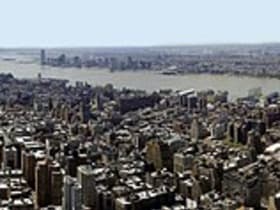
The Panorama of the City of New York
8.3 miles away
This is one of the great overlooked wonders of the city, tucked in a museum most tourists skip.

Branch Brook Park Cherry Blossoms
8.6 miles away
In cherry-blossom season this is one of the prettiest outdoor stops in the region, and the scale amazes kids: more than 5,000 flowering trees, the largest such collection in the country, larger than W...
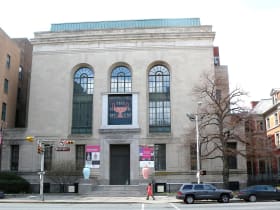
Newark Museum of Art
8.8 miles away
Many people are surprised the largest and one of the finest art museums in New Jersey sits in downtown Newark.
The Cloisters
8.9 miles away
Most first-time visitors never make it this far uptown, which is exactly why the Cloisters feels like a secret.

The Bronx Zoo
9.7 miles away
At 265 acres this is a big day, so plan a route. Kids gravitate to the Congo Gorilla Forest, a walk-through rainforest where you come face to face with a gorilla troop through the glass, and the Wild...

Montclair Art Museum
12 miles away
Tucked in the leafy suburb of Montclair, this is a quietly excellent art museum most out-of-towners never hear about.
City Island
13 miles away
People are always surprised this is legally part of New York City.
Sandy Hook Lighthouse
20 miles away
History that kids can climb. Sandy Hook Lighthouse, lit in 1764, is the oldest working lighthouse in the country, and rangers lead tours up the tower on a seasonal schedule, best for ages 5 and up who...