

Central Park
50 85th St Transverse, New York, NY
New York, NY
A vast, hand-built landscape of meadows, woods, and lakes laid out in the middle of Manhattan, where a whole city goes to breathe.
Central Park is the great green heart of Manhattan, a vast rectangle of meadows, woodlands, lakes, and rock ridges laid out in the middle of one of the densest cities on earth. It looks natural, but almost none of it is: the whole landscape was designed and built by hand in the nineteenth century, its hills shaped, its lakes dug, and its woods planted to create the illusion of untouched country.
Within its borders lie some of the most famous scenes in the city, the grand stairway and fountain of Bethesda Terrace, the tangled woodland of the Ramble, the graceful span of Bow Bridge, and the wide loop around the Reservoir. For New Yorkers it is a backyard, a running track, a concert lawn, and a refuge; for visitors it is the place the city goes to slow down.
What Travelers Love
- Miles of paths through meadows, woods, and rock outcrops, all within the city
- Iconic spots like Bethesda Terrace, the Ramble, Bow Bridge, and the Reservoir loop
- The way a few steps inside can hush the roar of the streets
- Rowing on the Lake, ice skating in winter, and free concerts and theater in summer
Worth Knowing
- It is far bigger than it looks on a map, so a full loop is a serious walk
- The park is designed with sunken transverse roads so traffic crosses out of sight
- It is open daily and welcomes everyone, with some attractions inside ticketed
- The northern end is quieter and wilder than the busy south, and worth exploring
Learn about Central Park
A park built by design
In the mid-nineteenth century, as the city climbed northward up Manhattan, civic leaders set aside a great tract of rocky, swampy, uneven land for a public park. A design competition was won by Frederick Law Olmsted and Calvert Vaux, whose Greensward Plan called for a naturalistic landscape of meadows, woods, and water, threaded with separate paths for walkers, riders, and carriages, and with cross-town roads sunk out of sight.
The land was not empty. Among the communities displaced to build the park was Seneca Village, a settlement of Black landowners, along with Irish and German residents, that was cleared away in the 1850s. The park was carved from the ancestral homeland of the Lenape, the people of Manhattan, and its creation, like the city's, came at a human cost that the park's own history now works to acknowledge.
The great built landscape
What looks like wild nature is in fact a work of engineering and artistry. Hills were reshaped, tens of thousands of trees and shrubs were planted, lakes and ponds were excavated and lined, and drainage was laid beneath the whole surface. The bare rock outcrops that push up through the lawns are among the few genuinely natural features, ancient bedrock scraped and polished by glaciers.
Olmsted and Vaux designed the park so that a visitor moving through it would meet a constant sequence of scenes, a broad meadow, a shaded ramble, a formal terrace, an open lake, each composed like a painting. That careful staging is why a walk across the park feels like a journey through many different landscapes rather than a single field.
The famous places within
At the park's center, Bethesda Terrace descends past a carved arcade to a fountain crowned by the Angel of the Waters, looking out over the Lake. Nearby, Bow Bridge arches across the water toward the Ramble, a deliberately wild wood of winding paths that is a favorite of birdwatchers during migration.
Elsewhere lie the Sheep Meadow and the Great Lawn for lounging and concerts, the formal Mall lined with American elms, the Reservoir with its famous running loop, and, near the southeast corner, a zoo and a carousel. The wilder, hillier northern end holds a ravine, a waterfall-fed stream, and old fortifications, and draws far fewer visitors.
Season by season in the park
Spring floods the park with blossom, the cherries and magnolias flowering and the songbirds pouring through the Ramble on migration. Summer brings the great lawns to life with picnickers, ballplayers, and the free concerts and outdoor theater the park is famous for.
Fall is many people's favorite, when the woods turn gold and red and the light goes low and warm across the meadows. Winter quiets the park under snow, opens the ice-skating rinks, and reveals the bones of the landscape, the rock outcrops and bare trees, in a way the leafy months hide.
Closest Boutels
The closest Boutel™ stays, so you can turn this stop into an overnight. Each is a place we chose through independent editorial review, never a paid placement.
Details
New York, NY
Frequently asked questions
What are the must-see spots in Central Park?
Among the highlights are Bethesda Terrace and its grand fountain, the Bow Bridge and the Lake with its rowboats, Belvedere Castle's lofty views, the Mall's cathedral-like elm allée, Strawberry Fields with its Imagine mosaic honoring John Lennon, the wild woodland paths of the Ramble, and the wide-open Sheep Meadow. With over 800 acres and dozens of attractions, the park rewards both a highlights tour and aimless wandering.
How much time should I spend in Central Park?
You could spend anywhere from a couple of hours to a full day. A focused walk hitting the southern landmarks like Bethesda Terrace, the Mall, and the Lake takes two to three hours, while a leisurely visit adding the Ramble, Belvedere Castle, the reservoir, and a rowboat or the zoo easily fills a day. Starting from the south end and working north is a popular way to see the classic sights in order.
What is there to do in Central Park?
Far more than just walking. You can rent a rowboat on the Lake, visit the Central Park Zoo, catch a marionette show, ice skate in winter, ride the historic carousel, picnic on the meadows, watch street performers around Bethesda and Strawberry Fields, and take in world-class museums along the park's edges. It is a place to relax, people-watch, and dip into as much or as little activity as you like.
When is the best time to visit Central Park?
The park is glorious year-round. Spring brings blossoms and fall paints the Mall and the Ramble in brilliant color, both especially beautiful, while summer buzzes with activity on the lawns and winter offers snow-dusted scenes and ice skating. Early mornings are peaceful and great for photos before the crowds arrive. There truly is no bad season; each shows the park in a different light.
Is Central Park safe, and any tips for first-timers?
Central Park is generally very safe by day and heavily visited, though as anywhere in a big city it is wise to stay aware of your surroundings and stick to well-populated paths, especially after dark. Give yourself unhurried time, since the best details reveal themselves slowly, wear comfortable shoes, and grab a map or note a few target spots, as it is large and easy to lose track of where you are.
Nearby
American Museum of Natural History
0.5 miles away
This is a full day for kids of almost any age. The dinosaur halls on the top floor are the draw, with real fossil mounts including a Titanosaur so long its head reaches into the hallway, and kids can...
The High Line
3.2 miles away
The High Line took an abandoned elevated freight rail line, left to weeds for twenty years, and kept the idea of that wild meadow when it became a park.

Little Island
3.7 miles away
A small, whimsical public park that floats above the Hudson River off the West Side of Manhattan, built on a cluster of tulip-shaped concrete columns that rise from the water to hold up an undulating...

Federal Hall
5.7 miles away
The Wall Street site where the United States first governed itself: George Washington took the oath as the first President here in 1789, and the first Congress met and the Bill of Rights took shape he...
The Cloisters
5.9 miles away
Most first-time visitors never make it this far uptown, which is exactly why the Cloisters feels like a secret.

The Bronx Zoo
6.6 miles away
At 265 acres this is a big day, so plan a route. Kids gravitate to the Congo Gorilla Forest, a walk-through rainforest where you come face to face with a gorilla troop through the glass, and the Wild...
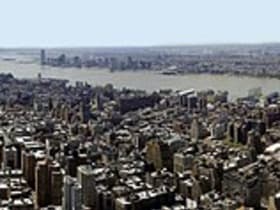
The Panorama of the City of New York
6.7 miles away
This is one of the great overlooked wonders of the city, tucked in a museum most tourists skip.

Ellis Island
6.9 miles away
People make for the Statue of Liberty and sometimes skip the island next to it, which for many families is the more personal stop.

Liberty Science Center
6.9 miles away
This is a full-day kid magnet at the edge of Liberty State Park.

Liberty State Park
7.1 miles away
It is a city park, but Liberty State Park also protects a genuine slice of Hudson estuary nature reclaimed from an old rail yard.
Green-Wood Cemetery
8.8 miles away
Brooklynites treat this as a park, and you should too. Green-Wood is a 478-acre Victorian garden cemetery on the borough high ground, so scenic in the 1800s that it drew half a million visitors a year...
City Island
10 miles away
People are always surprised this is legally part of New York City.

Branch Brook Park Cherry Blossoms
10 miles away
In cherry-blossom season this is one of the prettiest outdoor stops in the region, and the scale amazes kids: more than 5,000 flowering trees, the largest such collection in the country, larger than W...
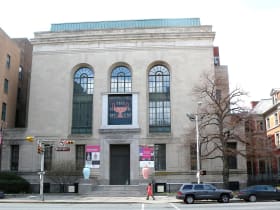
Newark Museum of Art
11 miles away
Many people are surprised the largest and one of the finest art museums in New Jersey sits in downtown Newark.

Montclair Art Museum
13 miles away
Tucked in the leafy suburb of Montclair, this is a quietly excellent art museum most out-of-towners never hear about.
Old Westbury Gardens
19 miles away
This is the Long Island of The Great Gatsby, and one of the few Gold Coast estates you can actually walk through.