
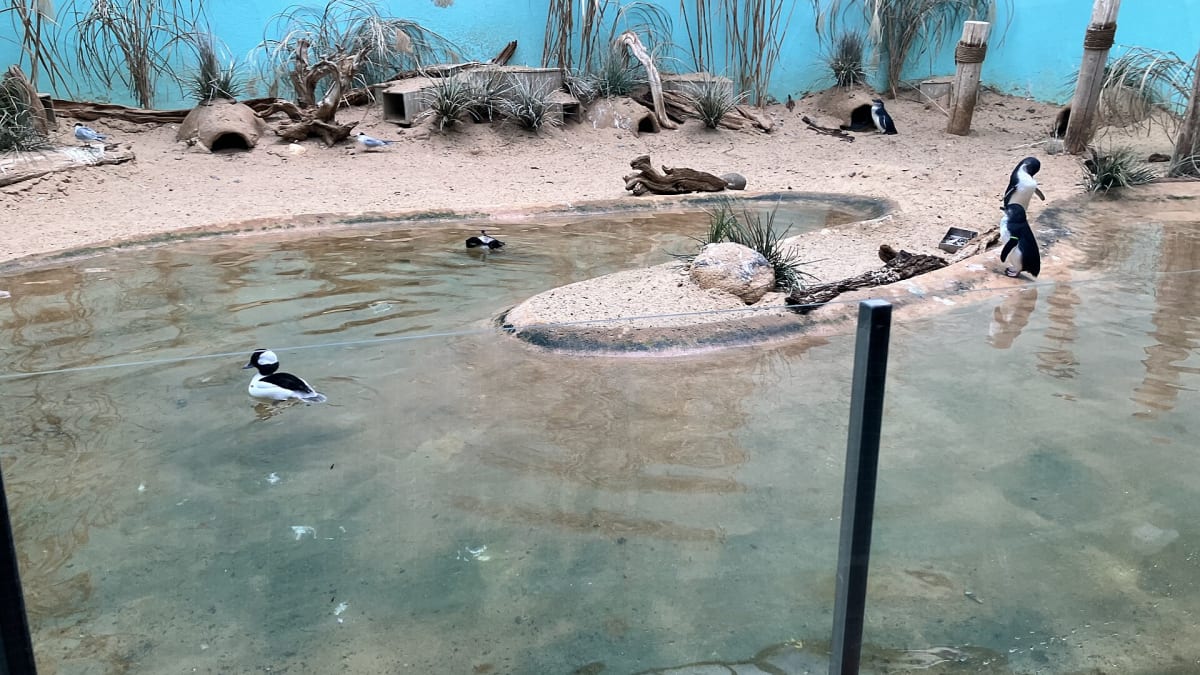
The Bronx Zoo
2300 Southern Blvd
Bronx, NY
A vast green world of forests, rivers, and open country tucked inside the Bronx, where gorillas, tigers, and bison live on some of the wildest ground in the city.
The Bronx Zoo is one of the largest metropolitan zoos in the United States, a sprawling landscape of forest, river, and open country set down in the middle of New York City. Since it opened in 1899 it has grown into a place where a visitor can wander from a misty African gorilla forest to an Asian tiger wood to a herd of American bison on open range, all within a single afternoon in the Bronx.
From the start the zoo was as much a conservation project as a place to see animals. Its parent institution helped save the American bison from extinction and has worked for more than a century to protect wildlife around the world. That mission still shows in the way the exhibits are built, favoring big, planted habitats that put animals in something close to their own country rather than in bare cages.
What Travelers Love
- Walking through the misty, tropical Congo Gorilla Forest among a troop of western lowland gorillas
- The immersive tiger and Asian forest habitats where paths wind through the trees
- A working bit of true wildness along the Bronx River running through the grounds
- Riding above the animals on the aerial tram for a treetop view of the park
Worth Knowing
- It is a very large park, so wear comfortable shoes and plan a route rather than trying to see everything
- Some seasonal exhibits and rides operate mainly in the warmer months and may pause in winter
- Weekends and school breaks are the busiest; mornings on weekdays are calmest
- It is reachable by subway and bus, which spares you the parking and the traffic
Learn about The Bronx Zoo
The story of the zoo
The Bronx Zoo opened in 1899 under the New York Zoological Society, founded in part to promote the study and protection of wild animals at a time when many species in North America were being hunted toward extinction. Its first director, William Hornaday, had watched the great bison herds vanish from the plains and made their rescue a founding cause.
In 1905 the zoo helped launch the American Bison Society, and it later shipped bison raised on its own grounds back to the western plains to help rebuild wild herds. That early success set the pattern for the institution now known as the Wildlife Conservation Society, which runs field programs on nearly every continent and still uses the Bronx Zoo as its flagship and public face.
Wild country inside the city
The zoo's signature exhibits trade cages for landscape. The Congo Gorilla Forest recreates a slice of central African rainforest, humid and green, where a troop of western lowland gorillas lives among planted trees and the trail winds through their world. Nearby, immersive habitats for tigers, snow leopards, and other Asian wildlife thread paths through woodland that hides the barriers.
The Bronx River runs right through the grounds, and along it the zoo keeps some of the most natural ground in the whole city, a real river corridor of trees and marsh. Open ranges hold bison and other hoofed animals, a nod to the zoo's founding rescue work, and an aerial tram carries visitors above it all for a treetop look at the park in warm weather.
Conservation, then and now
Behind the exhibits, the Bronx Zoo has long doubled as a research and breeding center. Its early work with bison was only the beginning; over the decades it has bred and helped protect species ranging from snow leopards to rare birds and amphibians, and its scientists study wildlife in the field from Africa to the Arctic.
That work threads through a visit in quiet ways: the signs that explain why a species is threatened, the breeding programs behind a rare animal on view, the emphasis on habitats that teach how creatures actually live. The zoo presents itself less as a collection to gawk at and more as a place fighting to keep wild animals in the world.
Seasons and a day at the zoo
Spring and early summer are lively, with young animals and the grounds in fresh leaf, while high summer can be hot, so early hours and shaded exhibits are your friends. Fall brings cooler air, thinner crowds, and good color in the wooded parts of the park.
Winter is the quietest season, when some seasonal rides and warm-weather exhibits pause, but the cold-country animals like tigers and snow leopards are often at their most active, and the park takes on a hushed, uncrowded feel. In any season, the sheer scale rewards planning a route rather than trying to see it all.
Closest Boutels
The closest Boutel™ stays, so you can turn this stop into an overnight. Each is a place we chose through independent editorial review, never a paid placement.
Details
Bronx, NY
Frequently asked questions
What are the highlights of the Bronx Zoo?
As one of the largest urban zoos in the country, it packs in standout exhibits like the Congo Gorilla Forest, Tiger Mountain, JungleWorld's Asian rainforest, and the Children's Zoo, plus the seasonal Wild Asia Monorail that carries you past tigers, rhinos, elephants, and more in spacious habitats. With thousands of animals across hundreds of acres of naturalistic settings, there is far more than you can see in a single quick visit.
How much time do you need at the Bronx Zoo?
Plan on a full day to see a good portion of it, though a focused visit can be done in around four hours. The zoo is very large, so expect a lot of walking. Wear comfortable shoes, grab a map when you arrive, and prioritize the exhibits you most want to see. For families, a stroller or wagon for young children helps a lot over the long distances between exhibits.
When is the best time to visit the Bronx Zoo?
Spring and fall bring the most comfortable weather and smaller crowds, with fall foliage making the monorail ride especially beautiful. Arriving right when the zoo opens gives you cooler animals and quieter paths. There is a discounted or donation-based admission day, often midweek, but it tends to be mobbed, so many visitors find a regular day with tickets booked in advance far more pleasant.
Are some Bronx Zoo attractions extra?
Yes. General admission covers most of the zoo, but a handful of premium experiences, such as the monorail, certain rides, and special seasonal attractions, carry an additional charge. If you want to include those, it can be worth looking at a total-experience ticket. Checking what is included when you buy, and which seasonal exhibits are open, helps you plan and budget before you arrive.
What is near the Bronx Zoo to combine with a visit?
The zoo sits right beside the New York Botanical Garden, another world-class attraction, and a short distance from Arthur Avenue, the Bronx's beloved Little Italy, packed with authentic markets and restaurants. Together they can make a rich full day in the Bronx. Just note that seeing both the zoo and the garden properly is a lot for one day, so you may want to pick one and add a meal on Arthur Avenue.
Nearby
The Cloisters
3.0 miles away
Most first-time visitors never make it this far uptown, which is exactly why the Cloisters feels like a secret.
City Island
4.7 miles away
People are always surprised this is legally part of New York City.

Central Park
6.6 miles away
It is easy to forget that Central Park is entirely artificial, a landscape sculpted from swamp and bare schist in the 1850s so completely that it now reads as natural.
American Museum of Natural History
7.0 miles away
This is a full day for kids of almost any age. The dinosaur halls on the top floor are the draw, with real fossil mounts including a Titanosaur so long its head reaches into the hallway, and kids can...
The Panorama of the City of New York
7.4 miles away
This is one of the great overlooked wonders of the city, tucked in a museum most tourists skip.
The High Line
9.7 miles away
The High Line took an abandoned elevated freight rail line, left to weeds for twenty years, and kept the idea of that wild meadow when it became a park.

Little Island
10 miles away
A small, whimsical public park that floats above the Hudson River off the West Side of Manhattan, built on a cluster of tulip-shaped concrete columns that rise from the water to hold up an undulating...

Federal Hall
12 miles away
The Wall Street site where the United States first governed itself: George Washington took the oath as the first President here in 1789, and the first Congress met and the Bill of Rights took shape he...

Ellis Island
14 miles away
People make for the Statue of Liberty and sometimes skip the island next to it, which for many families is the more personal stop.

Liberty Science Center
14 miles away
This is a full-day kid magnet at the edge of Liberty State Park.

Liberty State Park
14 miles away
It is a city park, but Liberty State Park also protects a genuine slice of Hudson estuary nature reclaimed from an old rail yard.
Green-Wood Cemetery
15 miles away
Brooklynites treat this as a park, and you should too. Green-Wood is a 478-acre Victorian garden cemetery on the borough high ground, so scenic in the 1800s that it drew half a million visitors a year...
Old Westbury Gardens
15 miles away
This is the Long Island of The Great Gatsby, and one of the few Gold Coast estates you can actually walk through.

Branch Brook Park Cherry Blossoms
16 miles away
In cherry-blossom season this is one of the prettiest outdoor stops in the region, and the scale amazes kids: more than 5,000 flowering trees, the largest such collection in the country, larger than W...
Newark Museum of Art
17 miles away
Many people are surprised the largest and one of the finest art museums in New Jersey sits in downtown Newark.

Montclair Art Museum
18 miles away
Tucked in the leafy suburb of Montclair, this is a quietly excellent art museum most out-of-towners never hear about.
Kykuit, the Rockefeller Estate
18 miles away
Few visitors to Sleepy Hollow realize the Rockefeller mansion is open just up the hill. Kykuit, meaning lookout in Dutch, was John D.

Sagamore Hill
19 miles away
Most travelers pass through Oyster Bay without knowing a president lived and is buried nearby.