

Spiral Jetty
Corinne, UT
Corinne, UT
A great coil of black basalt curling out into the pink salt water of the Great Salt Lake, one of the most famous artworks in the world, and among the hardest to reach.
Spiral Jetty is one of the most famous artworks of the twentieth century and one of the strangest places to visit in Utah. In 1970 the artist Robert Smithson used earth-moving equipment to build a coil of black basalt boulders, some 1,500 feet long and 15 feet wide, curling counterclockwise out into the pink salt water on the remote north shore of the Great Salt Lake. It is a sculpture you do not look at so much as walk out onto.
Getting there is part of the experience. The jetty lies at the end of a long, lonely dirt road past the Golden Spike site, in a landscape so empty and elemental it can feel like another planet. Depending on the lake's water level the spiral may sit high and dry, crusted white with salt, or lie just beneath a shimmer of rose-colored water, and no two visits are ever quite the same.
What Travelers Love
- Walking the great black basalt spiral out into the salt lake
- Pink and rose-colored water from salt-loving microbes and brine shrimp
- White salt crystals encrusting the rocks like frost
- The wild, empty, otherworldly feel of the north shore
Worth Knowing
- It is a long drive on dirt roads with no services, so carry water, food, and fuel
- Whether the jetty is exposed or submerged depends on the lake's changing water level
- There are no facilities, no shade, and no cell service, so come prepared and self-reliant
- It is a work of art on public land, so walk gently and take nothing, including salt crystals
Learn about Spiral Jetty
Smithson and the land art movement
Robert Smithson was a leading figure in Land Art, a movement of the late 1960s and 1970s in which artists left the gallery to make monumental works directly in the landscape itself. He chose Rozel Point for its blood-red water, its salt-encrusted shore, and its history of failed industry, and in 1970 he built the Spiral Jetty from local black basalt, choosing the spiral form for its echoes of galaxies, whirlpools, and the crystalline structure of salt.
Smithson died young in a plane crash in 1973 while surveying another earthwork, and the Spiral Jetty became his most celebrated creation. For decades afterward it lay hidden beneath the risen lake, resurfacing only when the water dropped, which lent it an almost mythic reputation. Today it is cared for as a gift to the public, an artwork you can visit freely, on its own remote terms, in the landscape that inspired it.
The pink water and the salt
The rose and pink hues of the water around the jetty are not a trick of the light but the work of living things. This arm of the Great Salt Lake is cut off from freshwater inflow and grows extremely salty, far saltier than the ocean, and only a few hardy organisms can survive it: salt-loving microbes and algae that tint the water pink and red, along with tiny brine shrimp. The color shifts with salinity, season, and light.
As lake water evaporates it leaves salt behind, and over the years white crystals have grown thickly over the black basalt of the jetty, encrusting the rocks like frost or coral. Walking the spiral you cross from dark stone to glittering white and back, with the pink water on either side. It is a place where art, chemistry, and biology all meet, and the sculpture keeps changing as the lake works on it year after year.
The land around Rozel Point
Long before it drew artists and pilgrims, the Great Salt Lake and its shores were part of the homeland of the Northwestern Shoshone and other Native peoples, who lived around the lake and its wetlands and retain ties to this country today. The north shore is a harsh, marginal place, and the traces of human effort here, an old oil-drilling attempt, scattered abandoned equipment near the point, speak to how hard people have tried, and mostly failed, to make it pay.
That history of thwarted industry was part of what drew Smithson to the site. The rusting remains near Rozel Point, the emptiness, and the sense of a place at the edge of the usable world all fed the meaning of the work. Today the surrounding land remains wild and quiet, home to pronghorn and coyote, patrolled by hawks, and utterly silent but for the wind off the lake.
Visiting a work of art in the wild
Reaching Spiral Jetty takes commitment. It is a long drive, much of it on graded dirt roads with no gas, water, or services along the way, so the essentials are a full tank, plenty of water and food, and a check of road conditions before setting out. Rain can make the final stretch slick, and there is no cell coverage, so tell someone your plan. It is best treated as a full day's outing, not a casual detour.
When you arrive, remember it is both an artwork and a fragile shore. Walk gently on the spiral, take only photographs, and leave the salt crystals and basalt exactly as you find them. Whether you catch it dry and white or half-drowned in pink water, standing at the center of the coil with the lake stretching to the mountains is a quietly unforgettable experience, well worth the long road in.
Closest Boutels
The closest Boutel™ stays, so you can turn this stop into an overnight. Each is a place we chose through independent editorial review, never a paid placement.
Details
Corinne, UT
Frequently asked questions
What is Spiral Jetty?
Spiral Jetty is a monumental earthwork sculpture created by artist Robert Smithson in 1970 at remote Rozel Point on the north arm of the Great Salt Lake. Built from black basalt rock and earth gathered on site, it forms a coil about fifteen feet wide that spirals more than 1,500 feet out into the reddish, salty water. One of the most celebrated works of land art in the world, it draws art lovers and curious travelers to a strikingly desolate, beautiful corner of Utah.
Is Spiral Jetty always visible?
No, and this is important to know before making the long trip. Because it sits at lake level, the jetty is only visible when the Great Salt Lake is low enough; it was submerged for years after its creation and re-emerged in the early 2000s, staying visible through the recent low-water period. Its appearance changes with the water, sometimes ringed by white salt crystals. Check current conditions and recent reports before you go, since visibility depends on the lake's level.
How do you get to Spiral Jetty?
It is genuinely remote, roughly two and a half hours from Salt Lake City, with the final stretch on a graded dirt and gravel road that most family vehicles can handle in dry weather but which turns muddy and impassable when wet. There are no services, restrooms, or water at the site, so come fully prepared with a full tank of gas, plenty of water, food, and appropriate clothing. Following the posted directions carefully helps, since the route has several forks.
What should I know before visiting Spiral Jetty?
Come self-sufficient for a remote desert outing, with water, sun protection, and no reliance on cell service. Practice leave-no-trace, treating both the artwork and the fragile natural environment with care, and take nothing. Watch your footing near the shore, where natural tar seeps can emerge at low water, and keep pets leashed. There is no shade, so bring a hat and sunscreen, and give yourself time to walk out along the spiral and soak in the surreal setting.
When is the best time to visit Spiral Jetty?
Spring and fall offer the most comfortable temperatures for the remote drive and the walk out to and along the jetty, while summer can be very hot and exposed. The sculpture and its salty, reddish surroundings look different with the season and water level, and clear days are best for photography. Combine a visit with nearby Golden Spike National Historical Park, which is on the way, to make the long journey out even more worthwhile.
Nearby
Golden Spike National Historic Site
14 miles away
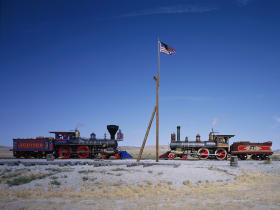
At Golden Spike National Historic Site near Corinne, full-size working replicas of the Jupiter and Engine 119 - the two locomotives that met at Promontory Summit on May 10, 1869 - are displayed in the...

Bear River Migratory Bird Refuge
24 miles away
The Bear River Migratory Bird Refuge sits at the north end of the Great Salt Lake where the Bear River delta creates a freshwater marsh within the hypersaline lake system.
Willard Bay State Park
31 miles away
Willard Bay is a freshwater bay separated from the Great Salt Lake by a 5-mile dike. It's an anomaly - fresh water surrounded by salt desert.
Logan Canyon Scenic Byway
50 miles away
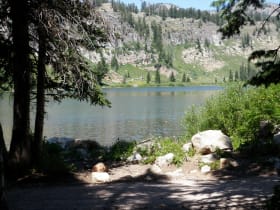
Logan Canyon is a dramatic limestone canyon carved by the Logan River, one of the most scenic mountain drives in northern Utah.