

Golden Spike National Historic Site
22970 W 6400 N, Corinne, UT
Corinne, UT
The lonely windswept summit where two railroads met in 1869 and stitched a continent together with a single ceremonial spike.
On May 10, 1869, at a bare, windswept ridge called Promontory Summit, the last rails of the first transcontinental railroad were joined and a ceremonial golden spike was driven to mark the moment. For the first time a traveler could cross the entire United States by rail, a journey that had taken months by wagon now shrunk to about a week. A telegraph flashed the single word done across the country, and cities from coast to coast erupted in celebration.
Today the site preserves that summit much as it looked, a stretch of restored track running out across the sagebrush to a modest visitor center. Twice, in season, two gleaming replica locomotives roll toward each other and stop cowcatcher to cowcatcher, recreating the famous photograph. It is a quiet, out-of-the-way place for something that changed the shape of the country.
What Travelers Love
- Standing on the exact spot where the last spike joined the two railroads
- The two full-size, working replica steam locomotives, Jupiter and No. 119, meeting head to head
- Walking the old grade where thousands of workers laid rail across the desert
- The quiet, wide-open high desert that looks much as it did in 1869
Worth Knowing
- The locomotives are steamed up seasonally, so check ahead if you hope to see them run
- It is a remote spot with a long access road, so come with a full tank and water
- The site is exposed and windy, hot in summer and cold in winter, so dress for the weather
- The winter season is quiet, with the engines put away and limited programming
Learn about Golden Spike National Historic Site
Two railroads racing to meet
The transcontinental line was built by two companies working toward each other. The Central Pacific pushed east from Sacramento, blasting and tunneling through the granite of the Sierra Nevada, while the Union Pacific drove west across the Great Plains and the Rockies. For years they raced, because each was paid by the mile, until Congress finally set Promontory Summit as the meeting point.
The ceremony itself was part triumph and part comedy. Dignitaries gathered, speeches were made, and the final spike, made of gold, was tapped in gently so as not to damage it, then quickly pulled back out and replaced with an ordinary iron one. When the two railroad presidents each swung at the spike, at least one is said to have missed entirely, to the delight of the crowd of workers looking on.
The hands that built it
The railroad was built by the muscle of tens of thousands of laborers, and the Central Pacific's workforce was overwhelmingly Chinese. Chinese crews did the most dangerous work, hanging in baskets to set charges on cliff faces and boring the Sierra tunnels through solid rock in deep snow, and many died in the effort. For generations their role was left out of the story, and the site now works to give them their due, including at the anniversary each year.
The Union Pacific side drew Irish immigrants, Civil War veterans of both armies, formerly enslaved men, and Mormon crews hired locally in Utah. The land the tracks crossed was the homeland of the Shoshone, Ute, Goshute, and Paiute peoples, whose lives and hunting grounds the railroad divided and disrupted profoundly, a cost that traveled beneath the celebration and is remembered here as well.
Jupiter, No. 119, and the working railroad
The two locomotives that met at Promontory, the Central Pacific's Jupiter and the Union Pacific's No. 119, were scrapped long ago, but the park had exact working replicas built and they are the heart of a visit. Painted in bright period colors, brass gleaming, they steam out along the track in season and ease toward each other until they nearly touch, just as they did on the famous day.
You can walk the restored grade and see the ties and rails laid in the old way, and short auto tours follow the original railroad bed out across the desert, past cuts and fills that crews shaped by hand. Standing on that empty ridge, it is easy to picture the crowds, the whistles, and the sudden quiet of a continent joined.
The land around the summit
Promontory Summit rises above the northern reaches of the Great Salt Lake, a country of sagebrush flats, low ridges, and the wide wetlands where the Bear River pours into the lake. Pronghorn range the benches, jackrabbits and coyotes work the sage, and hawks and eagles hunt the open ground, while the marshes below draw great flocks of migrating birds.
Summer here is hot and bright, with little shade on the exposed ridge, and winter can be bitterly cold and windy, which is why the locomotives are stored away in the coldest months. Spring and fall are the gentlest times to visit, when the air is mild and the light lies long and gold across the sage, and the whole scene looks close to how it did in 1869.
Closest Boutels
The closest Boutel™ stays, so you can turn this stop into an overnight. Each is a place we chose through independent editorial review, never a paid placement.
Details
Corinne, UT
Frequently asked questions
What is Golden Spike National Historical Park?
Golden Spike National Historical Park, at Promontory Summit in northern Utah, marks the spot where the Union Pacific and Central Pacific railroads met in 1869 to complete the first transcontinental railroad, joined by a ceremonial golden spike. This pivotal moment linked the country coast to coast and transformed the nation. Today the park commemorates that history with a visitor center, gleaming replica steam locomotives, and living-history reenactments that bring the dramatic day to life.
Can you see the locomotives at Golden Spike?
Yes, and they are the star attraction. Beautiful working replicas of the two steam locomotives from the 1869 ceremony, the Jupiter and No. 119, are displayed and, in season, rolled out along the tracks to recreate their historic meeting, complete with reenactments in period costume. It is worth timing your visit around the scheduled locomotive demonstrations and ceremony reenactments, since seeing the engines steaming and meeting nose to nose is the highlight.
When is the best time to visit Golden Spike?
Late spring through early fall, roughly May to September, is the prime time, when the visitor center is open daily, the locomotives run, and costumed reenactments of the Golden Spike ceremony take place. Outside that window, the locomotive demonstrations generally pause, so the experience is quieter. Checking the current schedule of locomotive runs and reenactments before you go helps you catch the most memorable moments of a visit.
What else is there to do at Golden Spike?
Beyond the visitor center and locomotives, you can drive two short auto-tour routes along the historic railroad grades, including a stretch where crews set a record for the most track laid in a single day, and walk a short trail. Seeing just the locomotives and center takes an hour or two, while adding the auto tours makes for a fuller half-day. There are no accommodations or services on site, so plan accordingly.
What is near Golden Spike National Historical Park?
The park lies in a remote area west of Brigham City in northern Utah, off the beaten path. Beyond it, the same route continues toward the Great Salt Lake's north arm and the famous land-art sculpture Spiral Jetty, so the two remote sites are often combined on one trip. Brigham City, back toward the interstate, offers the nearest services and lodging for those exploring this historic corner of the state.
Nearby

Spiral Jetty
14 miles away
Spiral Jetty is a 1,500-foot coil of black basalt and earth that Robert Smithson constructed in 1970 on the north shore of the Great Salt Lake at Rozel Point.

Bear River Migratory Bird Refuge
20 miles away
The Bear River Migratory Bird Refuge sits at the north end of the Great Salt Lake where the Bear River delta creates a freshwater marsh within the hypersaline lake system.
Willard Bay State Park
29 miles away
Willard Bay is a freshwater bay separated from the Great Salt Lake by a 5-mile dike. It's an anomaly - fresh water surrounded by salt desert.
Logan Canyon Scenic Byway
40 miles away
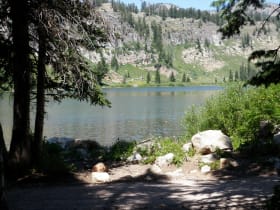
Logan Canyon is a dramatic limestone canyon carved by the Logan River, one of the most scenic mountain drives in northern Utah.