
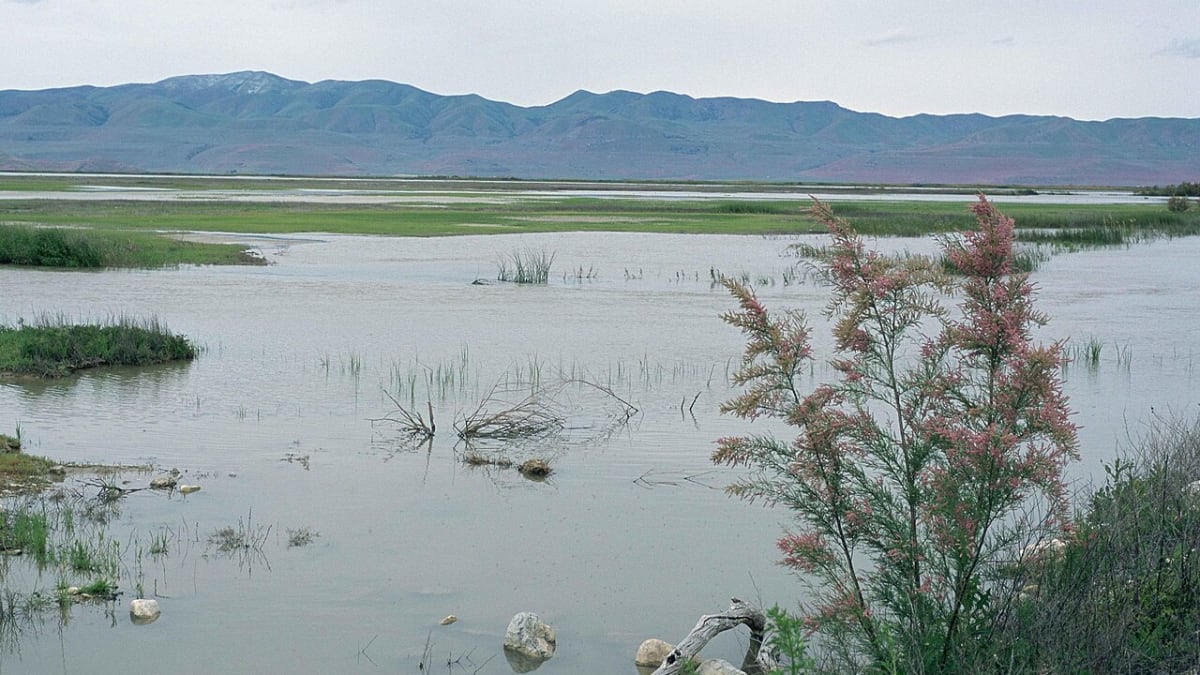
Bear River Migratory Bird Refuge
Bird Refuge Rd, Corinne, UT
Brigham City, UT
One of the most important bird stopovers in the West, a great marsh where the Bear River spreads into the Great Salt Lake and millions of birds gather each year.
Bear River Migratory Bird Refuge protects one of the great wetland complexes of the American West, the broad delta where the Bear River spreads out and sinks into the Great Salt Lake. This mosaic of marsh, mudflat, and open water is a crucial stop on the Pacific and Central flyways, drawing enormous numbers of migrating birds to rest and feed on their long journeys.
At the peak of migration the refuge can host staggering concentrations of waterfowl, shorebirds, ibis, pelicans, and grebes, a spectacle that made it one of the first federal bird refuges in the country. A twelve-mile auto tour loop lets visitors ease through the wetlands from their cars, and an education center near Brigham City introduces the marsh and the river that feeds it.
What Travelers Love
- The twelve-mile auto tour loop, a rolling blind that lets you watch birds up close from the car
- Spectacular concentrations of waterfowl, shorebirds, and pelicans during migration
- The wide, quiet wetland light against the mountains, especially at sunrise and sunset
- The education center's exhibits on the marsh, the river, and the flyway
Worth Knowing
- The auto tour is the heart of a visit and is best driven slowly with binoculars or a spotting scope
- Spring and fall migrations bring the biggest numbers, while summer nesting and winter raptors offer their own rewards
- Biting insects can be thick over the marsh in warm weather, so bring repellent
- Water levels and bird numbers vary with drought and season, so ask at the center about current conditions
Learn about Bear River Migratory Bird Refuge
A crossroads of the flyways
The refuge sits at a meeting point of major migratory routes, which is why so many birds funnel through. The freshwater of the Bear River mixing with the brine of the Great Salt Lake creates an extraordinarily productive marsh, thick with the insects, brine shrimp, and plants that migrating birds depend on to refuel. For many species crossing the arid West, this is one of the few great oases along the way.
The numbers can be astonishing, with hundreds of thousands of birds present at the height of spring and fall migration, and dozens of species using the refuge over the course of a year. It draws not only ducks and geese but tundra swans, white-faced ibis, American avocets, black-necked stilts, phalaropes, and great flocks of American white pelicans that nest on nearby lake islands and feed in the marsh.
The auto tour and the marsh
The centerpiece for most visitors is the twelve-mile auto tour route, a loop of dikes that carries you out among the ponds and channels. Driving slowly, with the car serving as a rolling blind, lets you approach birds far more closely than you could on foot, and pull-offs invite you to stop, scan the water, and listen to the marsh.
The wetlands change constantly with the seasons and the water. In spring and summer the marsh is green and loud with nesting birds; in fall it fills with staging flocks; and in winter, open water draws eagles and other raptors hunting the flats. Sunrise and sunset over the water, with the mountains reflected in the ponds, are the quiet highlights of any visit.
River, flood, and comeback
The refuge has weathered dramatic change. Established in the late 1920s, it was nearly wiped out in the mid-1980s when record high water on the Great Salt Lake flooded the marsh, drowned the dikes, and destroyed the infrastructure, leaving the refuge a saltwater bay for years. When the lake receded, the wetlands were painstakingly rebuilt.
The education center near Brigham City tells this story of loss and recovery, along with the natural history of the Bear River, the longest river in North America that never reaches the sea, ending instead in the Great Salt Lake. Exhibits there help visitors read the marsh and understand the flyway before heading out onto the auto tour.
Season by season
Spring brings the surge of northbound migrants and the start of nesting, filling the marsh with courtship and song, and it is one of the two peak birding seasons. Summer settles into the nesting rhythm, with young birds on the water and long, warm evenings, though biting insects are at their worst.
Fall is the other great season, as huge flocks stage and stack up on their way south, sometimes clouding the sky. Winter empties much of the marsh but concentrates raptors, including bald eagles, hunting over the ice and open leads. Whatever the season, the refuge rewards a slow, patient visit with binoculars in hand.
Closest Boutels
The closest Boutel™ stays, so you can turn this stop into an overnight. Each is a place we chose through independent editorial review, never a paid placement.
Details
Brigham City, UT
Frequently asked questions
What is the Bear River Migratory Bird Refuge?
The Bear River Migratory Bird Refuge, near Brigham City, protects the vast wetlands where the Bear River empties into the Great Salt Lake, forming one of the most important bird habitats in North America. A critical stop on major migratory flyways, it hosts millions of birds across the year. With a twelve-mile auto-tour loop through the marshes and a modern visitor center, it is a premier destination for birdwatching and a spectacular showcase of the region's astonishing birdlife.
What birds can you see at Bear River refuge?
The refuge teems with birds, including American white pelicans, white-faced ibis, graceful avocets and stilts, countless ducks and geese, elegant tundra swans, and a variety of raptors, among many others. The sheer numbers during peak times are breathtaking. The auto-tour route lets you view them from your car, a perfect mobile blind, so bring binoculars or a spotting scope, and drive slowly to spot and enjoy the birds along the water and marsh edges.
When is the best time to visit Bear River refuge?
Spring and fall migrations bring the greatest numbers and variety of birds and are the prime times for a visit, while winter offers raptors and tundra swans, and summer brings nesting birds along with heat and mosquitoes. Early morning and evening are best for wildlife activity and light. Whenever you go, checking recent bird reports can help you time your visit to the season's highlights at this world-class refuge.
What should I know before visiting Bear River refuge?
The refuge is free, with a helpful visitor center to start your visit. Bring binoculars or a scope, and drive slowly on the auto-tour loop to spot birds without disturbing them, staying in your vehicle or in designated areas. In the warm months, come prepared for heat, sun, and mosquitoes, since there is little shade and the wetlands can be buggy, so bring water, sun protection, and insect repellent.
Why is the Bear River refuge so important for birds?
The marshes where the Bear River meets the Great Salt Lake create an immense, food-rich wetland oasis in an otherwise arid region, providing essential resting, feeding, and nesting habitat for millions of migratory and breeding birds each year. For countless birds crossing the West, it is a vital stopover. That ecological significance makes the refuge both a birdwatching paradise and a place to appreciate the importance, and fragility, of the Great Salt Lake ecosystem.
Nearby
Willard Bay State Park
12 miles away
Willard Bay is a freshwater bay separated from the Great Salt Lake by a 5-mile dike. It's an anomaly - fresh water surrounded by salt desert.
Inspiration Point
15 miles away
Willard Bay State Park sits on a freshwater impoundment on the east shore of the Great Salt Lake north of Ogden.
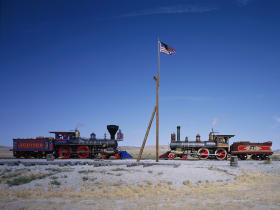
Golden Spike National Historic Site
18 miles away
At Golden Spike National Historic Site near Corinne, full-size working replicas of the Jupiter and Engine 119 - the two locomotives that met at Promontory Summit on May 10, 1869 - are displayed in the...
Logan Canyon Scenic Byway
31 miles away
Logan Canyon is a dramatic limestone canyon carved by the Logan River, one of the most scenic mountain drives in northern Utah.