
Sand Mountain Recreation Area
US-50, Fallon, NV
Fallon, NV
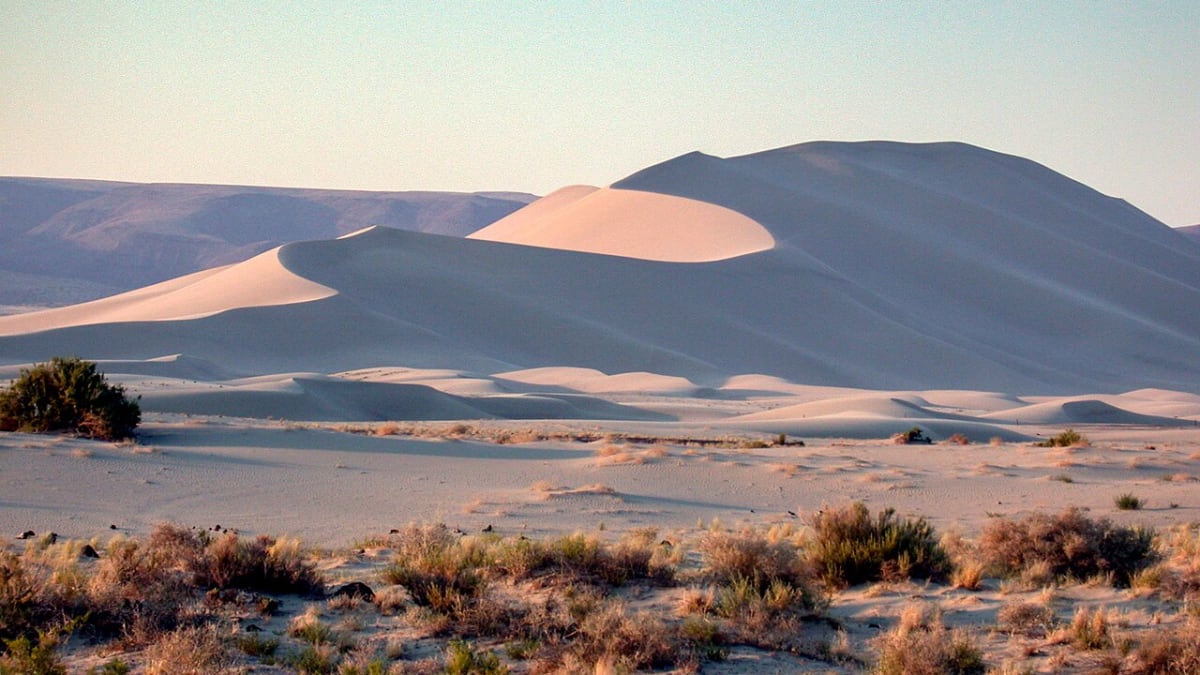
A two-mile mountain of pale sand that hums in the wind, rising alone from the desert beside the Loneliest Road.
Sand Mountain is one of the strangest and most striking sights on Nevada's US-50, a pale dune about two miles long and some 600 feet high, rising alone from the desert floor in a corner between two mountain ranges. Visible for miles across the empty basin, it looks almost out of place, a mountain of sand where the rest of the country is rock and sagebrush.
What makes it more than just a big dune is that it sings. When conditions are right and the dry sand slides down the steep face, it produces a deep, resonant hum that can carry a long way, one of the very few singing dunes in North America. At its base sit the stone ruins of a Pony Express station, tying this lonely spot to one of the West's most romantic chapters.
What Travelers Love
- The rare sight of a huge, isolated sand dune glowing pale against the dark desert ranges
- The eerie hum the dune makes when the sand slides, one of the few singing dunes in the country
- The ruins of the Sand Springs Pony Express station right at the base
- Wide-open off-road riding and stargazing far from any city lights
Worth Knowing
- It is a popular off-highway-vehicle area, so summer weekends can be busy and loud, while weekdays are quiet
- There is no shade or water and summer sand gets blistering hot, so bring plenty and avoid midday heat
- The Pony Express station ruins are fragile and protected, so look but do not disturb them
- A federal recreation pass or fee applies at the developed area, so check current requirements
Learn about Sand Mountain Recreation Area
How the dune came to be
Sand Mountain is built from the remains of ancient Lake Lahontan, the Ice Age sea that once covered much of western Nevada. As the lake dried, its old beaches and bottom were left as loose sand, and the prevailing winds have swept that sand across the basin and piled it against the mountains here, building the dune over thousands of years.
The dune keeps growing and shifting as the wind continues to carry sand from the surrounding flats, so its exact shape changes over time. Standing alone and tall, it is a living illustration of how wind reshapes a dry landscape long after the water is gone.
The singing sand
Only a handful of dunes in the world sing, and Sand Mountain is one of them. When a mass of dry sand slides down the steep leeward face, the grains shear past one another in a way that sets them vibrating together, producing a low, humming drone that some describe as an airplane or a distant organ.
The effect depends on delicate conditions. The sand grains must be rounded, of a certain size, high in silica, and at the right dryness, which is why the dune sings on some days and stays silent on others. It is worth pausing, away from engine noise, to listen for it.
The Sand Springs Pony Express station
At the foot of the dune lie the stone ruins of the Sand Springs Pony Express station, one of the relay posts where riders carrying the mail across the West swapped tired horses for fresh ones in 1860 and 1861. The Pony Express lasted only about a year and a half before the telegraph made it obsolete, which makes its surviving stations rare.
The Sand Springs ruins were excavated and stabilized and are protected on the National Register of Historic Places. Walking among the low stone walls, with the great dune rising behind, brings the hard reality of the Pony Express down to earth: a lonely outpost in a harsh basin, a place to rest before riding on.
The Loneliest Road
Sand Mountain sits on US-50, the highway an old magazine article once dismissed as the Loneliest Road in America, a label Nevada happily embraced. The route rolls across basin after basin between distant mountain ranges, one of the great empty drives in the country, and the dune is among its most memorable stops.
Today the developed recreation area at the dune draws off-highway riders to its open sand, especially on weekends, while weekdays and the shoulder seasons offer quiet and space. Either way, the combination of a singing mountain of sand, a frontier ruin, and a sky full of stars makes it a classic Nevada road-trip stop.
Closest Boutels
The closest Boutel™ stays, so you can turn this stop into an overnight. Each is a place we chose through independent editorial review, never a paid placement.
Details
Fallon, NV
Frequently asked questions
What is the Sand Mountain Recreation Area?
The Sand Mountain Recreation Area, along US Route 50 east of Fallon in central Nevada, is a striking desert landmark, a massive sand dune rising hundreds of feet above the desert floor, famous as a booming singing dune and a popular spot for off-highway vehicle recreation. One of the largest single sand dunes in the region, Sand Mountain is known for the low, resonant booming sound it can make as sand slides down its slopes, and it draws off-road enthusiasts who ride the dunes, as well as sightseers who climb for views. Nearby lies a historic Pony Express station site. A dramatic and unusual desert feature, it offers adventure and scenery. With its giant singing dune, the Sand Mountain Recreation Area offers a spectacular destination in Nevada.
What can you do at the Sand Mountain Recreation Area?
You can ride off-highway vehicles on the dunes, climb the towering sand mountain for sweeping desert views, listen for the dune's famous booming sound, sandboard, camp, and visit the nearby historic Pony Express station site. The giant dune, the off-road recreation, the climb and views, and the unusual singing sands are the draws, making it a dramatic and adventurous desert destination. Climbing the soft, steep sand is a strenuous workout. With its dune and recreation, the Sand Mountain Recreation Area offers a rewarding experience in Nevada.
What should I know before visiting the Sand Mountain Recreation Area?
The desert can be intensely hot, especially in summer, and the sand can become dangerously hot, so bringing plenty of water, wearing shoes, using sun protection, and visiting in cooler weather or hours are important. The area is popular with off-highway vehicles, so being aware of riders when on foot and following all safety rules matter, and a use fee or permit may apply. Climbing the steep, soft dune is exhausting, so pacing yourself helps. Coming prepared for the heat and staying aware of vehicles ensure a safe visit to the Sand Mountain Recreation Area in Nevada.
When is the best time to visit the Sand Mountain Recreation Area?
The cooler months of fall through spring offer the most comfortable weather for climbing the dune and exploring, while summer brings intense heat and dangerously hot sand, so early morning or cooler months are far better, and the off-road riding is popular in the cooler seasons. The dune is especially striking in the soft light of early morning and late afternoon. For comfortable weather to climb and explore, aim for fall through spring at the Sand Mountain Recreation Area in Nevada.
What is near the Sand Mountain Recreation Area?
The Sand Mountain Recreation Area is along US Route 50 east of Fallon in central Nevada, near the Grimes Point petroglyphs and the Middlegate Shoe Tree, within reach of Fallon, the historic Pony Express route, and the Reno area to the west. That makes the Sand Mountain Recreation Area a spectacular stop to combine with the Grimes Point petroglyphs, the Middlegate Shoe Tree, and the other attractions of central Nevada on a visit to the state.
Nearby
Grimes Point Petroglyphs, near Fallon
11 miles away
Grimes Point lies just off US-50 about 10 miles east of Fallon, a low rise scattered with dark, desert-varnished basalt boulders.
The Middlegate Shoe Tree, US-50
33 miles away
The Middlegate Shoe Tree stands beside US-50 a couple of miles east of the tiny Middlegate Station, out on the stretch of highway nicknamed the Loneliest Road in America.
Fort Churchill State Historic Park
41 miles away
Fort Churchill State Historic Park lies along the Carson River off US-50 Alt (SR-95A), about 8 miles south of Silver Springs.