
Randyland
1307 Federal St, Pittsburgh, PA
Pittsburgh, PA
A corner house painted every color at once, its courtyard a joyful jumble of murals, found objects, and hand-lettered good cheer.
Randyland is one of Pittsburgh's most joyful surprises, a corner house and courtyard on the North Side painted in every color imaginable and packed with murals, mosaics, mannequins, planters, and hand-lettered messages of hope. It is the lifelong project of Randy Gilson, a local artist who transformed a rundown corner into a free-spirited public art environment that has become a beloved city landmark.
What makes it special is not just the color but the spirit behind it. Gilson built the whole thing himself from salvaged and donated materials, and he often greets visitors in person. The place radiates a homemade, come-as-you-are welcome, and it stands as proof of how one determined person with a paintbrush can change the feel of a whole neighborhood.
What Travelers Love
- The exuberant courtyard where every wall, planter, and object is painted in bright color
- The story of Randy Gilson, who built it all himself out of found and salvaged materials
- A cheerful, welcoming stop that is donation-based and open to all
- The murals and messages of kindness worked into every corner
Worth Knowing
- It is a compact courtyard rather than a long attraction, easy to fit into a North Side walk
- The space is popular for photos, so weekday and early visits are quieter
- It runs on goodwill and welcomes visitors, with donations supporting its upkeep
- Pair it with the surrounding Mexican War Streets and nearby museums for a fuller day
Learn about Randyland
Randy Gilson and a courtyard built by hand
Randy Gilson grew up in tough circumstances and spent much of his life working service jobs in Pittsburgh, but he had a gift for turning neglected spaces into something beautiful. He began planting gardens and painting on the North Side, and eventually bought a rundown corner property that he set about transforming into the riot of color now known as Randyland.
Nearly everything in the courtyard was found, salvaged, or donated, then painted and arranged by Gilson himself over many years. He built it without formal training, following his own instinct for color and cheer, and he has kept it open and welcoming as a gift to the city rather than a business. His own story of turning hardship into art is inseparable from the place.
The Mexican War Streets
Randyland sits in the Mexican War Streets, a historic North Side neighborhood laid out in the mid-nineteenth century, its streets named for battles and generals of the Mexican-American War. The district is a well-preserved grid of brick rowhouses that went through decline and then revival, and it is now known for its architecture and its arts scene.
Gilson's work is part of what drew attention back to the neighborhood, adding a burst of color to blocks of stately old houses. A visit to Randyland naturally leads to a walk through the surrounding streets, where the historic architecture and the folk-art courtyard make an unexpected pairing.
Color as a public gift
Randyland belongs to a tradition of self-taught folk-art environments, places where a single visionary spends years covering a home and yard in art. What sets Gilson's apart is its openness and its message. The murals carry words of kindness, gratitude, and encouragement, and the whole space is meant to lift the spirits of anyone who wanders in.
The courtyard runs on donations and goodwill rather than ticket sales, in keeping with its founder's belief that beauty should be shared. That generosity is part of the appeal. Visitors leave not just with bright photographs but with the sense of having met a place made purely to make people happy.
Pittsburgh's North Side and its history
The wider region is the ancestral homeland of the Lenape, Shawnee, and Haudenosaunee peoples, who lived and traveled through the Ohio Valley before the city rose at the meeting of its three rivers. Displacement pushed these nations westward over the eighteenth and nineteenth centuries, and their descendant communities continue elsewhere today.
The North Side began as the separate city of Allegheny before it was annexed into Pittsburgh, and it grew as a district of immigrants, industry, and grand civic buildings. After decades of decline in the twentieth century, artists and preservationists helped revive its old neighborhoods, and Randyland is one of the brightest signs of that revival.
Closest Boutels
The closest Boutel™ stays, so you can turn this stop into an overnight. Each is a place we chose through independent editorial review, never a paid placement.
Details
Pittsburgh, PA
Frequently asked questions
What is Randyland?
Randyland is one of Pittsburgh's most joyful and colorful attractions, a free public folk-art courtyard and museum in the Mexican War Streets neighborhood on the North Side. Created by local artist Randy Gilson, it transforms an entire corner building into an explosion of bright murals, painted found-object art, and whimsical creations. Widely considered one of the most colorful buildings in America, it radiates positivity and creativity, offering a delightful, uplifting stop that is completely free to enjoy.
What can you do at Randyland?
You can wander the vibrant open-air courtyard, take countless photos amid the riot of color, quirky sculptures, and found-object art, and simply soak up the cheerful, welcoming atmosphere. It is a favorite spot for photographers and anyone looking for a dose of pure, playful creativity. Often the artist himself is around, adding to the friendly, community feel. It is a quick but memorable visit that leaves most people smiling.
Is Randyland free, and how long does a visit take?
Yes, Randyland is free to visit, part of its generous, community-spirited charm, though donations are appreciated to help maintain the ever-evolving artwork. A visit is short, typically around half an hour, making it easy to fold into a day exploring Pittsburgh's North Side. Because it is so photogenic and uplifting, many visitors find it a memorable highlight despite its small size, and its free admission makes it an easy, feel-good stop.
When is the best time to visit Randyland?
Spring through fall is ideal for enjoying the outdoor courtyard in pleasant weather and good light, and daytime visits let you fully appreciate the vivid colors and detail. Because it is compact and popular, weekday or earlier visits are quieter for photos. The bright, sunny setting is at its best on a clear day, so timing a visit for nice weather makes the color pop even more in your pictures.
What is near Randyland?
Randyland sits in the historic Mexican War Streets on Pittsburgh's North Side, within easy reach of other attractions including the National Aviary, the Andy Warhol Museum, and the Children's Museum of Pittsburgh, along with the neighborhood's charming rowhouses and eateries. The North Shore, with its riverfront and stadiums, is close by too. That makes Randyland an easy, colorful addition to a day exploring the creative, walkable North Side of Pittsburgh.
Nearby
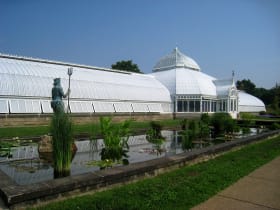
Phipps Conservatory and Botanical Gardens
3.4 miles away
A dependable rainy-day or cold-day stop that keeps young kids engaged.

Pennsylvania Trolley Museum
23 miles away
Rail buffs know it, but most travelers driving past Washington have no idea it is here.
Idlewild and SoakZone
41 miles away
This is a park built for younger kids, not teenagers chasing coasters.