
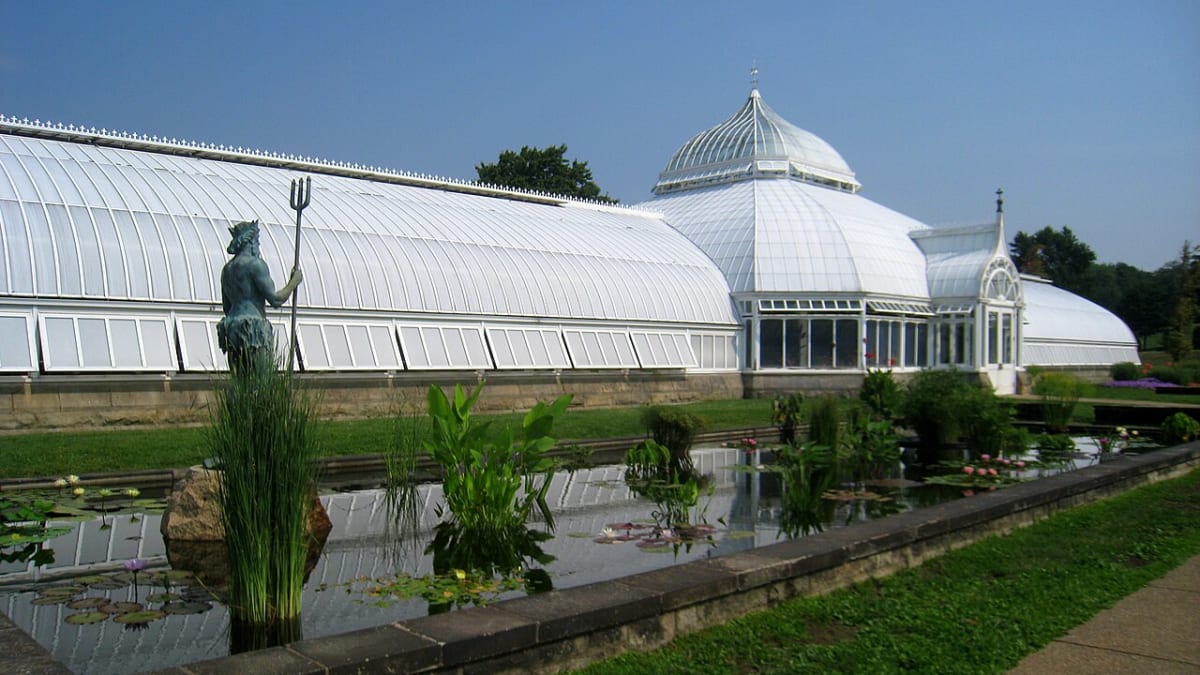
Phipps Conservatory and Botanical Gardens
1 Schenley Dr, Pittsburgh, PA
Pittsburgh, PA
A glittering Victorian glasshouse in the middle of a city park, where palm court, orchid room, and desert glide one into the next under a canopy of glass.
Phipps Conservatory is a grand Victorian glasshouse set in Pittsburgh's Schenley Park, a series of connected glass rooms that carry visitors from a soaring palm court into ferns, orchids, tropical fruit, and desert cactus, each under its own dome of glass. Opened in the 1890s, it remains one of the country's finest surviving greenhouses of its era, still full of flowers through every season.
Beyond the historic glasshouse, Phipps has grown into a modern botanical institution known for sustainability, with additions built to some of the greenest standards in the world. The result is a place where nineteenth-century ironwork and twenty-first-century green building sit side by side, all in service of plants and the people who come to see them.
What Travelers Love
- Moving room to room through palm court, fern room, orchid house, and desert under one glass roof
- The big seasonal flower shows that change the displays through the year
- The blend of a restored Victorian glasshouse with modern, energy-efficient additions
- Walking straight out into Schenley Park's woods and trails afterward
Worth Knowing
- The tropical rooms are warm and humid year-round, so dress in layers you can shed
- The seasonal flower shows are a highlight, so it is worth checking what is in bloom before you go
- Timed entry is common at popular gardens, so plan your visit ahead on busy weekends
- Photography is popular here, but be mindful of others in the narrow glasshouse aisles
Learn about Phipps Conservatory and Botanical Gardens
A gift of glass to Pittsburgh
The conservatory was a gift to the city from Henry Phipps, a steel partner of Andrew Carnegie, who wanted to give Pittsburgh's working families a place of beauty and refuge from the smoke of the mills. It opened in the 1890s in the new Schenley Park, its central structure fabricated from iron and glass in the great Victorian glasshouse tradition.
From the start it drew crowds for its flower shows and its collection of exotic plants brought from around the world, some gathered at a world's fair of the era. Through more than a century of Pittsburgh's transformation from steel town to modern city, the glasshouse has stayed open and blooming, one of the constants of the park.
Room by room under the glass
The pleasure of Phipps is walking from one climate to the next without stepping outside. The palm court rises high overhead, the fern room drips with green, the orchid room glows with color, and the desert room holds cactus and succulents from the world's dry places. Between them sit specialty rooms devoted to bonsai, tropical fruit, and other collections.
Threaded through the permanent rooms are the seasonal flower shows, which transform the displays with tulips and spring bulbs, summer color, autumn chrysanthemums, and winter poinsettias and lights. Because the shows rotate, no two visits in different seasons feel quite the same.
A leader in green building
In recent decades Phipps has become as well known for its buildings as its plants. Newer wings and the Center for Sustainable Landscapes were designed to some of the most demanding environmental standards in the world, generating their own energy and treating their own water, and turning the institution into a working model of sustainability.
The pairing is deliberate. A place devoted to plants uses its own campus to show how buildings can tread lightly, so a visit becomes a lesson in ecology as well as horticulture. The old glasshouse and the new green additions together tell a story of a city reinventing itself around cleaner ideas.
Schenley Park and the land it stands on
The wider region is the ancestral homeland of the Lenape, the Shawnee, and the Haudenosaunee peoples, who lived and traveled through the Ohio Valley long before Pittsburgh grew up at the meeting of its three rivers. Displacement pushed these nations westward over the eighteenth and nineteenth centuries, and their descendant communities continue elsewhere today.
The glasshouse itself sits within Schenley Park, hundreds of acres of woods, trails, and ravines given to the city in the same era. Many visitors pair the conservatory with a walk in the surrounding park, so the cultivated tropics inside give way to Pennsylvania oak and maple just outside the doors.
Closest Boutels
The closest Boutel™ stays, so you can turn this stop into an overnight. Each is a place we chose through independent editorial review, never a paid placement.
Details
Pittsburgh, PA
Frequently asked questions
What is Phipps Conservatory?
Phipps Conservatory and Botanical Gardens is a stunning historic glasshouse and garden in Pittsburgh's Schenley Park, dating to the 1890s. Under its soaring Victorian glass domes, it houses a lush world of plants, from tropical forests and orchids to bonsai and desert species, along with elaborate seasonal flower shows and often dazzling glass-art installations woven among the greenery. A beloved city landmark, it offers year-round beauty and a warm, blooming escape in any weather.
What can you see at Phipps Conservatory?
Highlights include a tropical forest room, a nationally recognized orchid collection, a butterfly room alive with fluttering butterflies, bonsai and desert plant displays, and richly themed seasonal flower shows that change through the year. The winter holiday show, with its lights and model trains, is especially popular. Glass-art sculptures frequently accent the plantings, adding a striking artistic dimension. The variety and craftsmanship of the displays place Phipps among the finest botanical gardens anywhere.
When is the best time to visit Phipps Conservatory?
As an indoor glasshouse, Phipps is beautiful year-round and makes an ideal choice on a cold or rainy day. Each season brings a different flower show, and the winter holiday display is a spectacular highlight, though it gets extremely crowded around Christmas and New Year's, so visiting on a weekday or in early January means more space and calm. A visit typically takes an hour to an hour and a half, so it is easy to fit into a Pittsburgh day.
Is Phipps Conservatory good for families?
Yes. Children are delighted by the butterfly room, the tropical plants, the seasonal displays, and the model trains in the holiday show, and the manageable size keeps young visitors engaged without wearing them out. It offers family activities and a magical, colorful environment that appeals across ages. While admission is not cheap, most visitors feel the quality of the displays and the friendly, knowledgeable staff make it well worth the price for a family outing.
What is near Phipps Conservatory?
Phipps sits in Pittsburgh's Oakland neighborhood, surrounded by Schenley Park and close to a cluster of cultural attractions, including the Carnegie Museums of Art and Natural History and the University of Pittsburgh's landmark Cathedral of Learning. The area's universities, dining, and green space make it easy to build a full day. That central, walkable setting makes Phipps a natural centerpiece for exploring Pittsburgh's rich museum and park district.
Nearby
Randyland
3.4 miles away
Locals send visitors here and grin about it. Randyland at 1501 Arch St is a free courtyard on the North Side that folk artist Randy Gilson has been painting and decorating for decades, turning a rough...

Pennsylvania Trolley Museum
23 miles away
Rail buffs know it, but most travelers driving past Washington have no idea it is here.
Idlewild and SoakZone
37 miles away
This is a park built for younger kids, not teenagers chasing coasters.