
Ralph Stanley Museum
134 Dickenson Hwy, Clintwood, VA
Clintwood, VA
A museum in a deep mountain town to the man whose high, lonesome voice carried old-time Appalachian music to the world.
The Ralph Stanley Museum honors one of the towering figures of American mountain music, born and raised in these Dickenson County hills. Ralph Stanley, with his brother Carter as the Stanley Brothers and later on his own, helped shape bluegrass and carried old-time Appalachian singing to audiences far beyond the mountains, his high, lonesome tenor and clawhammer banjo instantly recognizable.
The museum sits in Clintwood, deep in the coalfields of far southwest Virginia, in a restored historic house that suits the region's heritage. It tells the story of the Stanleys and the musical world they came from, a place where church singing, ballads, banjos, and fiddles were woven into daily mountain life.
What Travelers Love
- The story of Ralph Stanley and the Stanley Brothers told in the mountains that made them
- Exhibits on old-time and bluegrass music and the region's deep musical roots
- A restored historic house that gives the museum its handsome setting
- Being on the Crooked Road, Virginia's heritage music trail through the mountains
Worth Knowing
- The museum keeps small-town hours that vary by season, so check current days before visiting
- It is a community heritage museum that welcomes visitors and depends on their support
- The roads into this remote corner are winding mountain routes, so allow extra driving time
- Pair a visit with a stop at a nearby Crooked Road music venue for the living tradition
Learn about Ralph Stanley Museum
Ralph Stanley and the Stanley Brothers
Ralph Stanley grew up in the mountains of Dickenson County, learning the old clawhammer banjo style and the a cappella hymn singing of his home church. With his older brother Carter he formed the Stanley Brothers, whose recordings from the late 1940s onward became foundational to bluegrass, blending the drive of the new genre with the older ballads and sacred songs of the mountains.
After Carter's death, Ralph carried on for decades as a solo artist and bandleader, keeping the traditional sound alive when trends moved elsewhere. Late in his long life he found a wide new audience when his stark, unaccompanied singing of an old mountain hymn featured in a hit film, introducing his high, lonesome voice to a generation that had never heard it.
The music of these mountains
The Stanleys did not invent their sound so much as inherit it. The mountains of southwest Virginia hold one of the richest traditional-music cultures in the country, where ballads carried from the British Isles, African American banjo styles, church harmony, and fiddle tunes mingled over generations into old-time and, later, bluegrass music.
The museum sets Ralph Stanley within that larger tradition, showing how the songs, instruments, and singing styles of the region shaped him and how he in turn carried them forward. It is as much a window on Appalachian musical culture as a tribute to one man.
The house and the exhibits
The museum occupies a restored historic house in Clintwood, a handsome old building that gives the collection a fitting home in the heart of town. Inside, exhibits gather instruments, recordings, photographs, stage clothing, and memorabilia that trace Stanley's career from the mountain churches of his youth to the concert stage and recording studio.
The displays let visitors hear the music as well as read about it, so the sound that made Stanley famous fills the rooms. For anyone drawn to bluegrass and old-time music, it is a chance to stand in the very landscape that produced it.
The Crooked Road
The museum is a stop on the Crooked Road, Virginia's heritage music trail, a route that winds through the southwestern mountains linking the venues, festivals, and communities that keep old-time and bluegrass music alive. Along the trail, small-town jam sessions, weekend music halls, and festivals carry on a living tradition rather than a museum piece.
That makes Clintwood a natural base for a music-minded trip through the region, where a museum visit can be followed by an evening of the real thing at a nearby venue. The mountains here reward slow travel, and the music is best experienced in the places that still play it.
Closest Boutels
The closest Boutel™ stays, so you can turn this stop into an overnight. Each is a place we chose through independent editorial review, never a paid placement.
Details
Clintwood, VA
Frequently asked questions
What is the Ralph Stanley Museum?
The Ralph Stanley Museum, in the town of Clintwood in far Southwest Virginia, honors the legendary bluegrass and old-time musician Ralph Stanley, a native of the region and one of the most influential figures in traditional Appalachian and bluegrass music. The museum tells the story of Stanley's life and career, his family's musical legacy, and the mountain music tradition of Southwest Virginia, with exhibits, memorabilia, recordings, and artifacts. A cornerstone of the region's music heritage, it delights fans of bluegrass and old-time music. With its tribute to a bluegrass legend and Appalachian music, the Ralph Stanley Museum offers an engaging destination in Southwest Virginia.
Who was Ralph Stanley?
Ralph Stanley was a legendary American bluegrass and old-time musician, a singer and banjo player from the mountains of Southwest Virginia who, with his brother in the Stanley Brothers and later his own band, became one of the most revered and influential figures in traditional Appalachian and bluegrass music. His distinctive high, mournful singing and old-time banjo style, rooted in his mountain heritage, won him wide acclaim, especially later in his life. The museum in his home region honors his enduring legacy. Learning about his life and music makes the Ralph Stanley Museum a meaningful stop in Southwest Virginia.
What can you see at the Ralph Stanley Museum?
You can see exhibits, memorabilia, instruments, recordings, photographs, and artifacts chronicling the life and career of Ralph Stanley, his family's musical legacy, and the old-time and bluegrass music tradition of Southwest Virginia. The displays trace his journey from the mountains to wide acclaim and celebrate the region's rich musical heritage. Fans of bluegrass and old-time music especially appreciate the tribute. Set in his home region along the Crooked Road music trail, it deepens appreciation of the music. With its exhibits on a bluegrass legend and mountain music, the Ralph Stanley Museum offers an engaging visit in Clintwood, Southwest Virginia.
When is the best time to visit the Ralph Stanley Museum?
As an indoor museum, the Ralph Stanley Museum is enjoyable year-round in any weather, though checking current days and hours before you go is wise, as they can vary, especially in this rural area. The surrounding mountains of Southwest Virginia are especially beautiful in the milder months and in fall color, making spring through fall a lovely time to combine a visit with the region's other music sites along the Crooked Road. For the museum any time paired with beautiful mountain scenery, aim for spring through fall at the Ralph Stanley Museum in Clintwood, Southwest Virginia.
What is near the Ralph Stanley Museum?
The Ralph Stanley Museum is in the town of Clintwood in far Southwest Virginia, along the Crooked Road music trail, within reach of the Southwest Virginia Museum Historical State Park and June Tolliver House in Big Stone Gap, Natural Tunnel State Park, and the historic town of Abingdon with the Barter Theatre. That makes the Ralph Stanley Museum an engaging stop to combine with Big Stone Gap's attractions, the Crooked Road music sites, and the other sights of Southwest Virginia on a visit to the state.
Nearby
Breaks Interstate Park
13 miles away
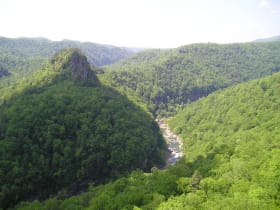
The Russell Fork River has spent millions of years sawing straight through Pine Mountain, and the result is the deepest gorge east of the Mississippi, over 1,000 feet in places and five miles long.
Big Sandy Heritage Center
23 miles away
Most travelers pass through Pikeville chasing the Cut-Through view and never find this one upstairs.
Pikeville Cut-Through Overlook
24 miles away
For the quickest way to understand what Pikeville pulled off, drive up to the Cut-Through Overlook at Bob Amos Park.