
Big Sandy Heritage Center
54 Julius Ave, Pikeville, KY
Pikeville, KY
A mountain museum that gathers the story of the Big Sandy valley, from coal and railroads to the famous Hatfield and McCoy feud that unfolded in these hills.
The Big Sandy Heritage Center gathers under one roof the layered story of far eastern Kentucky, the rugged coalfield country drained by the Big Sandy River and its forks. This is a landscape of steep, folded ridges and narrow bottomland where mountain families, coal, railroads, and one of the most famous family feuds in American history all left their mark.
The center's exhibits carry visitors through that history: the deep culture of Appalachian mountain life, the coming of the railroads and the coal boom that reshaped the region, and the Hatfield and McCoy feud, whose violence unfolded in these very valleys along the Kentucky and West Virginia line. It is the kind of regional museum that makes sense of a whole corner of the state.
What Travelers Love
- Exhibits on the Hatfield and McCoy feud, which played out in this very country
- The story of coal and the railroads that carved into these mountains
- Displays of everyday mountain life, tools, music, and craft
- A grounding stop before touring the feud sites in the surrounding hills
Worth Knowing
- The center focuses on the history and culture of the Big Sandy valley region
- It makes a good starting point for exploring the Hatfield and McCoy country nearby
- Pikeville is known for the Cut-Through, an enormous engineering project that rerouted a river
- The exhibits cover coal, railroads, feuds, and mountain daily life together
Learn about Big Sandy Heritage Center
The Big Sandy valley
The Big Sandy River forms part of Kentucky's eastern border with West Virginia, and its Levisa and Tug forks reach up into some of the most rugged country in the Appalachians. Long before settlers arrived, these mountains were hunting grounds crossed by the Shawnee, Cherokee, and other nations whose ancestral ties to the region run deep, and whose descendant nations continue today, largely removed westward to Oklahoma.
Scots-Irish, English, and German settlers pushed into the narrow valleys in the late 1700s and 1800s, building a distinct mountain culture of subsistence farming, ballad singing, and tight kinship networks in the isolated hollows. The Big Sandy Heritage Center works to preserve that culture and the objects and stories that carry it, from handmade tools to old photographs of valley life.
Coal, railroads, and the boom
Everything changed when outside interests realized how much coal lay under these mountains. In the late 1800s and early 1900s, railroads pushed up the valleys, and coal camps and towns sprang up almost overnight. The region became one of the great coalfields of Appalachia, and the boom brought wealth, hard labor, and profound change to a place that had been remote and self-sufficient.
The center's exhibits trace this transformation, the railroads that threaded the hollows, the miners who went underground, and the towns that rose and sometimes fell with the price of coal. It is a story of both opportunity and hardship, and it shaped the modern history of eastern Kentucky as powerfully as anything before or since.
The Hatfields and the McCoys
The most famous story of the Big Sandy country is the feud between the Hatfield family of West Virginia and the McCoy family of Kentucky, which erupted along the Tug Fork in the years after the Civil War and became a byword for family vendetta across America. Rooted in old grievances, disputed property, and hard mountain pride, it grew into a cycle of killings that drew in the courts, the governors of two states, and the national press.
The Big Sandy Heritage Center interprets the feud in its true setting, this rugged border country, and helps visitors sort the history from the legend. It also serves as a natural first stop for travelers who want to tour the actual feud sites scattered through the hills nearby, from cemeteries to old homeplaces, where the story really happened.
Pikeville and the mountains
Pikeville, the center's home, is the hub of the far eastern Kentucky mountains, known for a remarkable feat of engineering called the Pikeville Cut-Through, which sliced through a mountain to reroute the Levisa Fork, the railroad, and a highway all at once and free the crowded valley below. It is one of the largest earth-moving projects ever undertaken in the region.
From Pikeville, the whole coalfield country opens up: winding mountain highways, the forks of the Big Sandy, and the ridgelines that shaped this insular, resilient culture. The heritage center gives visitors the context to understand what they are seeing as they drive out into those hills.
Closest Boutels
The closest Boutel™ stays, so you can turn this stop into an overnight. Each is a place we chose through independent editorial review, never a paid placement.
Details
Pikeville, KY
Frequently asked questions
What is the Big Sandy Heritage Center?
The Big Sandy Heritage Center, in Pikeville in eastern Kentucky, is a regional museum preserving and sharing the rich history, culture, and heritage of the Big Sandy Valley and the Appalachian coalfields region. The museum's exhibits cover the area's Native American history, pioneer settlement, coal-mining heritage, the famous Hatfield and McCoy feud connected to the region, and the culture and daily life of the mountain communities. A welcoming window into the story of eastern Kentucky's mountains and people, it offers an engaging and educational stop for those exploring the region's heritage. With its regional history and exhibits, the Big Sandy Heritage Center offers a fascinating destination in Kentucky.
What can you see at the Big Sandy Heritage Center?
You can explore exhibits on the Big Sandy Valley's Native American history, pioneer settlement, coal-mining heritage, the famous Hatfield and McCoy feud tied to the region, and the culture and daily life of the Appalachian mountain communities. The regional history, the feud story, the coal and pioneer heritage, and the cultural exhibits are the draws, offering an engaging and educational look at eastern Kentucky's story. It provides rich context for exploring the region. With its regional history, the Big Sandy Heritage Center offers an engaging visit in Pikeville, Kentucky.
What was the Hatfield and McCoy feud?
The Hatfield and McCoy feud was a famous and violent conflict between two families in the Appalachian border country of Kentucky and West Virginia in the late nineteenth century, one of the most legendary feuds in American history. Rooted in disputes, grudges, and the rugged, isolated mountain culture of the era, the feud escalated into years of violence between the families and became a symbol of Appalachian conflict in popular imagination. The Big Sandy region figures in this history. The Big Sandy Heritage Center helps interpret this and other regional history, adding intrigue to a visit in Kentucky.
When is the best time to visit the Big Sandy Heritage Center?
As an indoor museum, the Big Sandy Heritage Center is enjoyable year-round in any weather, making it a rewarding stop in any season, while the mild months are pleasant for combining it with the scenic Appalachian attractions of the Pikeville area like the Cut-Through overlook and Breaks Interstate Park. Because hours can vary, checking the current schedule before you go is wise. Because it is indoors, the Big Sandy Heritage Center makes a rewarding stop any time of year in Pikeville, Kentucky.
What is near the Big Sandy Heritage Center?
The Big Sandy Heritage Center is in Pikeville in eastern Kentucky, within reach of the Pikeville Cut-Through overlook, Breaks Interstate Park on the Kentucky and Virginia border, Butcher Holler near Van Lear, and the eastern Kentucky Appalachian country. That makes the Big Sandy Heritage Center a fascinating stop to combine with the Pikeville Cut-Through overlook, Breaks Interstate Park, and the other attractions of eastern Kentucky on a visit to the state.
Nearby
Pikeville Cut-Through Overlook
1.7 miles away
For the quickest way to understand what Pikeville pulled off, drive up to the Cut-Through Overlook at Bob Amos Park.
Breaks Interstate Park
18 miles away
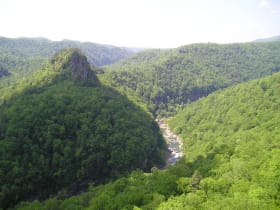
The Russell Fork River has spent millions of years sawing straight through Pine Mountain, and the result is the deepest gorge east of the Mississippi, over 1,000 feet in places and five miles long.

The Coal House
19 miles away
It is exactly what it sounds like, and it stops people in their tracks: a building made of coal.