
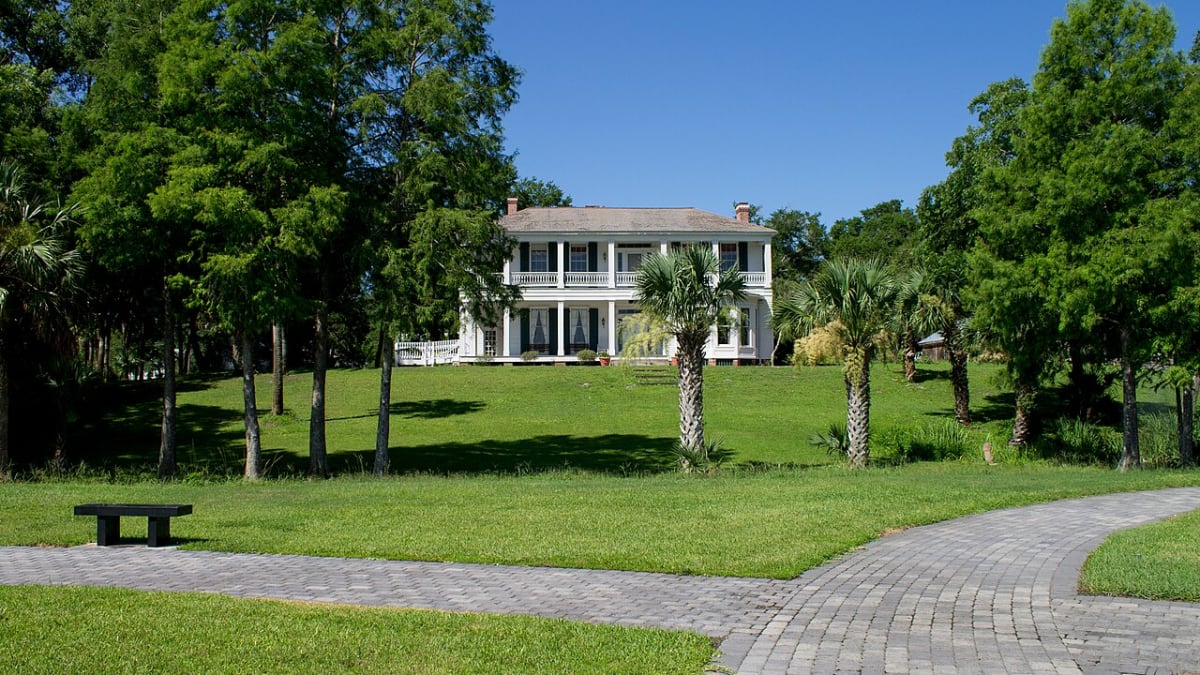
Orman House Historic State Park
177 5th St
Apalachicola, FL
An 1838 cotton king's house shipped down from New York in pieces, looking out over the Apalachicola River, with a botanist's garden growing next door.
The Orman House is the kind of place that makes a small town's whole history suddenly visible. Thomas Orman was a cotton merchant, and in the 1830s Apalachicola was booming as one of the Gulf Coast's great cotton ports, third only to New Orleans and Mobile in the amount of cotton that moved through it. Orman wanted a house to match his standing, and in 1838 he got one.
What makes it remarkable is how it was built. The fine woodwork, the doors, the trim, and the windows were all manufactured up in Syracuse, New York, loaded onto a ship, sailed all the way down the Atlantic and around Florida, and assembled here on the bluff above the river. Today the house is a Florida state park, furnished to its era, standing over the same river that carried the cotton that paid for it.
What Travelers Love
- A beautifully preserved 1838 antebellum home, one of the oldest houses on the Forgotten Coast
- The story of a house built in New York, shipped south in pieces, and reassembled on this bluff
- The adjoining Chapman Botanical Gardens, with a butterfly garden and quiet walking paths
- The view over the Apalachicola River, the same trade route that made the town rich
Worth Knowing
- The grounds and gardens are open daily for a stroll, while the house itself is seen on a guided tour, so it is worth checking the tour schedule before you go
- A small state-park admission or tour fee applies for the house, and the gardens beside it are free to walk
- The house is historic and its rooms are furnished with period pieces, so it is a look-and-listen visit rather than a hands-on one
- There is little shade on the open lawn in high summer, so bring water and sun protection, especially with children
Learn about Orman House Historic State Park
The house cotton built
In the middle of the 19th century, Apalachicola was one of the busiest cotton-shipping ports on the Gulf of Mexico. Cotton grown across the interior floated down the Apalachicola River to the town's warehouses and wharves, where it was loaded onto ships bound for the mills of the North and of England. Thomas Orman arrived in 1834 and spent the next fifty years as one of the town's leading merchants, helping turn the tiny settlement into a major port.
His house, finished in 1838, sits high on a bluff so that Orman could watch the ships and the river traffic from his own windows. It was a place of business as much as a home, where deals were struck and the town's leading families gathered. The design blends Federal and Greek Revival styles, with wooden mantelpieces, molded plaster cornices, and wide heart-pine floorboards, the kind of finish that announced a man had done well.
Built in New York, reassembled on the river
The most surprising thing about the Orman House is that much of it did not start here at all. In an age before local mills and hardware, the finish carpentry, the doors, the window sashes, and the trim were all made to order in Syracuse, New York, then shipped hundreds of miles by sea to Apalachicola and put together on site in 1838. In a young port town at the edge of the frontier, that was how a wealthy man got a refined house.
That origin tells you something about how connected these Gulf ports were to the wider world. Cotton went out to the North and to England, and finished goods, furniture, even the parts of a house, came back in. The Orman House is a physical record of that trade, a home assembled from the same shipping routes that made its owner rich, still standing after nearly two centuries above the water.
The Chapman Botanical Gardens
Beside the house lies a quieter treasure: the Chapman Botanical Gardens, named for Dr. Alvan Chapman, one of the most important American botanists of the 19th century. Chapman was born in Massachusetts and settled in Apalachicola in 1847, at the age of thirty-eight, and lived and worked here until his death at eighty-nine. From this small Gulf town he cataloged the plants of the southeastern United States, and his great work on southern flora became the standard reference for decades.
The gardens honor him with walkways, open lawns, native plantings, and a butterfly garden, a peaceful place to wander after touring the house. Together the mansion and the garden tell two sides of the same town: the merchant who shipped cotton to the world, and the doctor who quietly studied the wild plants growing all around him. Both left a mark far larger than the little port would suggest.
Visiting Orman House Historic State Park
The park sits at the edge of Apalachicola's walkable historic district, an easy stop on any visit to the Forgotten Coast. The grounds and the botanical gardens are open daily for a self-guided stroll, while the house itself is shown on a guided tour, so it is worth checking the tour times before you come. A small admission or tour fee supports the state park.
Give yourself an unhurried hour to walk through the furnished rooms, hear the story of how the house came to be, and then wander the Chapman gardens next door. Combine it with a walk through Apalachicola's old streets, where more than six hundred historic buildings survive, and a look at the river that carried the cotton, and you have a full picture of one of the most storied little towns on the Gulf.
Closest Boutels
The closest Boutel™ stays, so you can turn this stop into an overnight. Each is a place we chose through independent editorial review, never a paid placement.
Details
Apalachicola, FL
Frequently asked questions
What is Orman House Historic State Park?
Orman House Historic State Park, in the historic town of Apalachicola on Florida's Forgotten Coast in the Panhandle, preserves a beautiful nineteenth-century mansion overlooking the Apalachicola River. Built in the mid-nineteenth century by a prosperous cotton merchant, the elegant historic home blends Federal and Greek Revival architecture and is furnished to reflect the era, offering guided tours that share the history of the house, the family, and the cotton-trading heyday of Apalachicola. The grounds include gardens and a memorial. Set in a charming historic town, it offers a window into the antebellum river-port era. With its historic mansion and river-town heritage, Orman House Historic State Park offers a fascinating destination in Florida.
What can you do at Orman House Historic State Park?
You can take a guided tour of the beautiful historic nineteenth-century mansion, admiring its Federal and Greek Revival architecture and period furnishings, learn about the cotton merchant who built it and Apalachicola's heyday as a bustling cotton-trading river port, stroll the grounds and gardens overlooking the Apalachicola River, and explore the charming historic town nearby. The historic mansion, the tour, and the river-town history are highlights. It pairs well with exploring historic Apalachicola. With its historic mansion and heritage, Orman House Historic State Park offers an engaging visit in Apalachicola, Florida.
Why was Apalachicola an important cotton port?
Apalachicola was an important cotton port in the antebellum era because it sat at the mouth of the Apalachicola River, which carried cotton grown upriver in Georgia and Alabama down to the Gulf, making the town a bustling shipping hub where cotton was gathered, stored, and loaded onto ships for export. At its height it was one of the busiest ports on the Gulf. This cotton-trading prosperity built fine homes like the Orman House, whose owner was a cotton merchant. Understanding this river-port heritage adds depth to a visit to Orman House Historic State Park in Apalachicola, Florida.
When is the best time to visit Orman House Historic State Park?
Fall through spring offers the most comfortable weather for touring the historic house and grounds and exploring Apalachicola, with mild temperatures far more pleasant than the hot, humid Panhandle summer, while the mansion tour offers an indoor experience. The house is typically toured on a schedule, so checking current tour days and hours before you go is wise, as they can be limited. Apalachicola is charming to explore in the mild months. For the most comfortable weather and available tours, aim for fall through spring at Orman House Historic State Park in Florida.
What is near Orman House Historic State Park?
Orman House Historic State Park is in the historic town of Apalachicola on Florida's Forgotten Coast in the Panhandle, within reach of St. Joseph Peninsula State Park near Cape San Blas, the Apalachicola Bay oyster country, St. George Island, and the Gulf coast. That makes Orman House Historic State Park a fascinating stop to combine with St. Joseph Peninsula State Park, historic Apalachicola, and the other attractions of the Forgotten Coast on a visit to Florida.
Outside the Park
St. Joseph Peninsula State Park
26 miles away
A wild barrier peninsula at the tip of Cape San Blas on Florida's Forgotten Coast, with sugar-white sand once ranked the best beach in America and some of the tallest dunes east of the Mississippi.

St. Andrews State Park
53 miles away
This is the wild counterpoint to the high-rise beaches next door, a thousand acres of sugar-white dune, pine flatwoods, and marsh at the tip of Panama City Beach.

Wakulla Springs State Park
55 miles away
A short drive from the state capital drops you into what feels like the deep tropics.