

Wakulla Springs State Park
465 Wakulla Park Dr
Wakulla Springs, FL
One of the largest and deepest freshwater springs on earth, where a jungle river winds past gators and manatees below a grand 1930s lodge.
Edward Ball Wakulla Springs State Park protects one of the largest and deepest freshwater springs in the world, a place where a vast underground river surges up into a clear blue pool and flows out as the Wakulla River. Ancient, jungle-lined, and teeming with wildlife, it looks so primeval that Hollywood used it as a stand-in for the wild river in old Tarzan films and a classic creature feature.
The spring has drawn people for thousands of years, and its depths have yielded the bones of mastodons and other Ice Age animals, along with evidence of the earliest humans in Florida. In the 1930s the financier Edward Ball bought the land and built a grand stone-and-timber lodge above the spring, and his estate eventually became the state park that carries his name, a rare survival of old Florida just minutes from the capital.
What Travelers Love
- The immense, clear spring that pours out a river of cool water
- River boat tours past sunning alligators, wading birds, and, in winter, manatees
- Swimming and diving off the platform into the deep, cold spring
- The historic Wakulla Springs Lodge, a grand 1930s inn frozen in time
Worth Knowing
- The spring water stays cold year round, refreshing on a hot day and bracing on a cool one
- Boat tours run when the water is clear enough; heavy rain can cloud the spring and pause the glass-bottom trips
- Wild alligators are present, so swim only in the designated area and heed the rules
- Winter is the best time to see manatees, which move into the warm spring run
Learn about Wakulla Springs State Park
A window into the aquifer
Wakulla is a first-magnitude spring, meaning it discharges an enormous volume of water, pouring out a river's worth every day from a deep cavern in the limestone below. The water is the visible outlet of the Floridan aquifer, the vast underground reservoir that supplies much of the state, filtered clean through the rock and emerging cold and, in good conditions, gin clear.
Below the surface lies one of the most extensive underwater cave systems ever explored, a maze of flooded passages that cave divers have mapped for miles into the earth. That hidden plumbing connects the spring to sinkholes and rivers across the region, and it makes Wakulla a place where the ordinarily invisible workings of Florida's water are laid bare, a rare direct view into the aquifer that sustains the whole peninsula.
Bones of the Ice Age and ancient people
The clear depths of Wakulla have preserved an extraordinary record of the distant past. Divers and researchers have recovered the bones of mastodons, giant ground sloths, and other Ice Age megafauna from the spring and its caverns, animals that lived here when sea levels were lower and the land was drier. The spring has become an important site for understanding what Florida looked like tens of thousands of years ago.
People have lived around Wakulla for a very long time as well, and the area holds evidence of some of the earliest human presence in the Southeast. The Native peoples of this region, and later the Apalachee, whose ancestral homeland lay across the Florida Big Bend, knew and used these waters long before Europeans arrived. The spring's name itself comes from a word in the Native languages of the region.
The Lodge and Edward Ball's Florida
In the mid-1930s the financier Edward Ball, associated with the du Pont business interests in Florida, acquired the spring and built the Wakulla Springs Lodge overlooking it. Completed in 1937, the lodge is a handsome Mediterranean-revival building of stone and cypress, with a grand lobby, painted ceiling beams, marble, and an old-fashioned soda fountain, and it has changed remarkably little in the decades since.
Staying or dining at the lodge feels like stepping into an earlier era of Florida travel, before the interstate and the theme parks. Ball protected the springs from development, and after his death the estate passed to the state, which established the park in the 1980s. The lodge remains the centerpiece, a rare unspoiled resort of old Florida sitting above one of its natural wonders.
Wildlife along the river
The Wakulla River that flows from the spring is a corridor of wildlife, and the park's guided river boat tours are the classic way to see it. Alligators bask on the banks and log jams, turtles line up on fallen trunks, and the trees are full of herons, egrets, anhingas, ospreys, and limpkins. In winter, manatees move up into the warm spring run to escape the cold Gulf water.
When the spring runs clear, glass-bottom boats let visitors peer straight down into the depths of the spring itself, watching fish and the play of light in water many tens of feet deep. Between the boat tours, the swimming area, the wooded trails, and the birdlife, Wakulla offers a full immersion in the wild, watery Florida that existed long before the coasts were developed.
Closest Boutels
The closest Boutel™ stays, so you can turn this stop into an overnight. Each is a place we chose through independent editorial review, never a paid placement.
Details
Wakulla Springs, FL
Frequently asked questions
What is Wakulla Springs State Park?
Wakulla Springs State Park, near Tallahassee in north Florida, is a beautiful park home to one of the largest and deepest freshwater springs in the world, whose crystal-clear waters flow up from deep underground. The famous spring feeds a scenic river teeming with wildlife, and the park offers glass-bottom and riverboat tours to see the clear waters, alligators, manatees, wading birds, and abundant nature, along with swimming in the spring, a historic lodge, and trails. Its clear waters and wildlife have made it a filming location for classic movies. With its magnificent spring, river tours, and wildlife, Wakulla Springs State Park offers a spectacular destination in Florida.
What can you do at Wakulla Springs State Park?
You can take a riverboat or, when clarity allows, glass-bottom boat tour to see the crystal-clear spring and abundant wildlife including alligators, manatees, turtles, and wading birds, swim in the cool, clear spring, jump from the historic diving platform, hike the trails, stay or dine at the historic lodge, and enjoy the beautiful natural setting. The spring, the wildlife boat tours, and swimming in the clear water are highlights. With its spring, boat tours, swimming, and wildlife, Wakulla Springs State Park offers a rewarding experience near Tallahassee, Florida.
What safety tips apply at Wakulla Springs State Park?
When swimming in the spring, be aware the water is cold and very deep, so swim within your ability, watch children closely, and use the designated swimming area, and note that alligators live in the river, so swimming is only in the guarded spring area and you should keep a safe distance from alligators elsewhere and never approach or feed them. Follow all park guidance. Being cautious of the cold, deep water, staying in the designated swim area, and respecting the alligators ensure a safe visit to Wakulla Springs State Park in Florida.
When is the best time to visit Wakulla Springs State Park?
Wakulla Springs is enjoyable year-round, with summer popular for swimming in the cool spring, a refreshing escape from the heat, while the cooler months of winter bring manatees seeking the spring's constant-temperature warm water and excellent wildlife viewing on the boat tours. Spring and fall offer pleasant weather. The spring stays a constant cool temperature. For swimming aim for the warm months, and for manatees and wildlife, winter, at Wakulla Springs State Park near Tallahassee, Florida.
What is near Wakulla Springs State Park?
Wakulla Springs State Park is near Tallahassee in north Florida, within reach of Tallahassee with Cascades Park, the Forgotten Coast with Apalachicola and Orman House, St. Joseph Peninsula State Park, and the Big Bend region. That makes Wakulla Springs State Park a spectacular stop to combine with Cascades Park, the Forgotten Coast, and the other attractions of north Florida on a visit to the state.
Outside the Park

Cascades Park
14 miles away
An easy, free place to let kids burn energy in the middle of Tallahassee.
Pebble Hill Plantation
42 miles away
The Red Hills around Thomasville hold dozens of enormous private hunting plantations, and Pebble Hill is the only one that lets you in.
Orman House Historic State Park
55 miles away
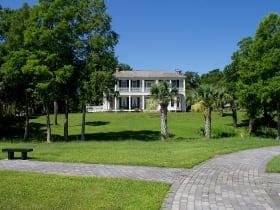
An 1838 cotton merchant's mansion above the Apalachicola River, its fine woodwork built in New York and shipped south in pieces, now a Florida state park.