
St. Joseph Peninsula State Park
8899 Cape San Blas Rd
Port St. Joe, FL
A slender wild peninsula on Florida's Forgotten Coast, with some of the tallest dunes east of the Mississippi and a beach once crowned the best in America.
St. Joseph Peninsula State Park sits at the far tip of Cape San Blas, on the stretch of the Florida Panhandle so quiet and undeveloped that people call it the Forgotten Coast. It is a barrier peninsula, a slender arm of sand reaching north into the Gulf, wide beach and rolling white dunes on the seaward side and the sheltered, glassy water of St. Joseph Bay on the other. The dunes here are among the oldest and highest in the state, some rising thirty-five feet, and in 2002 the beach coach known as Dr. Beach ranked this the number one beach in America.
What makes it special is how wild it stays. Past the campground and cabins the peninsula runs on into a Wilderness Preserve where the road ends and only a footpath continues, so you can walk for miles of empty sand with the Gulf on one hand and the bay on the other. It is a place built for slowness: swimming and shelling on the Gulf side, kayaking the calm bay, watching for migrating hawks and monarch butterflies that funnel down the cape each fall.
What Travelers Love
- A wide, sugar-white beach that Dr. Beach once named the best in the entire country
- Towering old dunes, some of the tallest sand hills east of the Mississippi River
- Two shores in one park: Gulf surf on the west, calm bay water for kayaking on the east
- The wild, undeveloped feel of the tip and the Wilderness Preserve, and superb birding
Worth Knowing
- This is a coastal barrier peninsula, so it takes storms head-on; check park conditions before a long drive, as sections can be closed for recovery
- The dunes are fragile and protected, so stay on the marked boardwalks and crossovers and never walk on the dune grass
- Bay scalloping is a summer draw, but it needs a saltwater fishing license and follows a set season and daily limit, so read the current rules first
- There are cabins and campsites but few services out on the cape, so bring water, sunscreen, and food from Port St. Joe
Learn about St. Joseph Peninsula State Park
A beach ranked the best in America
The reason people drive out to the end of Cape San Blas is the beach, and it earns the trip. The sand is the fine, squeaky quartz-white that the Panhandle is famous for, backed by real dunes rather than a wall of condos, and the water shades from clear green to deep Gulf blue. In 2002 Stephen Leatherman, the coastal scientist better known as Dr. Beach, put St. Joseph Peninsula at the very top of his annual ranking of American beaches, and it has landed on best-of lists ever since.
The dunes behind the beach are part of the appeal. Some of them stand thirty-five feet tall, among the highest sand dunes east of the Mississippi, and they are old, held in place by sea oats and rooted grasses that took generations to grow. Because they are so fragile the park keeps visitors on boardwalks and crossovers, but from the top of a walkover you get a long view down the pale ribbon of shore with almost nothing built on it.
Two shores, one narrow peninsula
The peninsula is a barrier of sand only a few hundred yards wide in places, which gives the park a rare double personality. The western, Gulf-facing side is all surf and open horizon, the place for swimming, shelling, and sunset. The eastern side faces St. Joseph Bay, a shallow, protected lagoon where the water lies calm and warm, ideal for launching a kayak or canoe and paddling over seagrass beds thick with sea life.
That bay is also the heart of the park's summer scalloping. When the season opens, snorkelers wade and swim the shallows gathering bay scallops by hand, one of the small Gulf traditions the Forgotten Coast still keeps alive. It takes a saltwater license and follows a set season and limit, but few things feel more like an old Florida summer than filling a mesh bag of scallops in clear, waist-deep water.
Because the peninsula sits out in the Gulf and shelters a long run of coast behind it, it becomes a natural pinch point for anything traveling the shore. Over two hundred and forty bird species have been recorded here, and every fall migrating hawks, songbirds, monarch butterflies, and dragonflies pour down the narrow cape, making it one of the best wildlife-watching spots in the Panhandle.
The wilderness at the end of the road
Drive north through the park and the pavement eventually gives out at a Wilderness Preserve that takes up much of the peninsula's upper end. From there the only way on is on foot, along a sand track that runs between the Gulf and the bay to the very tip. Backpackers carry in and sleep under the stars among the dunes, and day hikers walk out for the simple pleasure of empty beach with no one else on it.
This is also the layered human history of the place. Spanish explorers named St. Joseph Bay in the early 1500s and briefly built a fort and mission out near the tip; in the 1800s a boomtown called St. Joseph rose on the mainland shore and put a lighthouse on the peninsula in 1839, only for yellow fever to empty the town within a couple of years. The sand has erased almost all of it, which is part of the peninsula's mood, a wild edge of coast that has watched people come and go and stayed itself.
Visiting St. Joseph Peninsula State Park
The park lies at the north end of Cape San Blas Road, a short drive from Port St. Joe out along the cape. Give yourself a full day: mornings are best for calm water and scalloping on the bay side, afternoons for the Gulf beach, and fall for the migration and the monarchs. There are cabins and a campground if you want to stay over inside the park, but bring what you need from town, since services thin out fast past the entrance.
This is a working piece of the natural coast, so it takes weather seriously. Storms have reshaped and even cut the peninsula in the past, and the park sometimes closes areas while it recovers, so it is worth a quick check of conditions before a long detour. Treat the dunes gently, stay on the crossovers, and this stretch of the Forgotten Coast will give you exactly what it promises: white sand, wild water, and room to breathe.
Closest Boutels
The closest Boutel™ stays, so you can turn this stop into an overnight. Each is a place we chose through independent editorial review, never a paid placement.
Details
Port St. Joe, FL
Frequently asked questions
What is St. Joseph Peninsula State Park?
St. Joseph Peninsula State Park, on a slender peninsula near Cape San Blas on Florida's Forgotten Coast in the Panhandle, is a stunning and unspoiled coastal park repeatedly ranked among the most beautiful beaches in the country. The remote park protects miles of pristine white-sand beaches, towering dunes, and clear emerald Gulf waters on one side and a calm bay on the other, along with maritime forest, a wilderness preserve, abundant wildlife, and superb birdwatching. Away from the crowds, it offers a natural, tranquil beach paradise. With its pristine beaches, dunes, and wilderness, St. Joseph Peninsula State Park offers a spectacular destination in Florida.
What can you do at St. Joseph Peninsula State Park?
You can relax and swim on the pristine white-sand beaches, explore the towering dunes, hike the trails through the maritime forest and wilderness preserve, kayak and paddle the calm bay, fish, camp or stay in cabins, watch for abundant wildlife and excellent birdlife, and enjoy the unspoiled emerald Gulf waters. The gorgeous, uncrowded beaches, the dunes, and the nature are highlights, offering a tranquil coastal paradise. With its beaches, dunes, trails, and camping, St. Joseph Peninsula State Park offers a rewarding experience on Florida's Forgotten Coast.
What safety tips apply at St. Joseph Peninsula State Park?
When swimming in the Gulf, watch for currents and any rip currents, be aware the remote beaches may have limited or no lifeguards, and supervise children closely. The Florida sun is intense with little shade on the beaches, so bring plenty of water, sunscreen, and shade. Come prepared, as the park is remote with limited services, and bring insect repellent for the forest. Being cautious in the water, protecting against the sun, and coming prepared for the remote setting ensure a safe visit to St. Joseph Peninsula State Park in Florida.
When is the best time to visit St. Joseph Peninsula State Park?
Spring through fall is popular for the beach, with summer warmest for swimming though hot and humid, while spring and fall offer pleasant weather, fewer crowds, and good birdwatching, especially during fall migration when the peninsula draws migrating birds and hawks, and mild winters allow quiet beach walks. The remote beaches are lovely year-round. For beach weather aim for late spring through early fall, and for birding and pleasant weather, spring or fall, at St. Joseph Peninsula State Park in Florida.
What is near St. Joseph Peninsula State Park?
St. Joseph Peninsula State Park is near Cape San Blas on Florida's Forgotten Coast in the Panhandle, near the town of Port St. Joe, within reach of Apalachicola with the Orman House, St. Andrews State Park near Panama City Beach, and the Gulf coast. That makes St. Joseph Peninsula State Park a spectacular stop to combine with Apalachicola, St. Andrews State Park, and the other attractions of the Florida Panhandle on a visit to the state.
Outside the Park
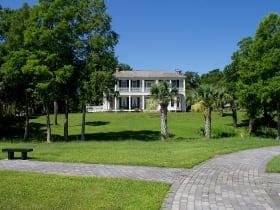
Orman House Historic State Park
26 miles away
An 1838 cotton merchant's mansion above the Apalachicola River, its fine woodwork built in New York and shipped south in pieces, now a Florida state park.

St. Andrews State Park
30 miles away
This is the wild counterpoint to the high-rise beaches next door, a thousand acres of sugar-white dune, pine flatwoods, and marsh at the tip of Panama City Beach.
Seaside and the 30A Beach Towns
56 miles away
People come for the beach and stumble into a piece of architectural history.