
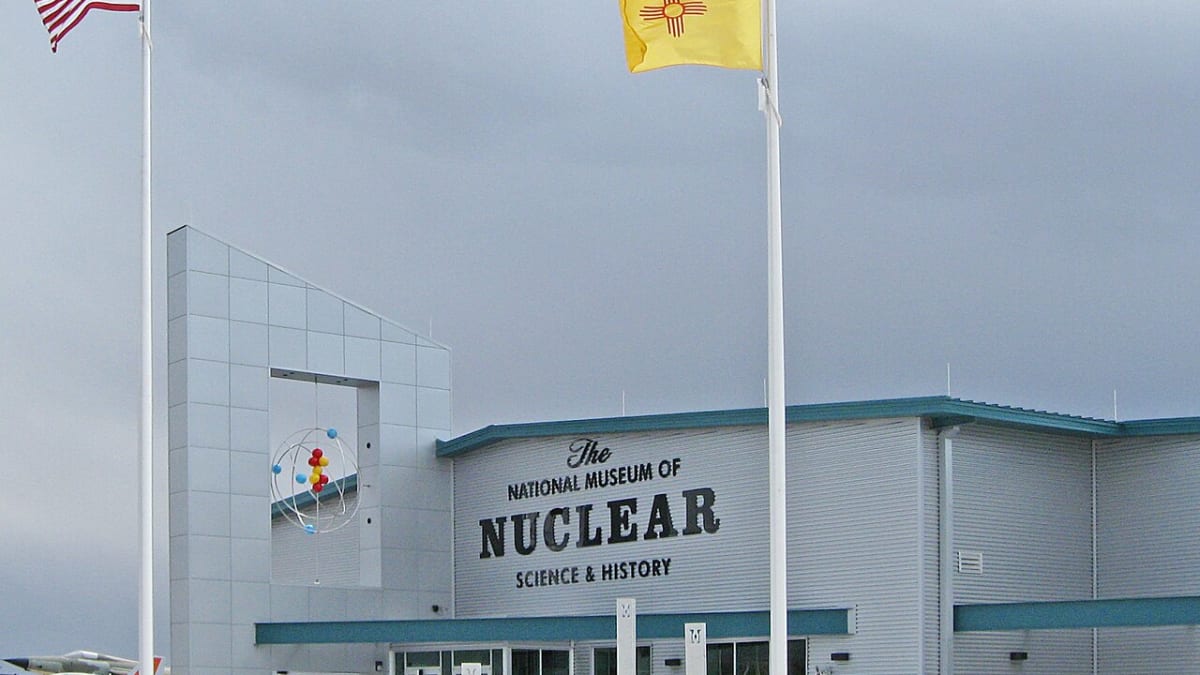
National Museum of Nuclear Science and History
601 Eubank Blvd SE
Albuquerque, NM
The only nuclear museum chartered by the U.S. Congress, telling the whole story of the Atomic Age from the Manhattan Project to today, with a nine-acre outdoor park of aircraft and missiles.
The National Museum of Nuclear Science and History in Albuquerque is the only museum of its kind chartered by the United States Congress, and a Smithsonian Affiliate, which makes it far more than a local science stop. It sets out to tell the whole story of the Atomic Age, from the first glimmerings of atomic science through the secret rush of the Manhattan Project and the tense decades of the Cold War, to the peaceful uses of nuclear power in medicine and energy today.
That story runs especially deep in New Mexico, where the first atomic bomb was designed at Los Alamos and tested in the desert to the south. The museum lays it all out honestly, weapons and wonders alike, so visitors can grapple with one of the most consequential chapters in modern history. Out back, a nine-acre park called Heritage Park lets you walk among the real aircraft, missiles, and rockets that carried the age forward.
What Travelers Love
- The full arc of the Atomic Age under one roof, from early discovery through the Manhattan Project and Cold War to medicine and energy today
- Heritage Park, a nine-acre outdoor field of real aircraft, missiles, rockets, and a submarine sail
- A rare, plain-spoken look at a story that shaped New Mexico and the world
- Family-friendly hands-on science areas that make big ideas approachable for kids
Worth Knowing
- It is a Smithsonian Affiliate and the only nuclear museum chartered by the U.S. Congress, so the depth and credibility are real
- Plan for a couple of hours indoors plus time to walk Heritage Park outside, which is exposed to the desert sun
- The subject matter is handled thoughtfully but is serious history, worth knowing before bringing very young children
- It sits on the east side of the city, an easy drive from Old Town and Route 66 attractions
Learn about National Museum of Nuclear Science and History
From atomic museum to national charter
The museum opened in 1969 as the National Atomic Museum, first housed on Kirtland Air Force Base, where much of the country's nuclear work was carried out. In 1991 Congress granted it a national charter under federal law, and its mission broadened from telling the story of nuclear weapons to covering all of nuclear science and history, including its many peaceful uses.
After the September 2001 attacks, tighter security on the base cut off easy public access, and the museum eventually moved off-base to its current home on the east side of Albuquerque. Today it stands as a Smithsonian Affiliate and the only congressionally chartered museum in its field, a national repository for the story of the Atomic Age.
Telling the whole story
Inside, the exhibits walk visitors through the entire arc of nuclear history. Galleries cover the atomic pioneers and the early science, the enormous secret effort of the Manhattan Project, and the long Cold War standoff that followed. Others turn to how the same science reshaped everyday life, from nuclear medicine that saves lives to reactors that power cities, alongside a look at how the bomb entered popular culture in film, toys, and design.
It is a story that runs right through New Mexico's own ground. The bomb was designed up the road at Los Alamos and first tested in the desert to the south at the Trinity site, so the history on the walls happened, in part, just beyond the city. The museum tells it plainly, holding both the terror and the promise of the atom in view, which is what lifts it above an ordinary science museum.
Heritage Park, out under the sky
Behind the building lies Heritage Park, a nine-acre outdoor exhibit that is a favorite with many visitors. Here the machines of the age sit out in the open desert air: iconic aircraft, towering missiles and rockets, military vehicles, and even a submarine's sail, arranged so you can walk among them and take in their sheer scale.
Standing beneath a bomber or a Cold War missile makes the history feel physical in a way that no display case can. Because the park is exposed to the New Mexico sun, it is best enjoyed in the cooler part of the day or the milder seasons, with water and a hat in hand. Together the indoor galleries and the outdoor field make for a full and memorable visit.
Visiting the museum
The museum sits on Eubank Boulevard on the east side of Albuquerque, near Kirtland Air Force Base and the Sandia foothills, an easy drive from the city's Old Town and its stretch of historic Route 66. Give yourself a couple of hours for the indoor galleries and extra time to explore Heritage Park outside.
The subject is handled with care but it is serious, weighty history, so it is worth knowing what you are walking into, especially with young children in tow. For anyone curious about science, the Cold War, or the story that put New Mexico on the world stage, it is one of the most substantial and thought-provoking stops in the state.
Closest Boutels
The closest Boutel™ stays, so you can turn this stop into an overnight. Each is a place we chose through independent editorial review, never a paid placement.
Details
Albuquerque, NM
Frequently asked questions
What is the National Museum of Nuclear Science and History?
The National Museum of Nuclear Science and History, in Albuquerque, New Mexico, is a Smithsonian-affiliated museum dedicated to the history and science of the atomic age, nuclear energy, and related technology. Given New Mexico's central role in the development of the atomic bomb, the museum offers a fascinating and sobering look at the Manhattan Project, the science of nuclear physics, the Cold War, and the many uses of nuclear technology, from weapons to medicine and energy. With extensive exhibits, historic aircraft and artifacts, and an outdoor Heritage Park, the museum provides an in-depth and thought-provoking exploration of one of the most consequential scientific and historical subjects of the modern era.
What can you see at the National Museum of Nuclear Science and History?
You can explore exhibits on the Manhattan Project and the development of the atomic bomb, the science of nuclear physics and radiation, the Cold War and the arms race, and the peaceful uses of nuclear technology in medicine and energy, along with artifacts, historic weapons replicas, and interactive displays. Outside, the Heritage Park features historic aircraft, missiles, and a submarine sail. The museum offers depth and context on a weighty subject. With its comprehensive exhibits and outdoor artifacts, the National Museum of Nuclear Science and History provides an engaging, educational, and thought-provoking experience for those interested in science and history.
Is the National Museum of Nuclear Science and History appropriate for kids?
The museum covers serious and sometimes sobering topics, including nuclear weapons and their consequences, but it presents the science and history in an educational and thoughtful way, and many families visit with older children and teens studying science or history. Younger children may find some content beyond them, though the outdoor aircraft and missiles and interactive science exhibits appeal to many kids. Parents know their children best. Overall, the museum offers a valuable and age-appropriate learning experience for older children and adults interested in the science, history, and important issues surrounding nuclear technology.
When is the best time to visit the National Museum of Nuclear Science and History?
As a largely indoor museum, it is enjoyable year-round and a great option in any weather, including a good choice on a hot summer day, though the outdoor Heritage Park with its aircraft and artifacts is most pleasant in mild weather. Weekdays and mornings tend to be less crowded. Checking current hours before you go is wise, and allowing a couple of hours lets you explore the extensive exhibits. The indoor setting means almost any time works, making the museum a reliable and enriching stop year-round in Albuquerque, New Mexico.
What is near the National Museum of Nuclear Science and History?
The museum is in Albuquerque, New Mexico, within reach of Old Town Albuquerque with its historic plaza and museums, the Albuquerque BioPark, the Explora science museum, the Sandia Peak Tramway, and the Petroglyph National Monument. That makes the National Museum of Nuclear Science and History a fascinating stop to combine with Old Town, the BioPark, the Sandia Peak Tramway, and the many other attractions of Albuquerque on a visit to New Mexico.
Nearby

Albuquerque BioPark
8.0 miles away
ABQ BioPark: combined admission covers zoo, aquarium, and botanic garden. Open daily, admission charged, children under 3 free.
Old Town Albuquerque and the Albuquerque Museum
8.1 miles away
Old Town: free to walk the plaza and surrounding streets. San Felipe de Neri Church: free, open to respectful visitors between services.
iExplora and the Sandia Peak Tramway
9.8 miles away
This is a straightforward crowd-pleaser for families. The tram is the longest of its kind in the Western Hemisphere, and the cars glide over deep granite canyons where kids can spot climbers and hawks...
Tinkertown Museum
12 miles away
Ross Ward painted circus and carnival banners for a living and carved miniatures in his spare time, and over four decades that hobby swallowed his life in the best way.
Petroglyph National Monument Boca Negra Canyon
13 miles away
Petroglyph has a visibility problem: most ABQ residents drive past the monument regularly and never stop.

Coronado Historic Site
18 miles away
This is the rare Pueblo-history stop you can reach without leaving the interstate corridor, and most travelers speed right past the exit. Kuaua means evergreen in Tiwa.