
Coronado Historic Site
485 Kuaua Rd, Bernalillo, NM
Bernalillo, NM
The ruins of an ancestral Tiwa pueblo above the Rio Grande, where some of the finest painted kiva murals in the Southwest were found.
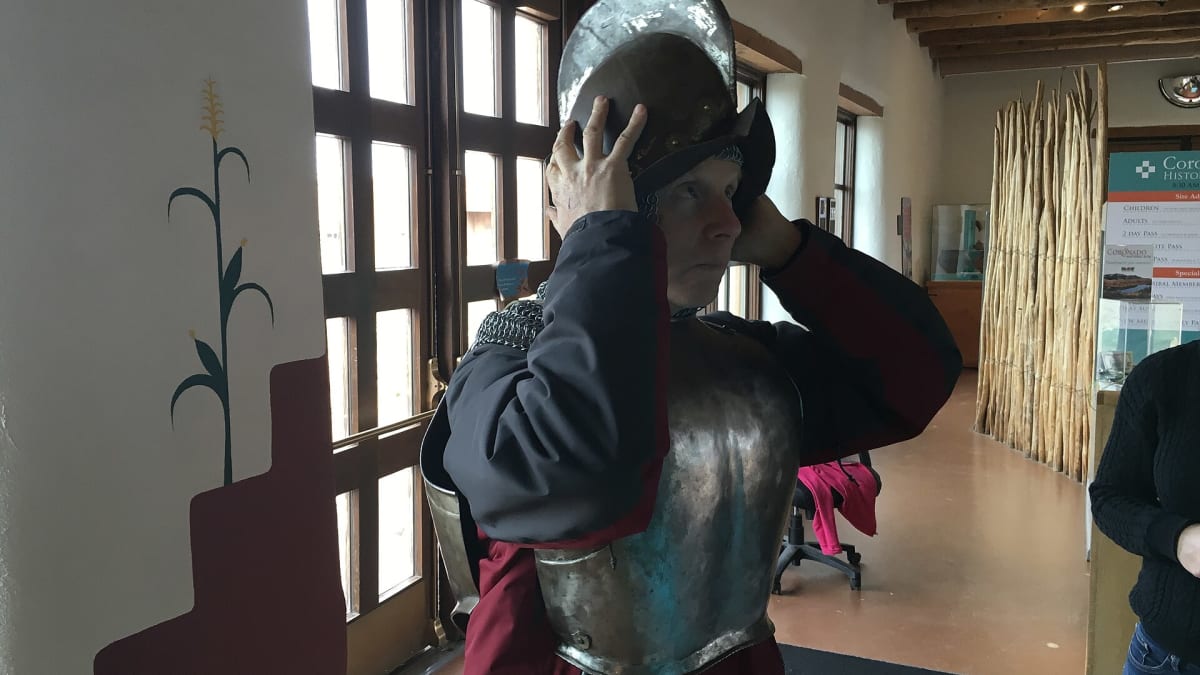
Coronado Historic Site preserves the ancestral pueblo of Kuaua, a Tiwa-speaking village that stood on a bluff above the Rio Grande for centuries. Its adobe walls, now weathered down to low outlines, once formed a large community of interconnected rooms and open plazas. The site is named for the Spanish expedition led by Francisco Vazquez de Coronado, which passed through this stretch of the Rio Grande valley in the 1540s.
What makes Kuaua extraordinary is what was found beneath its plazas: a ceremonial kiva whose plastered walls were painted, layer over layer, with some of the finest and most detailed murals ever discovered in the ancestral Pueblo world. Figures of rain, seeds, birds, and human forms were rendered in earth colors, a rare surviving window into the spiritual life of the people who built the village.
What Travelers Love
- The reconstructed painted kiva and its replicas of rare, vividly detailed murals
- A quiet walk among the low adobe walls of an ancestral pueblo above the river
- Wide views of the Rio Grande bosque and the Sandia Mountains beyond
- A small museum whose exhibits set the pueblo in its long and living history
Worth Knowing
- This is an ancestral site of living Pueblo peoples, so treat the ruins and the kiva with respect and stay on marked paths
- The original kiva murals are fragile and preserved indoors, while the ones you see in the kiva are careful reproductions
- There is little shade on the pueblo grounds, so bring water and sun protection in warm weather
- It is an outdoor archaeological site, so mind footing on uneven ground and watch the weather
Learn about Coronado Historic Site
Kuaua and the Tiwa people
Kuaua was one of many Tiwa-speaking pueblos strung along the Rio Grande, founded well before Europeans arrived and inhabited for generations. Its people farmed the fertile river bottomland, growing corn, beans, and squash in the floodplain, and drew on the river and the bosque for water, game, and materials. The descendants of these Rio Grande Tiwa communities live on in the nearby pueblos of Sandia and beyond, and the ancestral connection to this place remains alive.
When Coronado's expedition came up the Rio Grande in the winter of 1540 to 1541 seeking rumored cities of gold, it wintered among these pueblos, an encounter that brought hardship and conflict to the villages of the valley. Kuaua was gradually abandoned in the centuries that followed. In the twentieth century archaeologists excavated the site, and it was set aside as a state monument to protect what remained.
The painted kiva murals
The great discovery at Kuaua came when excavators found a rectangular kiva, a sacred underground chamber, whose plastered walls had been repainted again and again over the years. Beneath the surface lay many separate layers of murals, painted in mineral pigments, depicting figures tied to rain, fertility, and ceremony. The preservation of so many layers made the find one of the most important of its kind in the Southwest.
Because the originals are too fragile to display in place, conservators carefully removed and preserved sections, and the reconstructed kiva at the site shows faithful reproductions painted where they were found. Standing inside the reconstructed chamber, with the painted figures encircling you, gives a rare and moving sense of the ceremonial world of the ancestral Pueblo people.
The Rio Grande and its bosque
The site sits on a low bluff above the Rio Grande, and the river's presence explains why the pueblo stood here at all. The floodplain gave rich, workable soil for farming, and the bosque, the ribbon of cottonwood forest that follows the river, provided wood, shelter, and habitat for game and birds. The Sandia Mountains rise across the valley to the east, catching the last light of day.
Today the bosque remains one of the great wildlife corridors of central New Mexico. Cottonwoods turn brilliant gold in autumn, and the river draws herons, waterfowl, and countless songbirds. A visit rewards a slow look outward from the pueblo as much as a look down into it.
Wildlife, the museum, and seasons
A small museum at the site interprets Kuaua and the broader story of the Rio Grande pueblos, displaying artifacts and setting the ruins in the long arc of Pueblo history. Along the river below, the bosque teems with birds, from sandhill cranes and geese in winter to warblers and flycatchers in the warmer months, and the cottonwoods shelter deer, coyotes, and smaller mammals.
Spring and fall are the most comfortable seasons for a visit, with mild days and the golden cottonwoods especially beautiful in autumn. Summer is hot and bright, so early or late in the day is best. Winter brings crisp, clear air, snow on the Sandias, and the great seasonal gathering of cranes and geese along the river.
Closest Boutels
The closest Boutel™ stays, so you can turn this stop into an overnight. Each is a place we chose through independent editorial review, never a paid placement.
Details
Bernalillo, NM
Frequently asked questions
What is the Coronado Historic Site?
The Coronado Historic Site, near Bernalillo just north of Albuquerque in New Mexico, preserves the ruins of Kuaua Pueblo, an Ancestral Puebloan village on the banks of the Rio Grande that was inhabited when the Spanish explorer Coronado passed through the region in the sixteenth century. The site is especially famous for a restored kiva containing remarkable pre-contact painted murals, some of the finest examples of ancient Native American mural art, which visitors can view. With its riverside setting, ancient pueblo ruins, extraordinary kiva murals, and museum, the Coronado Historic Site offers a fascinating glimpse into Ancestral Puebloan life and the era of early Spanish contact in New Mexico.
What can you see at the Coronado Historic Site?
You can walk the trail through the ruins of Kuaua Pueblo, seeing the outlines of the ancient village on the scenic banks of the Rio Grande, view the restored kiva with its extraordinary pre-contact painted murals, considered rare masterpieces of ancient Native American art, and explore the visitor center and museum with exhibits on the Ancestral Puebloans and the era of Spanish contact. The beautiful riverside setting with mountain views adds to the experience. With its ancient pueblo ruins, the remarkable kiva murals, and its museum, the Coronado Historic Site offers a fascinating and scenic look at Ancestral Puebloan history near Albuquerque.
What are the kiva murals at the Coronado Historic Site?
The kiva murals at the Coronado Historic Site are a remarkable series of pre-contact paintings that once adorned the walls of a ceremonial kiva at Kuaua Pueblo, depicting figures, animals, and symbols connected to the spiritual and ceremonial life of the Ancestral Puebloans. Discovered during excavation, these layered murals are considered among the finest surviving examples of ancient Native American mural art in North America. A reconstructed kiva at the site allows visitors to descend and view reproductions in the original setting, while some original mural fragments are preserved in the museum, making the murals a highlight and treasure of the site.
When is the best time to visit the Coronado Historic Site?
Spring through fall offers the most pleasant weather for exploring the outdoor ruins and riverside trail, with spring and fall especially comfortable, while summer can be warm, so morning visits are best, and winter is cooler but the site remains open. The Rio Grande setting is beautiful, especially with fall color along the river. A visit is fairly short, making it easy to combine with Albuquerque's attractions. Checking current hours before you go is wise. For the best combination of comfortable weather and scenery, aim for spring or fall at the Coronado Historic Site.
What is near the Coronado Historic Site?
The Coronado Historic Site is near Bernalillo just north of Albuquerque, New Mexico, along the Rio Grande, near the Sandia Mountains and the Sandia Peak Tramway, the town of Bernalillo, and within reach of Albuquerque with its Old Town and museums to the south and Santa Fe to the north. That makes the Coronado Historic Site a fascinating cultural stop to combine with Albuquerque's Old Town, the Sandia Peak Tramway, and the attractions of the Albuquerque area and northern New Mexico on a visit to the state.
Nearby
iExplora and the Sandia Peak Tramway
11 miles away
This is a straightforward crowd-pleaser for families. The tram is the longest of its kind in the Western Hemisphere, and the cars glide over deep granite canyons where kids can spot climbers and hawks...
Tinkertown Museum
12 miles away
Ross Ward painted circus and carnival banners for a living and carved miniatures in his spare time, and over four decades that hobby swallowed his life in the best way.
Petroglyph National Monument Boca Negra Canyon
16 miles away
Petroglyph has a visibility problem: most ABQ residents drive past the monument regularly and never stop.
Old Town Albuquerque and the Albuquerque Museum
17 miles away
Old Town: free to walk the plaza and surrounding streets. San Felipe de Neri Church: free, open to respectful visitors between services.

Albuquerque BioPark
17 miles away
ABQ BioPark: combined admission covers zoo, aquarium, and botanic garden. Open daily, admission charged, children under 3 free.

National Museum of Nuclear Science and History
18 miles away
The only nuclear museum chartered by the U.S. Congress and a Smithsonian Affiliate, telling the full story of the Atomic Age from the Manhattan Project to nuclear medicine today.