
National Museum of Civil War Medicine
48 E Patrick St, Frederick, MD
Frederick, MD
The surprising, humane story of how battlefield medicine in the Civil War laid the foundations of modern emergency care.
The National Museum of Civil War Medicine tells a story usually left out of the histories of battles and generals: what happened to the hundreds of thousands of soldiers who were wounded or fell ill during the Civil War, and how the doctors, nurses, and stretcher-bearers who cared for them changed medicine forever. Set in a historic building in downtown Frederick, it is the leading museum on its subject in the country.
Far from a catalog of horrors, the museum reveals how the immense scale of Civil War suffering forced real innovation. Systems for evacuating and triaging the wounded, the rise of trained nursing, advances in anesthesia and surgery, and the organization of large hospitals all took shape in these years, laying groundwork for the emergency medicine of today. It is a moving and unexpectedly hopeful window on one of American history's darkest chapters.
What Travelers Love
- A sobering, respectful look at how the wounded were treated in the Civil War
- The story of how battlefield care during the war shaped modern emergency medicine
- Authentic artifacts, from surgical kits to an original embalming display, presented with care
- A base in Frederick's charming historic downtown, close to famous battlefields
Worth Knowing
- The subject matter is serious and at times graphic, presented with dignity rather than sensationalism
- The museum pairs naturally with a visit to nearby Antietam or Monocacy battlefields
- It operates a second site at the Pry House on the Antietam battlefield for those going deeper
- The historic downtown of Frederick around it rewards a walk before or after
Learn about National Museum of Civil War Medicine
Medicine meets a war of unprecedented scale
The Civil War produced casualties on a scale the country had never seen, with disease killing even more soldiers than battle. The medical services of both armies were overwhelmed at first, and the museum traces how they struggled and then adapted, confronting problems of sanitation, supply, and sheer numbers that no earlier American war had posed.
Out of that ordeal came lasting change. The war saw the development of an organized ambulance corps to carry the wounded quickly from the field, a system of triage and evacuation to field and general hospitals, and improvements in record-keeping and hospital design. The museum shows how these hard-won lessons became the ancestors of modern emergency and military medicine.
The people who did the healing
The museum keeps human beings at the center of its story. It follows surgeons working under impossible conditions, the stretcher-bearers and ambulance drivers who braved fire to reach the fallen, and the era's great expansion of nursing, when women stepped into hospital service in large numbers and helped transform the profession. Figures such as Clara Barton, who tended the wounded near these very battlefields, appear in the narrative.
It also honors the ordinary soldiers who endured wounds, amputations, and long convalescence, and remembers the many who did not survive. By centering the experiences of patients and caregivers alike, the museum makes the medical history feel deeply personal rather than clinical.
Artifacts and honest interpretation
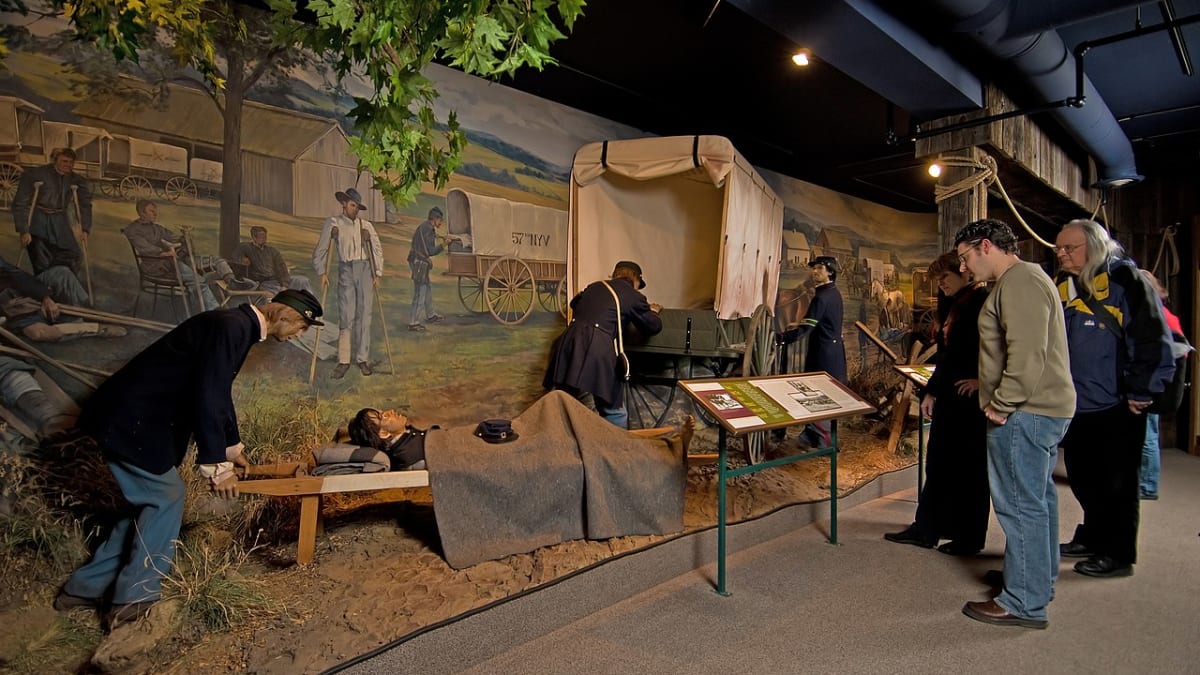
The galleries hold authentic artifacts that bring the era close, including surgical instruments and field kits, medicines and hospital furnishings, and personal effects of soldiers and caregivers. One notable exhibit addresses embalming, a practice that spread during the war so that the bodies of soldiers could be sent home, and which shaped the American funeral industry that followed.
The interpretation is frank about the era's suffering and its limits, including the crude state of much treatment and the toll of amputation and infection, but it presents this material with dignity and purpose rather than shock. The effect is to leave visitors with respect for those who endured and those who cared for them.
Frederick and the battlefields nearby
The museum's home in Frederick is fitting, for the city was a major hospital center during the war, its churches, warehouses, and public buildings filled with the wounded from the surrounding campaigns. The walkable historic downtown around the museum, with its brick rowhouses, shops, and restaurants, makes a pleasant setting for a visit.
Frederick also sits within easy reach of some of the war's most significant sites. The Antietam battlefield, scene of the bloodiest single day in American history, lies a short drive west, and Monocacy and Gettysburg are close as well. The museum runs a second site, the Pry House Field Hospital Museum, on the Antietam field itself, letting visitors connect the story to the ground where it unfolded.
Closest Boutels
The closest Boutel™ stays, so you can turn this stop into an overnight. Each is a place we chose through independent editorial review, never a paid placement.
Travelers Rest Motel
Honorable Mention3701 Old Philadelphia Pike, Intercourse, PA
82 miles away|Learn More ›
Details
Frederick, MD
Frequently asked questions
What is the National Museum of Civil War Medicine?
The National Museum of Civil War Medicine, in historic downtown Frederick, Maryland, is dedicated to the largely overlooked story of medical care during the Civil War. Through artifacts, recreated scenes, and exhibits, it explores battlefield surgery, nursing, the birth of the modern ambulance and evacuation system, and the era's medical innovations. Far more compelling and humane than its subject might suggest, it offers a fascinating and moving look at a crucial and often misunderstood aspect of the war.
What can you see at the National Museum of Civil War Medicine?
You can view a rich collection of authentic medical instruments, personal items, and artifacts, walk through lifelike recreated scenes of a field dressing station, surgery, and hospital, and learn about the surgeons, nurses, and stewards who cared for the wounded. Exhibits dispel myths about Civil War medicine and highlight genuine advances in triage, evacuation, and care. The thoughtful, well-curated displays make a sobering subject accessible and deeply human.
Is the National Museum of Civil War Medicine too graphic for children?
While the subject involves surgery and battlefield wounds, the museum handles it thoughtfully and educationally rather than sensationally, and many families visit with older children who are studying the Civil War. Younger or more sensitive children may find some recreated medical scenes intense, so parents know their kids best. Overall it is presented with respect and historical context, making it a meaningful stop for those interested in Civil War or medical history.
When is the best time to visit the National Museum of Civil War Medicine?
As an indoor museum, it is enjoyable year-round and makes a great rainy-day option, with a visit typically taking one to two hours. Checking current hours before you go is wise. Its location in walkable downtown Frederick means you can easily pair it with exploring the town's shops and restaurants, and history buffs often combine it with nearby Civil War battlefield sites for a fuller experience of the era.
What is near the National Museum of Civil War Medicine?
The museum sits in downtown Frederick, a charming and historic city with a lively district of shops, galleries, and restaurants along a scenic creekside promenade. It is within easy reach of major Civil War sites, including the Antietam and Monocacy battlefields, and the mountains of western Maryland. That makes the museum an ideal anchor for a day exploring Frederick's history and dining or a broader Civil War heritage tour of the region.
Nearby
Washington Monument State Park
13 miles away
A small monument with a big payoff for the effort. Local farmers built this squat stone tower on South Mountain in one day in 1827, the first completed monument to George Washington anywhere.

Appalachian Trail at Harpers Ferry
18 miles away
Harpers Ferry is the spiritual halfway house of the Appalachian Trail, and you can walk a piece of it easily.
The Point at Harpers Ferry
18 miles away
For the classic Harpers Ferry view in just a few minutes, walk to the Point at the very tip of the lower town, where the Shenandoah River empties into the Potomac.

Jefferson Rock
18 miles away
Most day visitors stay down in the lower town and never make the short climb to the best view in Harpers Ferry.

Antietam National Battlefield
18 miles away
A battlefield can land hard with kids, and this one carries real weight: Antietam saw the bloodiest single day in American history. That makes it best for ages 9 and up who can take in the history.

Harpers Ferry Lower Town
19 miles away
Harpers Ferry turns history into something kids can walk through.