
Myles Standish State Forest
194 Cranberry Rd, Carver, MA
Carver, MA
One of the largest pine-barrens forests in the Northeast, a sandy country of pitch pine, clear kettle ponds, and quiet trails just inland from the coast.
Myles Standish State Forest is one of the largest publicly owned pine barrens in the Northeast, a vast, sandy expanse of pitch pine and scrub oak dotted with clear kettle ponds. Just inland from the South Shore, it offers miles of quiet trails, spring-fed ponds for swimming and paddling, and a sense of open woodland that feels far from the busy coast nearby.
The forest protects a landscape that is genuinely uncommon in New England. Pine barrens grow on dry, sandy, nutrient-poor soils and depend on periodic fire, producing an open, sun-dappled forest unlike the dense hardwoods elsewhere in the region. Named for a military leader of the Plymouth Colony, the forest is now a place to walk, ride, paddle, and camp in a landscape shaped by ice, sand, and fire.
What Travelers Love
- Miles of trails for hiking, biking, and horseback riding through the pine barrens
- Clear, spring-fed kettle ponds for swimming and paddling in warm weather
- The unusual pitch-pine and scrub-oak forest, a rare habitat in New England
- A large, quiet expanse of woods surprisingly close to Boston and Cape Cod
Worth Knowing
- This is a dry, fire-adapted pine barrens, so heed any fire warnings and stay on marked trails
- The kettle ponds vary in facilities, so check which have swimming areas before you go
- It is a working forest managed by the state, popular with campers in the warm months
- Ticks are common in the underbrush, so take the usual precautions in warm weather
Learn about Myles Standish State Forest
A rare pine barrens
The forest sits on a broad outwash plain of sand and gravel left behind by the glaciers, soils so dry and poor that only tough, fire-adapted plants thrive here. The result is a pine barrens, dominated by pitch pine and scrub oak, with an open understory of huckleberry, bearberry, and lichen that gives the woods a distinctive, sun-filled character.
This kind of habitat is rare in New England, and Myles Standish protects one of its largest surviving examples. Pine barrens depend on fire to clear the understory and open pine cones, and land managers use controlled burns to keep the ecosystem healthy. The plants and animals here are specialists, adapted to sandy ground and periodic flames, which makes the forest both fragile and ecologically important.
The kettle ponds
Scattered through the forest are kettle ponds, clear, rounded pools that formed when great blocks of buried glacial ice melted and left basins behind. Fed largely by groundwater, these ponds are clean and often ringed by sandy shores, and several have designated areas for swimming and non-motorized boating in the warm season.
The ponds give the forest much of its summer life. On a hot day, families gather at the swimming areas, paddlers slip out onto the still water, and the sandy shallows draw waders. Because the ponds sit within a large protected forest, they keep a quiet, natural feel, a contrast to the busier beaches of the nearby coast.
Trails through the sand and pines
The forest is crossed by an extensive network of trails and old woods roads, open to hiking, mountain biking, and horseback riding, with paved bike paths linking some of the ponds and camping areas. The flat to gently rolling terrain makes for easy going, and the open pine canopy lets in light and long sightlines through the trees.
Riding or walking these trails, you move through a landscape of low pines, scrub oak, and ground cover, past pond after pond, with the sandy soil crunching underfoot. Campgrounds within the forest make it a base for a longer stay, and the size of the place means you can find solitude even on a busy weekend by heading to its farther corners.
The country around it
The forest lies in the heart of Massachusetts cranberry country, where low bogs and reservoirs surround the pinelands and turn crimson at harvest time in the fall. The town of Carver and its neighbors have grown cranberries here for generations, and the working bogs are part of the character of the region.
This is also historic ground. The land is part of the homeland of the Wampanoag people, whose descendants remain in the region today, and the nearby town of Plymouth holds the story of the Pilgrim colony and its encounter with them. The forest makes an easy inland counterpoint to a coastal history trip, trading harbor and monument for pond and pine.
Closest Boutels
The closest Boutel™ stays, so you can turn this stop into an overnight. Each is a place we chose through independent editorial review, never a paid placement.
AWOL Provincetown
Honorable Mention59 Province Lands Road, Provincetown, MA
29 miles away|Learn More ›
Details
Carver, MA
Frequently asked questions
What is Myles Standish State Forest?
Myles Standish State Forest, spanning Plymouth and Carver, is one of the largest public recreation areas in Massachusetts, covering more than twelve thousand acres. It protects a globally rare pine-barrens ecosystem of pitch pine and scrub oak, dotted with around sixteen ponds and laced with extensive trails. With swimming, camping, and miles of paths for hiking, biking, and horseback riding, it is a major outdoor destination and a haven of unusual natural beauty close to the coast.
Can you swim at Myles Standish State Forest?
Yes, several of the forest's clear ponds have designated swimming beaches with lifeguards during the summer season, offering a refreshing freshwater alternative to the ocean. Swim only in the guarded, designated areas during guarded hours, and keep a close eye on children. The ponds are a beloved feature of the forest, popular for cooling off after a hike or bike ride on a warm summer day.
What can you do at Myles Standish State Forest?
Beyond swimming, you can camp at its campgrounds, hike and mountain-bike the many trails, ride the paved bike paths, go horseback riding, fish, and paddle the ponds, all while exploring the rare and fascinating pine-barrens landscape. The sheer size and variety make it a great destination for an active day or a longer camping trip. Reserving campsites ahead is wise for the busy summer season.
What should I know before visiting Myles Standish State Forest?
Ticks are common in the pine barrens' grass and brush, so wear long pants and repellent and check yourself afterward. The forest is large and laced with a maze of roads and trails, so carry a map and note your route to avoid getting turned around. Swim only at the guarded beaches, bring water, and expect a parking or day-use fee. Planning ahead makes for a safe, enjoyable visit to this expansive forest.
When is the best time to visit Myles Standish State Forest?
Late spring through fall is prime, with summer best for pond swimming and camping and fall offering pleasant hiking and biking with fewer bugs and beautiful color. The swimming beaches operate in the summer season. Spring and fall are also good for exploring the trails when temperatures are mild. Whenever you go, an early start helps with parking and gives you a full day to enjoy the forest.
Outside the Park

Plimoth Patuxet Museums
7.6 miles away
This is where the Thanksgiving story comes alive for kids. At the Plimoth Patuxet Museums the 1627 English Village is staffed by role-players who never break character: they speak, dress, cook, and wo...
Stephens Field
8.0 miles away
A free town waterfront park on the southern edge of Plymouth Harbor, with a scenic overlook, a refreshed playground, courts, a small beach, and a boat launch.
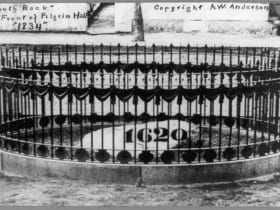
Plymouth Rock
8.4 miles away
Plymouth Rock is the storied Pilgrim landing stone, sheltered under a granite portico right on the Plymouth waterfront in Pilgrim Memorial State Park.

Mayflower II
8.4 miles away
Kids get a real jolt from the Mayflower II when they climb below decks and realize just how small the ship was for 102 people crossing an ocean.

New Bedford Whaling Museum
18 miles away
Most people know New Bedford only as a name in Moby-Dick, if at all, so the scale of this museum surprises them.