

Plimoth Patuxet Museums
137 Warren Ave, Plymouth, MA
Plymouth, MA
A recreated 1627 colony and a living Wampanoag homesite side by side, telling the story of the first Thanksgiving from both the English and the Native side.
Plimoth Patuxet is a living-history museum that recreates the world of southeastern Massachusetts in the 1600s, and it does something unusual and important: it tells the story from two sides at once. At the recreated English village, costumed role-players inhabit the Plymouth Colony as it stood in 1627, speaking and working as their real historical characters. Nearby, at the Wampanoag homesite, Native people from the Wampanoag Nation and other tribes present their own culture and history, speaking as themselves in the present tense, because they are still here.
The museum was long known simply as Plimoth Plantation, but in 2020 it took the name Plimoth Patuxet, adding Patuxet, the Wampanoag name for the very land the colony was built upon. The change reflects the museum's central truth: the Pilgrims did not arrive at an empty wilderness. They settled at the site of a Wampanoag community, on land people had lived on for thousands of years, and the encounter between those two peoples is the story this place exists to tell honestly.
What Travelers Love
- Two settings side by side: the English colony and the Wampanoag homesite, telling both sides
- Costumed role-players in the 1627 village who speak and answer as their historical characters
- The Wampanoag homesite, staffed by Native people speaking from their own present-day perspective
- Seeing wetu dwellings, a mishoon canoe burned from a log, and period farming and cooking up close
Worth Knowing
- The name changed to Plimoth Patuxet in 2020, adding the Wampanoag place-name Patuxet for the land the colony was built on
- This is mostly outdoors over uneven ground, so dress for the weather and wear sturdy shoes
- The village role-players stay in the year 1627, while the homesite staff speak as themselves today; both are worth your time
- The site keeps a seasonal schedule and typically closes in winter, so check before you go
Learn about Plimoth Patuxet Museums
The 1627 English village
The recreated colony shows Plymouth as it was in 1627, seven years after the Mayflower landing, a small cluster of timber-and-thatch houses inside a wooden palisade on a hillside above the sea. Costumed role-players take on the identities of actual colonists, and they stay fully in period: they will talk with you about their crops, their king, their fears and hopes, and answer as someone of that year would, with no knowledge of anything that came after.
That approach makes the settlement feel startlingly real. You watch people cook over hearths, tend gardens and livestock, and repair their homes with the tools and skills of the 1620s, and in conversation you get a sense not just of how they lived but of how they thought. It is a portrait of a fragile, anxious young colony, still close to the terrible first winter that had killed half the passengers who came on the Mayflower.
The Wampanoag homesite, told by Native people
A short walk away, the Wampanoag homesite presents Native life along the coast, and it is staffed by Wampanoag people and other Native people who speak from their own present-day perspective rather than playing a historical role. That difference is deliberate and meaningful: the Wampanoag are not a vanished people to be reenacted but a living nation whose members are here to share their culture in their own voice.
At the homesite you can see wetu, the dome-shaped bark-and-mat dwellings, watch the making of a mishoon by carefully burning and scraping out a single log to form a canoe, and learn about food, farming, and the deep relationship to this land that long predates the colony. The Wampanoag have lived in this region for thousands of years, and the federally recognized Mashpee Wampanoag Tribe and the Wampanoag Tribe of Gay Head, Aquinnah, continue that presence today.
The story behind the first Thanksgiving
This is the landscape of the famous 1621 harvest gathering that later generations came to call the first Thanksgiving, when the Plymouth colonists and about ninety Wampanoag men, led by the leader Ousamequin, often called Massasoit, shared several days of feasting after a successful harvest. The museum works to correct the storybook version of that event with the fuller, more complicated history.
That history includes an alliance struck for the survival and advantage of both peoples, and it includes what followed, the diseases, land loss, and violence that devastated Native communities across New England in the decades after. By placing the colony and the homesite side by side, the museum lets visitors hold both stories at once, the beginnings of a new colony and the profound cost to the people who were already here.
The waterfront, the crafts, and the seasons
Beyond the two main settings, the museum runs a working craft center and, on the Plymouth waterfront a few miles north, cares for the Mayflower II, a full-scale reproduction of the original ship. Together the sites let you follow the whole arc of the story, from the crossing of the Atlantic to the first fragile years on shore.
The museum lives outdoors and follows the seasons, so a visit changes through the year. Spring and summer bring planting, warm days, and the fullest program of activity. Autumn, harvest season, is fitting for a place so tied to Thanksgiving and often the loveliest time to come. The site generally closes for the coldest months, so it is best to check the calendar before planning a visit.
Closest Boutels
The closest Boutel™ stays, so you can turn this stop into an overnight. Each is a place we chose through independent editorial review, never a paid placement.
AWOL Provincetown
Honorable Mention59 Province Lands Road, Provincetown, MA
23 miles away|Learn More ›
Details
Plymouth, MA
Frequently asked questions
What is Plimoth Patuxet Museums?
Formerly known as Plimoth Plantation, it is an acclaimed living-history museum in Plymouth that recreates one of America's first settlements, telling the intertwined stories of the English settlers we call the Pilgrims and the Native Wampanoag people. Through a meticulously recreated 1600s English Village and a Historic Patuxet Homesite, visitors step directly into the seventeenth century. Repeatedly named the best open-air museum in the country, it offers an immersive, memorable window into early American and Indigenous history.
What is the living-history experience like?
In the English Village, costumed first-person interpreters role-play actual 1627 colonists, staying in character as they answer your questions and discuss daily life, while at the Wampanoag Homesite, Native interpreters speaking from a present-day perspective share seventeenth-century lifeways and a culture that continues to thrive today. You are encouraged to join hands-on demonstrations of cooking, planting, and animal care, making history vivid, personal, and genuinely engaging for all ages.
How much time do you need at Plimoth Patuxet?
Plan on around two and a half hours to see the main sites, though many visitors happily spend a full day soaking up the immersive experience. Be aware that touring involves roughly half a mile of walking over uneven ground, so wear comfortable shoes, bring water, and use sunscreen, since much of it is outdoors. Giving yourself unhurried time to talk with the interpreters is the best way to enjoy it.
When is Plimoth Patuxet open, and when should I go?
It is a seasonal museum, generally open from mid-March through the Sunday after Thanksgiving, with daytime hours. Weekday mornings tend to be good times to visit, though school groups also come then during the academic year. November, around Thanksgiving, is an especially fitting and popular time given the site's history. Checking current dates and hours before you go helps you plan, particularly at the start and end of the season.
What else is near Plimoth Patuxet?
The museum organization also operates the Mayflower II, a full-scale reproduction of the Pilgrims' ship docked at the Plymouth waterfront, and the sites pair naturally with nearby Plymouth Rock and the town's other historic attractions. Combined tickets are often available. Together they let you experience the Pilgrim and Wampanoag story from multiple angles, from the ship of arrival to the village and homesite, for a rich day of history.
Nearby
Stephens Field
1.8 miles away
A free town waterfront park on the southern edge of Plymouth Harbor, with a scenic overlook, a refreshed playground, courts, a small beach, and a boat launch.
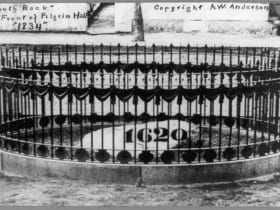
Plymouth Rock
2.3 miles away
Plymouth Rock is the storied Pilgrim landing stone, sheltered under a granite portico right on the Plymouth waterfront in Pilgrim Memorial State Park.

Mayflower II
2.4 miles away
Kids get a real jolt from the Mayflower II when they climb below decks and realize just how small the ship was for 102 people crossing an ocean.
Myles Standish State Forest
7.6 miles away
A few miles behind Plymouths crowded waterfront lies a landscape almost nobody expects: a true pine barrens.