
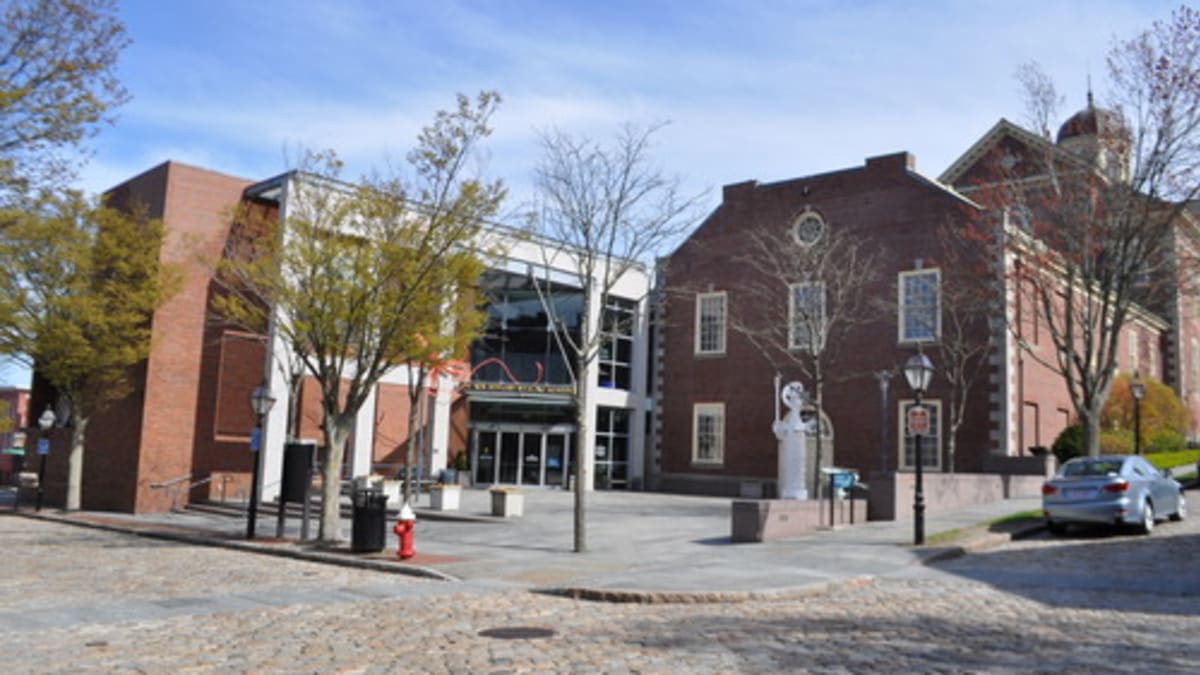
New Bedford Whaling Museum
18 Johnny Cake Hill, New Bedford, MA
New Bedford, MA
The largest whaling museum in the world, in the port that once lit the lamps of America, where whale skeletons hang above a half-scale whaleship you can climb aboard.
The New Bedford Whaling Museum is the largest museum in the world devoted to the history of whaling, set in the port city that once dominated the trade. Beneath its roof hang full skeletons of great whales, including a rare blue whale, and at its heart stands a half-scale model of an actual 19th-century whaleship that visitors can climb aboard, walking the decks to feel the world the whalers knew.
In the mid-1800s, New Bedford was the whaling capital of the world and, by some measures, the richest city in America, its fortune built on the oil that lit the lamps of a continent. The museum tells that sweeping story, from the ships and the hunt to the diverse crews who sailed and the culture the trade created, all within a historic district that still looks the part.
What Travelers Love
- Full whale skeletons, including a rare blue whale, suspended overhead
- Climbing aboard a half-scale model of a real 19th-century whaleship
- The story of the port that was once the richest city in the world per capita
- Deep collections of scrimshaw, art, and the diverse history of whaling crews
Worth Knowing
- It is the largest museum of its kind, so leave plenty of time to explore its galleries
- The surrounding cobblestone district is a National Historical Park worth walking
- The museum tells an honest story that includes the diverse and immigrant crews of whaling
- The nearby Seamen's Bethel, the chapel from Moby-Dick, is a short walk away
Learn about New Bedford Whaling Museum
The city that lit the world
By the middle of the 19th century, New Bedford had overtaken Nantucket as the leading whaling port, its deep harbor and rail links letting it outfit and send out a huge fleet. Ships sailed from here on voyages that could last years, ranging across the Pacific and beyond in pursuit of whales, and the oil they brought back lit lamps and lubricated the machines of a rapidly industrializing world.
The wealth was staggering. The mansions of whaling merchants rose on the hill above the harbor, and the city gained a reputation as one of the richest in the country for its size. That prosperity, and the global reach of the trade, drew sailors and settlers from around the world to New Bedford, making it an unusually diverse city for its era, a theme the museum explores with care.
Whale skeletons and a whaleship
The museum's galleries are dramatic. Full skeletons of great whales hang overhead, among them a blue whale, the largest animal ever to have lived, along with humpback and sperm whales, giving a powerful sense of the scale of the creatures at the center of the story. Below them spread collections of harpoons, tools, logbooks, paintings, and one of the finest gatherings of scrimshaw anywhere.
The centerpiece is the Lagoda, a half-scale model of a real whaling bark, built large enough to walk aboard and explore its decks and rigging. Climbing onto the ship, with the whale skeletons above, collapses the distance between a visitor and the whalers, letting you stand where sailors stood and imagine the long, dangerous voyages that filled the port's warehouses.
The people of the whaling trade
New Bedford's whaling crews came from everywhere, and the museum tells their varied stories: Yankee captains and Portuguese sailors from the Azores and Cape Verde, Pacific Islanders, and African Americans who found in whaling one of the few trades that judged a man by his skill. The city was also an important stop on the road to freedom, and the abolitionist Frederick Douglass lived and worked here after escaping slavery.
This is also the homeland of the Wampanoag people, whose knowledge of the sea and whose ancestors' coastal whaling long predated the industry that made the port famous, and who remain in the region today. By telling the human story alongside the ships and the science, the museum makes clear that whaling was as much about people from many worlds as it was about whales.
The historic district and Moby-Dick
The museum sits within the New Bedford Whaling National Historical Park, a district of cobblestone streets, granite counting houses, and merchants' buildings that preserves the look of the whaling era. A short walk away stands the Seamen's Bethel, the mariners' chapel that Herman Melville worshiped in and immortalized in Moby-Dick, whose early chapters are set in New Bedford.
That literary connection runs deep here, and the city holds an annual marathon reading of Moby-Dick. Walking the district after a museum visit, past the old houses and down toward the still-working waterfront, ties the exhibits to the streets, so the whole neighborhood becomes part of the story. New Bedford remains a major fishing port, keeping the tie to the sea alive.
Closest Boutels
The closest Boutel™ stays, so you can turn this stop into an overnight. Each is a place we chose through independent editorial review, never a paid placement.
AWOL Provincetown
Honorable Mention59 Province Lands Road, Provincetown, MA
47 miles away|Learn More ›
Details
New Bedford, MA
Frequently asked questions
What is the New Bedford Whaling Museum?
It is the world's premier museum devoted to whaling and the maritime history of New Bedford, once the whaling capital of the world. Spanning an entire city block with around twenty galleries, it tells the story of the whaling industry and its lasting impact through an extraordinary collection of artifacts, art, and, most memorably, several complete whale skeletons. It is a fascinating, sometimes sobering look at a defining chapter of American history and the ocean giants at its center.
What are the highlights of the New Bedford Whaling Museum?
Visitors are greeted by massive real whale skeletons hanging overhead, including a young blue whale, a humpback, and a North Atlantic right whale with her calf, giving a jaw-dropping sense of these animals' scale. The museum also holds the world's largest collections of scrimshaw, the intricate carvings whalers made on whale bone and teeth, and of whaling-ship logbooks, along with fine art and full-size whale reproductions that illuminate whale biology and the industry alike.
What is the museum's connection to Moby-Dick?
New Bedford is deeply tied to Herman Melville's classic novel Moby-Dick, since Melville shipped out as a whaler from this area before writing the book, and the city and its whaling culture shaped the story. The museum celebrates this heritage, displaying related artifacts, and each January it hosts a beloved Moby-Dick Marathon, a multi-day event where fans read the entire novel aloud, drawing enthusiasts from around the world.
When is the best time to visit the New Bedford Whaling Museum?
The museum welcomes visitors year-round and, being fully indoors, is a great choice in any weather. The famous Moby-Dick Marathon in early January is a special, lively time for literature lovers, while the warmer months are pleasant for combining a visit with exploring New Bedford's historic waterfront. Checking current hours and any special events or exhibitions before you go helps you make the most of a visit.
Who will enjoy the New Bedford Whaling Museum?
History buffs, ocean and whale lovers, art enthusiasts, and Moby-Dick fans all find it captivating, and the dramatic whale skeletons make it especially memorable for families and children. It thoughtfully balances celebrating the skill and daring of the whalers with reckoning with the industry's toll on whales, offering a rich, multifaceted experience. It is a standout attraction well worth a trip to New Bedford.
Nearby

Battleship Cove
13 miles away
People drive over the Braga Bridge and spot the gray battleship without realizing they can walk right through it.
Linden Place
18 miles away
It looks like a simple grand house on the parade route, but Linden Place at 500 Hope St carries a heavier story.

Herreshoff Marine Museum
18 miles away
Sailors know it, but plenty of visitors miss that a tiny Bristol yard once ruled world yacht racing.

Green Animals Topiary Garden
18 miles away
Off the usual Newport circuit, up in Portsmouth on the bay, sits a garden that delights people who did not expect to be delighted.
Myles Standish State Forest
18 miles away
A few miles behind Plymouths crowded waterfront lies a landscape almost nobody expects: a true pine barrens.

Blithewold Mansion, Gardens and Arboretum
19 miles away
Garden people travel for this one; casual visitors are stunned to find giant sequoias on the Rhode Island shore.
Colt State Park
19 miles away
This former gentlemans farm gives Bristol a broad, open front on Narragansett Bay.