
Museum of the Cherokee People
589 Tsali Blvd, Cherokee, NC
Cherokee, NC
The Eastern Band of Cherokee Indians tell their own story here, from the ancient homeland through the Trail of Tears to a living nation that remains in these mountains today.
The Museum of the Cherokee People, in the town of Cherokee, is the tribal museum of the Eastern Band of Cherokee Indians, and it is where the Cherokee tell their own long history in their own words. It stands on the Qualla Boundary, the homeland the Eastern Band holds in the Great Smoky Mountains, and it traces the story of the people from their ancient origins in these mountains through the wrenching removal of the 1830s and on to the thriving nation that remains here today.
This is not a museum about a vanished people. The Eastern Band of Cherokee Indians is a federally recognized tribe of thousands of citizens who live on and near the Qualla Boundary, speaking, teaching, and reviving the Cherokee language and keeping their traditions alive. The museum's power comes from that continuity, presenting the Trail of Tears not as an ending but as one hard chapter in a story that continues in the community all around the building.
What Travelers Love
- The Cherokee story told by the Cherokee themselves, in their own voice
- A journey through thousands of years of history to the present-day nation
- The unflinching account of the Trail of Tears and those who stayed behind
- A grounding for the whole visit to the living Cherokee community around it
Worth Knowing
- This is a tribal museum on the sovereign land of the Eastern Band, so visit with respect
- The exhibits cover heavy history, including the Trail of Tears, with honesty
- It pairs well with the Qualla Arts and Crafts co-op and the Oconaluftee Indian Village nearby
- Allow time to read and reflect, as the story rewards a slower visit
Learn about Museum of the Cherokee People
The Cherokee story, told by the Cherokee
The museum carries visitors through thousands of years of Cherokee history, beginning with the ancient life of the people in these mountains, their towns, farms, and clans, and their sophisticated society long before European contact. It moves through the arrival of settlers, the invention of the Cherokee syllabary by Sequoyah in the early 1800s, which gave the nation a written language, and the growth of a literate, organized Cherokee republic.
Because the museum is run by the Eastern Band itself, the history arrives from the inside rather than filtered through an outside lens. That perspective changes the story, giving weight to Cherokee names, voices, and understandings, and treating the people as the authors of their own past rather than the subjects of someone else's.
Removal and those who stayed
The hardest chapter the museum tells is the Trail of Tears. In 1838 and 1839, under the federal Indian Removal policy, the United States forced the majority of the Cherokee Nation west to what is now Oklahoma, a brutal winter march on which thousands died of cold, hunger, and disease. The museum tells this history plainly and without softening the loss.
But the museum's setting is itself part of the story, because not everyone was removed. Some Cherokee hid in the rugged Smoky Mountains and resisted, and others, through legal standing and the help of a few allies, were able to remain in North Carolina. Their descendants form the Eastern Band of Cherokee Indians, and the land they hold, the Qualla Boundary, is the homeland from which the museum tells the story of a people who endured and stayed.
A living nation on the Qualla Boundary
The Eastern Band of Cherokee Indians remains a vibrant, self-governing nation today, and the museum works not only to preserve the past but to strengthen the present, supporting the revival of the Cherokee language, which is taught in tribal schools, and the continuation of traditional arts, crafts, and ceremonies. Its collections and programs are tools for the community as much as displays for visitors.
For travelers, the museum is the natural first stop for understanding the town of Cherokee and the Qualla Boundary. Nearby the Qualla Arts and Crafts co-op sells the celebrated basketry, carving, and pottery of tribal artists, and the community hosts events and gatherings through the year that keep its culture visible and alive.
Cherokee and the Smokies around it
The town of Cherokee sits at the southern gateway to Great Smoky Mountains National Park, where the main road over Newfound Gap begins its climb into the highest mountains in the East. The Oconaluftee River runs through town, the national park's Oconaluftee Visitor Center and Mountain Farm Museum stand just up the road, and the peak the Cherokee call Kuwohi rises within the park.
A visit to the museum grounds the whole trip through this region. It gives the Cherokee name and story to the mountains, rivers, and places travelers will see, and it makes clear that the Smokies are not empty wilderness but an ancestral homeland with a people still living within it. Bryson City, Sylva, and the wider western North Carolina mountains lie a short drive away.
Closest Boutels
The closest Boutel™ stays, so you can turn this stop into an overnight. Each is a place we chose through independent editorial review, never a paid placement.
Riverhouse at the Park
Honorable Mention205 Ski Mountain Rd, Gatlinburg, TN
19 miles away|Learn More ›
Details
Cherokee, NC
Frequently asked questions
What is the Museum of the Cherokee People?
The Museum of the Cherokee People, in Cherokee, North Carolina, is a distinguished museum telling the history and culture of the Cherokee people, one of the oldest and most respected tribal museums in the country. Located on the lands of the Eastern Band of Cherokee Indians at the edge of the Great Smoky Mountains, the museum shares thousands of years of Cherokee history, from ancient times through the tragedy of the Trail of Tears to the present, through immersive exhibits, artifacts, art, and storytelling. Honoring the living culture and enduring presence of the Cherokee people, it offers a profound and respectful educational experience. With its Cherokee history and culture, the Museum of the Cherokee People offers a meaningful destination in North Carolina.
What can you learn at the Museum of the Cherokee People?
You can learn thousands of years of Cherokee history and culture, from ancient origins and traditional life through the devastating forced removal of the Trail of Tears to the resilience and living culture of the Cherokee people today, presented through immersive exhibits, artifacts, art, and storytelling. The rich history, the powerful telling of the Trail of Tears, and the celebration of living Cherokee culture are at the heart of the experience, offering a moving and educational visit. It honors the Eastern Band of Cherokee Indians on their homeland. With its exhibits and heritage, the Museum of the Cherokee People offers a meaningful experience in North Carolina.
What was the Trail of Tears?
The Trail of Tears was the forced removal of Cherokee and other Native peoples from their ancestral homelands in the Southeast in the nineteenth century, when the United States government compelled them to march west to distant territory under brutal conditions that caused the deaths of thousands. Some Cherokee resisted removal and remained in the mountains of North Carolina, and their descendants form the Eastern Band of Cherokee Indians today. The museum tells this tragic history with honesty and reverence, honoring those who suffered and endured. Understanding the Trail of Tears gives profound context to a visit to the Museum of the Cherokee People in North Carolina.
What should visitors know before visiting the Museum of the Cherokee People?
Visitors should know that the museum sits on the homeland of the Eastern Band of Cherokee Indians and tells a history that includes profound tragedy alongside a vibrant living culture, so approaching it with respect, openness, and reflection is important. It is an educational experience appropriate for many ages, though some history is sobering. Nearby, the Cherokee community offers other cultural experiences that further honor the tribe's heritage. Checking current hours before you go is wise. Approaching it thoughtfully ensures a meaningful and respectful visit to the Museum of the Cherokee People in North Carolina.
What is near the Museum of the Cherokee People?
The Museum of the Cherokee People is in Cherokee, North Carolina, on the lands of the Eastern Band of Cherokee Indians, at the edge of Great Smoky Mountains National Park, within reach of Kuwohi, the Great Smoky Mountains Railroad in Bryson City, Soco Falls, Maggie Valley, and the Blue Ridge Parkway. That makes the Museum of the Cherokee People a meaningful stop to combine with Great Smoky Mountains National Park and the other attractions of western North Carolina on a visit to the state.
Nearby

Blue Ridge Parkway
1.6 miles away
America's Favorite Drive, a 469-mile mountain parkway with no trucks or billboards, running the crest of the southern Appalachians from Shenandoah to the Great Smokies.
Great Smoky Mountains Railroad
8.3 miles away
A train ride through the mountains lands with almost every age.
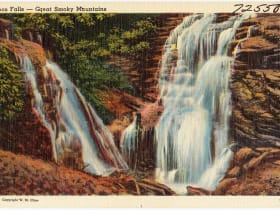
Soco Falls
8.3 miles away
A rare double waterfall where two mountain creeks plunge side by side into one green pool, tucked in a rhododendron gorge on the edge of Cherokee land.

Newfound Gap Overlook
11 miles away
The drive up from Gatlinburg over Newfound Gap is worth it for the view alone.

Clingmans Dome
12 miles away
At 6,643 feet Clingmans Dome is the roof of the Smokies and the third highest summit in the eastern United States, and the spiral observation ramp at the top can open a view of a hundred miles across...
Wheels Through Time Museum
13 miles away
Motorcycle people make pilgrimages here; everyone else stumbles on it and leaves converted.
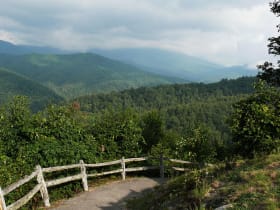
Cataloochee Valley
17 miles away
A remote, quiet valley in Great Smoky Mountains National Park where wild elk graze the open fields at dawn and dusk and a whole 1800s Appalachian farm community stands preserved, with churches, a scho...
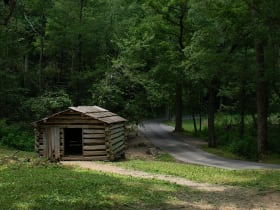
Great Smoky Mountains National Park
19 miles away
The most-visited national park, famous for misty ridgelines, wildflowers, and synchronous fireflies.
Salt and Pepper Shaker Museum
20 miles away
It sounds like a joke until you walk in, and then it just keeps going.