
Mulholland Drive Overlook
Mulholland Drive
Los Angeles, CA
A ridge road running the spine of the mountains above Los Angeles, where a pull-off can show you the whole valley on one side and the entire basin to the sea on the other.
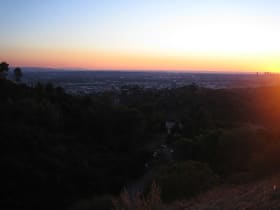
Mulholland Drive is the road that rides the top of the mountains through the middle of Los Angeles, and its overlooks offer some of the best free views in the city. From the ridge, the San Fernando Valley falls away to the north and the vast Los Angeles basin spreads south toward the sea, so a single pull-off can hold half of Southern California in one glance.
The road has become a piece of Los Angeles mythology, a byword for the city's glamour, its celebrity homes, and its cinematic self-image, immortalized in film and song. But strip away the legend and what remains is simply one of the great urban viewpoints anywhere, a place to watch the largest city in the West light up at dusk.
What Travelers Love
- Sweeping views over the San Fernando Valley on one side and the LA basin on the other from a single ridge
- The city lights spreading to the horizon after dark, a classic Los Angeles sight
- Glimpses of the Hollywood Sign, downtown towers, and on clear days the ocean
- The sense of driving the famous, cinematic road that rides the mountains above the city
Worth Knowing
- The road has several distinct overlooks; the Jerome C. Daniel Overlook above the Hollywood Bowl is the classic for Hollywood Sign and downtown views
- It is a winding, narrow, popular road, so drive carefully and park only in the marked pull-offs
- Clear days after rain or wind give the sharpest views; smog can flatten the basin on still days
- Night views are spectacular but the pull-offs are dark, so take normal city precautions
Learn about Mulholland Drive Overlook
The man and the road
The drive is named for William Mulholland, the self-taught engineer who built the Los Angeles Aqueduct, the enormous system completed in 1913 that carried water more than two hundred miles from the Owens Valley to fuel the city's explosive growth. Mulholland was a hero to Los Angeles for making its rise possible, though the aqueduct also drained the Owens Valley and left a bitter legacy there that still runs deep.
The scenic road along the mountain crest opened in 1924 and was named in his honor. It was meant from the start as a pleasure drive, a way for a car-loving city to reach the ridge and take in the view, and it has served that purpose for a century.
A view of the whole city
The Santa Monica Mountains run right through the middle of Los Angeles, an unusual thing for a great city, a range of wild chaparral canyons dividing the metropolis in two. Mulholland Drive follows their spine, so its overlooks look down on both halves of the city at once.
From the north-facing pull-offs, the grid of the San Fernando Valley stretches to the distant mountains. From the south side, the view sweeps over Hollywood and the basin toward downtown's cluster of towers and, on the clearest days, a strip of Pacific blue. The Jerome C. Daniel Overlook, perched above the Hollywood Bowl, frames the Hollywood Sign and downtown together and is the most famous of them all.
Hollywood mythology
Few roads carry as much cultural weight as Mulholland Drive. Winding past the gated estates of the Hollywood Hills, it became shorthand for movie-star glamour and for the dreamlike, sometimes sinister allure of Los Angeles itself, most famously in David Lynch's film that took the road as its name and its mood.
The overlooks have appeared in countless films, television shows, and photographs, the place where a character looks out over the city that will make or break them. Standing at a pull-off at night, with the whole basin flickering below, it is easy to feel why the road came to stand for the city's mix of promise and mystery.
Wild in the middle of the city
For all the mansions and mythology, Mulholland runs through genuinely wild country. The Santa Monica Mountains are a national recreation area, and the canyons below the road hold coyotes, mule deer, bobcats, and even the occasional mountain lion, along with hawks riding the ridge thermals and spring wildflowers on the slopes.
This land is part of the ancestral homeland of the Tongva people, who lived across the Los Angeles basin for thousands of years and remain a living community. A short walk on one of the ridge trails off Mulholland trades the city view for coastal sage scrub and birdsong, a reminder that a strip of wilderness still runs down the middle of the second-largest city in the country.
Closest Boutels
The closest Boutel™ stays, so you can turn this stop into an overnight. Each is a place we chose through independent editorial review, never a paid placement.
Safari Inn, a Coast Hotel
Honorable Mention1911 West Olive Avenue, Burbank, CA
5 miles away|Learn More ›
Details
Los Angeles, CA
Frequently asked questions
What is the Mulholland Drive Overlook?
Mulholland Drive is a famous, winding road that follows the ridgeline of the Santa Monica Mountains through Los Angeles, and its scenic overlooks offer spectacular panoramic views of the city, the San Fernando Valley, and the surrounding landscape. Immortalized in film and celebrated for its glamour and vistas, the drive features several pullouts and overlooks where visitors can stop to take in sweeping views of the LA basin, downtown skyline, Hollywood Sign, and, on clear days, the ocean. The Mulholland Drive overlooks are beloved spots for enjoying breathtaking scenery high above the city.
What can you see from the Mulholland Drive overlooks?
From the overlooks along Mulholland Drive, you can enjoy sweeping panoramic views of the Los Angeles basin and downtown skyline on one side and the San Fernando Valley on the other, with sightings of the Hollywood Sign, the Griffith Observatory, and, on clear days, the distant ocean. The views are especially stunning at sunset and after dark when the city lights sparkle below. Popular overlooks like the ones offering valley and city vistas are favorite photo spots. The dramatic elevated scenery makes the overlooks a memorable stop on a Los Angeles visit.
What safety tips apply at the Mulholland Drive overlooks?
Mulholland Drive is narrow and winding with sharp curves, so drive carefully and watch for cyclists, pedestrians, and other cars, and use only designated pullouts and overlooks rather than stopping on the road. At the overlooks, park safely, stay back from steep, unfenced edges, and keep children close. Be aware of your surroundings, especially after dark, and secure your belongings. Driving cautiously on the curvy road and being mindful at the overlook edges keeps a scenic drive along Mulholland safe and enjoyable while you take in the views.
When is the best time to visit the Mulholland Drive Overlook?
Clear days offer the best panoramic views of the city, valley, and ocean, while sunset and evening are especially magical as the sky glows and the city lights come on below, making them popular times. Smog and haze can reduce visibility on some days, so clear conditions, often after rain or on breezy days, are ideal. Weekdays may be less busy at popular overlooks. For the most spectacular views, aim for a clear day, with sunset offering a particularly beautiful vantage over Los Angeles from the ridge.
What is near the Mulholland Drive Overlook?
Mulholland Drive winds along the Santa Monica Mountains through Los Angeles, near the Hollywood Hills, Griffith Park and its observatory, the neighborhoods and studios of the San Fernando Valley on one side, and Hollywood and the west side on the other, with the beaches and canyons of the Santa Monica Mountains reachable nearby. That makes the Mulholland Drive overlooks a scenic highlight to combine with Griffith Park, Hollywood, and the many other attractions of Los Angeles on a Southern California visit.
Nearby

TCL Chinese Theatre
3.4 miles away
The world-famous 1927 pagoda movie palace on Hollywood Boulevard, its towering red columns, carved dragon, and guardian lions marking one of the most recognizable buildings in film.
Hollywood Walk of Fame
4.2 miles away
A free open-air monument of more than 2,800 brass-and-terrazzo stars set into the sidewalks of Hollywood Boulevard and Vine Street, honoring a century of film, TV, music, radio, and stage.
La Brea Tar Pits
4.5 miles away
The La Brea Tar Pits in the Miracle Mile district of Los Angeles are active asphalt seeps that have been trapping and preserving animals since before the last ice age.

The Getty Center
5.3 miles away
The Getty Center is a free hilltop art museum of gleaming travertine pavilions above Brentwood, with a living Central Garden by Robert Irwin and sweeping views over Los Angeles to the Pacific.
Griffith Park
5.5 miles away
Griffith Park covers 4,310 acres in the eastern Santa Monica Mountains within Los Angeles, making it one of the largest urban parks in North America.

Griffith Observatory
5.5 miles away
A free public observatory high on Mount Hollywood in Griffith Park, open since 1935.

Getty Villa
11 miles away
Just off the Pacific Coast Highway at the eastern edge of Malibu, the Getty Villa is a full-scale recreation of an ancient Roman country house, modeled on a seaside villa buried by Vesuvius in the yea...
Malibu Pier
17 miles away
A historic 1905 wooden fishing pier with white Cape Cod towers, right on the Pacific Coast Highway in central Malibu and now a free California State Parks landmark.
Carbon Beach
17 miles away
Malibu's famed Billionaire's Beach, a public strand below a wall of celebrity mansions that took decades of court fights to keep open.

Channel Islands National Park
50 miles away
Five undeveloped islands off the California coast, home to plants and animals found nowhere else on Earth.