
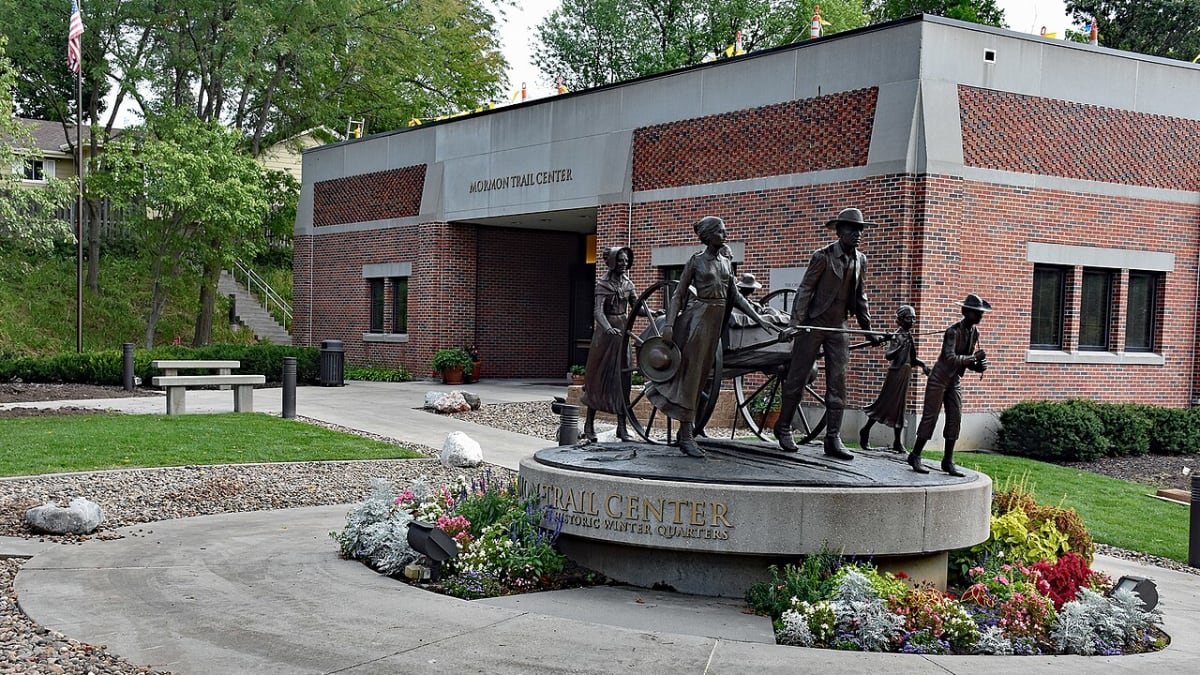
Mormon Trail Center at Historic Winter Quarters
3068 Ernst St, Omaha, NE
Omaha, NE
The bluff above the Missouri where thousands of Mormon pioneers wintered on their long road west, and where hundreds are buried who did not survive it.
In the winter of 1846, thousands of Latter-day Saint pioneers, driven from their homes in the East, camped on the bluffs above the Missouri River at a place they called Winter Quarters. They were partway through one of the great migrations in American history, an exodus of tens of thousands toward the valley of the Great Salt Lake, and they stopped here to survive the cold before pressing on the following spring.
That winter was brutal. Poorly sheltered and short of food, the pioneers suffered terribly, and hundreds died of exposure, disease, and hardship before the season ended. The Mormon Trail Center tells this story of faith and endurance, and beside it lies the pioneer cemetery where many of those who did not survive still rest, marked by one of the most affecting memorials in the region.
What Travelers Love
- The moving pioneer cemetery and its memorial to those who died here
- Exhibits and reconstructions that bring the winter of 1846 to 1847 to life
- A quiet, reflective setting on a bluff above the Missouri
- The story of an extraordinary act of faith and endurance
Worth Knowing
- This is a place of remembrance, so visitors of all beliefs are welcomed with reverence
- The cemetery and its sculpture are the emotional heart of a visit
- The center is run by The Church of Jesus Christ of Latter-day Saints
- It pairs with the wider Missouri riverfront and Omaha history for a fuller day
Learn about Mormon Trail Center at Historic Winter Quarters
The Mormon exodus west
The pioneers who wintered here were members of The Church of Jesus Christ of Latter-day Saints, forced by persecution and violence to abandon their city of Nauvoo, Illinois, in 1846. Under Brigham Young they set out across Iowa and gathered on both banks of the Missouri, intending to continue the following year to a new home far beyond the reach of their enemies, in the Rocky Mountain West.
The camp on the Nebraska side, Winter Quarters, became a substantial temporary town of hastily built cabins and dugouts. From here, in 1847, the first companies pushed on along what became the Mormon Trail to the Salt Lake Valley, blazing a route that tens of thousands more would follow over the next two decades. Winter Quarters was thus both a place of suffering and a launching point for one of the largest organized migrations in the nation's history.
The winter of 1846 and its cost
The pioneers arrived late in the season, exhausted from the crossing of Iowa, and faced a hard Nebraska winter with inadequate shelter and dwindling supplies. Scurvy, malaria, exposure, and other illnesses swept the camp, and the death toll mounted through the cold months. Hundreds died at Winter Quarters, many of them children, and the survivors buried their dead on the bluff above the river.
The pioneer cemetery preserves that ground, and at its center stands a bronze sculpture of a grieving couple burying their child, one of the most powerful pieces of public memorial art in Nebraska. It gives a face to the abstract numbers, the human cost of a migration undertaken in the name of faith, and it moves visitors of every background who come to stand before it.
This land and its earlier peoples
The pioneers were newcomers to a country already long inhabited. The bluffs and bottomlands along this stretch of the Missouri were the homeland of the Omaha, whose name the modern city carries, as well as neighboring nations. The Omaha and the Otoe-Missouria had lived, farmed, and traded along the river for generations before the wagon trains came, and the Omaha remain a living people with a homeland in Nebraska today.
The Latter-day Saints camped on this ground by arrangement with the tribes and the federal authorities, and their story here is one thread in the larger, complicated history of the Missouri River corridor, where Native nations, traders, and westward emigrants all left their mark. Understanding Winter Quarters means placing it within that older and wider human story of the river.
Visiting the center today
The Mormon Trail Center offers exhibits, reconstructions, and interpretive displays that recreate the daily life of the 1846 encampment, from the cramped cabins to the tools and hardships of the pioneers. The presentation is warm and welcoming to visitors of all beliefs, and guides help connect the objects and stories to the larger sweep of the westward trails.
Just beside the center stand the pioneer cemetery and a Latter-day Saint temple, giving the site a quiet, reverent atmosphere. The bluff-top setting above the Missouri is peaceful and reflective, and a visit pairs naturally with Omaha's riverfront and its other historic sites for a fuller day exploring the city's place on the great river road west.
Closest Boutels
The closest Boutel™ stays, so you can turn this stop into an overnight. Each is a place we chose through independent editorial review, never a paid placement.
Details
Omaha, NE
Frequently asked questions
What is the Mormon Trail Center at Historic Winter Quarters?
The Mormon Trail Center at Historic Winter Quarters, in Omaha, Nebraska, is a museum and visitor center telling the story of the Mormon pioneers who camped here during their difficult westward migration in the mid-nineteenth century. At this site, thousands of Latter-day Saint emigrants spent a hard winter on their journey west, and many did not survive; the center features exhibits, artifacts, and displays on their faith, hardships, and westward trek, and stands near a historic pioneer cemetery where many who perished are remembered. It preserves a moving chapter of the westward migration. A thoughtful and reflective historic site, it educates visitors. With its pioneer history, the center offers a meaningful destination in Nebraska.
What can you see at the Mormon Trail Center at Historic Winter Quarters?
You can explore exhibits, artifacts, and displays on the Mormon pioneers' westward migration, their winter encampment here, and their faith and hardships, and visit the nearby historic pioneer cemetery honoring the many who died during that difficult winter. The exhibits on the pioneers' journey, the artifacts, and the solemn nearby cemetery are the draws, offering a moving and educational experience. The stories of hardship and perseverance are deeply affecting. With its history and exhibits, the center offers a meaningful visit in Omaha, Nebraska.
Why is Winter Quarters historically important?
Winter Quarters is historically important as the place where thousands of Mormon pioneers camped during the harsh winter as they made their way west in the mid-nineteenth century, enduring cold, illness, and scarcity that claimed many lives. This encampment was a pivotal and tragic waypoint in the great Latter-day Saint migration to the West, and the nearby cemetery holds the graves of many who died here. The site honors their faith and sacrifice. Understanding this history enriches a visit to the Mormon Trail Center at Historic Winter Quarters in Nebraska.
When is the best time to visit the Mormon Trail Center at Historic Winter Quarters?
As a mostly indoor center, the Mormon Trail Center is enjoyable year-round in various weather, making it a reflective stop in any season, while the mild months are pleasant for also visiting the nearby historic cemetery grounds. Because hours can vary, checking the current schedule before you go is wise. Because it is largely indoors, the Mormon Trail Center makes a meaningful stop any time of year in Omaha, Nebraska.
What is near the Mormon Trail Center at Historic Winter Quarters?
The Mormon Trail Center at Historic Winter Quarters is in Omaha, Nebraska, within reach of downtown Omaha, the Missouri River, the Joslyn Art Museum, and the Henry Doorly Zoo and Aquarium. That makes the Mormon Trail Center a meaningful stop to combine with the other attractions of Omaha on a visit to Nebraska.
Nearby

Joslyn Art Museum
4.5 miles away
Joslyn Art Museum: 2200 Dodge Street, downtown Omaha. General admission is free; some special exhibitions ticketed.
Lincoln Highway Heritage Byway
5.3 miles away
Iowa's stretch of the Lincoln Highway, America's first coast-to-coast road, laid out in 1913 and now a marked heritage byway.

Loess Hills Scenic Byway
7.1 miles away
The Loess Hills run in a narrow band along Iowas western edge, steep ridges of wind-deposited silt so deep and rugged that this landform reaches comparable scale in only one other place on earth.

Henry Doorly Zoo and Aquarium
7.1 miles away
Henry Doorly Zoo and Aquarium: just south of downtown Omaha off Interstate 80 (13th Street exit). Admission charged; parking fee. Plan on most of a day.
Historic Squirrel Cage Jail
7.1 miles away
The Historic Squirrel Cage Jail sits in downtown Council Bluffs.
Union Pacific Railroad Museum
7.2 miles away
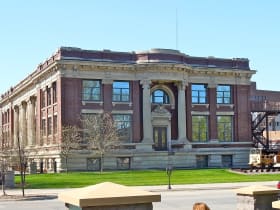
The Union Pacific Railroad Museum is in downtown Council Bluffs, in a 1905 Carnegie library. Admission is free.
Historic General Dodge House
7.6 miles away
Most travelers pass through Council Bluffs without knowing that the man who engineered the western half of the transcontinental railroad lived here in style.

Hitchcock Nature Center
7.8 miles away
Hitchcock Nature Center sits in the Loess Hills north of Council Bluffs. The ridges here are steep wind-built silt, and restored hilltop prairie is slowly returning across the preserve.