
Historic Squirrel Cage Jail
320 Oakland Ave, Council Bluffs, IA
Council Bluffs, IA
A jail built like a giant rotating drum, where cells turned past a single door and only one prisoner could reach the exit at a time.
The Historic Squirrel Cage Jail is one of the strangest buildings in Iowa, a rotary jail built in the 1880s on a wild idea: cells arranged like pie slices around a central axis inside a drum, with a single door on the outer wall. To let a prisoner in or out, a jailer turned a crank that rotated the whole drum of cells until the right one lined up with the door. Only one cell could reach the exit at a time, which was the whole point, letting a single jailer control many prisoners with minimal risk.
Only a handful of these rotary jails were ever built, and fewer still survive. The Council Bluffs jail, nicknamed the Squirrel Cage for its resemblance to a rotating pet wheel, served as the county lockup for decades before being retired and preserved as a museum. It stands today as a fascinating, slightly chilling monument to a strange chapter in the history of American ideas about crime and confinement.
What Travelers Love
- The bizarre design of a jail whose cells rotate on a central axis
- Understanding the clever, unsettling logic of the rotary jail idea
- Its rarity as one of only a handful ever built and one of the last standing
- The eerie, atmospheric feel of a preserved 1800s lockup
Worth Knowing
- It is one of only a few rotary jails ever built and one of the last that survive
- The rotating mechanism is no longer operated for safety, but the design is fully explained
- The upper floors and cells can be tight and steep, so mind your footing
- It has a reputation as a spooky site and hosts occasional after-dark events
Learn about Historic Squirrel Cage Jail
The idea behind the rotating jail
The rotary jail was patented in the 1880s as a way to make jails more secure with less staff. The design placed wedge-shaped cells around a central column inside a rotating cylinder, all enclosed in a fixed outer shell with just one opening per floor. By turning a hand crank, a jailer could rotate the cells until the desired one aligned with that single door, so no more than one prisoner could ever reach the exit at once.
The appeal was control and safety for the guards, but the design had serious flaws. The turning mechanism could injure prisoners who had a limb in the wrong place, escape and rescue were difficult, and in a fire the rotating cells could trap people. Because of these problems, very few were ever built, and most were eventually converted or torn down, which makes the survivors extraordinarily rare.
The Squirrel Cage in Council Bluffs
The Council Bluffs jail was built in the 1880s and served as the Pottawattamie County jail for many decades, its rotating cells housing generations of prisoners. Its nickname, the Squirrel Cage, came from the way the whole cell block turned like the wheel in a rodent's cage. Over its long life the mechanism wore and was eventually locked in place, but the building kept operating as a jail well into the twentieth century.
When it finally closed, rather than being demolished, it was saved and turned into a museum by the local historical society. Visitors can now explore the strange interior, see the rotating cell structure, and learn how the whole contraption worked, a rare chance to stand inside one of the oddest jails ever conceived.
An eerie landmark
There is something undeniably unsettling about the Squirrel Cage, and the museum leans into its atmosphere. The tight, dim cells, the turning drum, and the long history of confinement give it an eerie feel, and the jail has a reputation as one of the more haunted-seeming historic sites in the region, drawing ghost-story enthusiasts as well as history buffs.
Beyond the spookiness, the jail offers a genuine window into how earlier generations thought about crime, punishment, and the machinery of the law. It is the kind of place that sticks in the memory, both for its ingenuity and for the discomfort of imagining life inside a rotating cage.
Council Bluffs and the river
Council Bluffs grew up on the east bank of the Missouri River as a gateway to the West, a launching point for overland travelers and a hub of the transcontinental railroad. Its downtown holds a cluster of historic sites, from the railroad museum to the grand Dodge House, and the Squirrel Cage Jail is one of its most distinctive.
This stretch of the Missouri lies within the historic homelands of the Ioway, for whom the state is named, and other peoples of the region, whose communities lived along the great river long before the city rose. The council that gave Council Bluffs its name recalls that longer Native history on the riverbank where the strange little jail still stands.
Closest Boutels
The closest Boutel™ stays, so you can turn this stop into an overnight. Each is a place we chose through independent editorial review, never a paid placement.
Details
Council Bluffs, IA
Frequently asked questions
What is the Historic Squirrel Cage Jail?
The Historic Squirrel Cage Jail, in Council Bluffs in southwestern Iowa, is a remarkable and rare nineteenth-century rotary jail, one of only a few ever built and among the last surviving. Its ingenious and unusual design featured a rotating drum of pie-shaped cells inside a stationary cage, so that turning the drum would bring each cell to a single opening, an odd and somewhat notorious system meant to let one jailer control many prisoners. Now a museum, this strange and fascinating building lets visitors explore its unique mechanism and learn its history. With its one-of-a-kind rotating cells and curious history, the Historic Squirrel Cage Jail offers an unusual destination in Council Bluffs, Iowa.
How did the Squirrel Cage Jail work?
The Squirrel Cage Jail worked by an unusual rotary design: inside a stationary steel cage stood a rotating drum divided into pie-shaped cells stacked on several floors, and by turning the drum, the jailer could bring any single cell around to line up with the one fixed doorway, allowing many prisoners to be secured and accessed by just one opening. The clever but troublesome mechanism, meant to improve security with little staff, proved impractical and even hazardous over time, and few such jails were ever built. This ingenious, quirky system is what makes the Historic Squirrel Cage Jail so fascinating to tour in Council Bluffs, Iowa.
What can you see at the Historic Squirrel Cage Jail?
You can see the extraordinary rotating cell drum and its pie-shaped cells, learn how the rare rotary mechanism worked, explore the historic jail building including the jailer's quarters and exhibits on its history and the prisoners once held there, and hear the curious and sometimes eerie stories associated with the place. The unique rotating cells are the star attraction. It is a fascinating stop for history buffs and the curious. With its one-of-a-kind rotary design and intriguing history, the Historic Squirrel Cage Jail offers an unusual and memorable visit in Council Bluffs, southwestern Iowa.
When is the best time to visit the Historic Squirrel Cage Jail?
As an indoor museum, the Historic Squirrel Cage Jail is enjoyable year-round in any weather, though it is typically open on a seasonal or limited schedule and seen by tour, so checking current days and hours before you go is wise, as they can vary. The jail sometimes hosts special events, including spookier ones around Halloween given its eerie reputation. Summer is a pleasant time to combine it with other Council Bluffs sights. For the best access, check the current schedule and plan your visit accordingly at the Historic Squirrel Cage Jail in Council Bluffs, Iowa.
What is near the Historic Squirrel Cage Jail?
The Historic Squirrel Cage Jail is in Council Bluffs in southwestern Iowa, near the Historic General Dodge House, the Union Pacific Railroad Museum, the Loess Hills country with Hitchcock Nature Center, and within reach of the Missouri River and the Omaha area across the river. That makes the Squirrel Cage Jail an unusual stop to combine with the General Dodge House, the Union Pacific Railroad Museum, and the other attractions of Council Bluffs and southwestern Iowa on a visit to the state.
Nearby

Loess Hills Scenic Byway
0.2 miles away
The Loess Hills run in a narrow band along Iowas western edge, steep ridges of wind-deposited silt so deep and rugged that this landform reaches comparable scale in only one other place on earth.

Union Pacific Railroad Museum
0.3 miles away
The Union Pacific Railroad Museum is in downtown Council Bluffs, in a 1905 Carnegie library. Admission is free.
Lincoln Highway Heritage Byway
0.3 miles away
Iowa's stretch of the Lincoln Highway, America's first coast-to-coast road, laid out in 1913 and now a marked heritage byway.
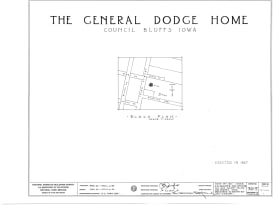
Historic General Dodge House
0.7 miles away
Most travelers pass through Council Bluffs without knowing that the man who engineered the western half of the transcontinental railroad lived here in style.

Henry Doorly Zoo and Aquarium
4.7 miles away
Henry Doorly Zoo and Aquarium: just south of downtown Omaha off Interstate 80 (13th Street exit). Admission charged; parking fee. Plan on most of a day.

Joslyn Art Museum
5.1 miles away
Joslyn Art Museum: 2200 Dodge Street, downtown Omaha. General admission is free; some special exhibitions ticketed.

Mormon Trail Center at Historic Winter Quarters
7.1 miles away
Mormon Trail Center at Winter Quarters: on State Street in the Florence area of north Omaha, across from the Mormon Pioneer Cemetery.

Hitchcock Nature Center
9.7 miles away
Hitchcock Nature Center sits in the Loess Hills north of Council Bluffs. The ridges here are steep wind-built silt, and restored hilltop prairie is slowly returning across the preserve.