
Mesa Falls Scenic Area
Mesa Falls Scenic Byway (Highway 47)
Ashton, ID
Two thundering waterfalls on the Henrys Fork, among the last big falls in the region left completely undammed, with a 1907 log inn watching over the upper drop.
Mesa Falls is where the Henrys Fork, one of the great trout rivers of the West, throws itself off the edge of an ancient volcanic plateau in two big, unrestrained drops. Upper Mesa Falls plunges roughly 114 feet and spreads some 200 feet wide, and a boardwalk carries you right to the lip of it, close enough to feel the ground shake and the mist rise.
What makes these falls special is not just their size but their freedom. On a river system as heavily dammed and diverted as the Snake and its tributaries, Mesa Falls stands out as one of the last major waterfalls in the region left to run wild, exactly as it has for thousands of years.
What Travelers Love
- The full force of Upper Mesa Falls seen up close from a boardwalk right beside the drop
- The historic Big Falls Inn, a 1907 log lodge that now tells the geologic and human story
- Two distinct falls, the powerful Upper and the more distant Lower, along one short byway
- A rare chance to see a major western river fall freely, undammed and undiverted
Worth Knowing
- The upper falls have a developed boardwalk and viewing area, while the lower falls are seen from an overlook a bit farther on
- The byway and viewing areas are a warm-season experience and access is limited by snow in winter
- Spring runoff makes the falls loudest and mistiest, so expect spray on the boardwalk
- It is a popular stop on the way to Yellowstone, so mornings are quieter
Learn about Mesa Falls Scenic Area
A river off the edge of a volcano
The rock the falls pour over is Mesa Falls Tuff, laid down about 1.3 million years ago when the Henrys Fork caldera, part of the same Yellowstone hotspot system that still powers the geysers next door, erupted and blanketed the region in rhyolite ash that later hardened into stone.
Long after, over roughly the last few hundred thousand years, the river cut a canyon here, basalt lava flows partly filled it, and the Henrys Fork carved its channel again through the harder rock. The result is the ledge that creates the two falls, a direct expression of the volcanic forces that shaped this whole corner of Idaho.
The Big Falls Inn
Perched near the upper falls, the Big Falls Inn is a one-and-a-half-story log building raised in 1907 to serve travelers in the days when reaching this remote canyon was an adventure in itself.
Restored, it now works as the interpretive center for the Mesa Falls Scenic Byway, with exhibits on the geology of the falls and canyon, the river's ecosystem, the plants and animals, and the long human history of the area from ancient times to the present.
The river and its wildlife
The Henrys Fork is legendary among fly anglers, and the water above and below the falls runs cold and clear through forest and canyon. Ospreys and bald eagles fish the river, and the surrounding Targhee forest holds elk, moose, and the occasional bear.
This is Greater Yellowstone country, so the wildlife can be genuinely wild. Keep your distance and store food carefully.
When to visit
Late spring brings the falls at their most powerful, fed by snowmelt, with spray drifting over the boardwalk. Summer is the easiest time to visit, and early fall pairs lower crowds with turning aspens.
Snow closes much of the byway in winter, so plan a warm-season trip and pair it with nearby Yellowstone or the Teton Valley.
Closest Boutels
The closest Boutel™ stays, so you can turn this stop into an overnight. Each is a place we chose through independent editorial review, never a paid placement.
Details
Ashton, ID
Frequently asked questions
What is the Mesa Falls Scenic Area?
The Mesa Falls Scenic Area, along the Mesa Falls Scenic Byway near Ashton in eastern Idaho, encompasses the beautiful Upper and Lower Mesa Falls and the surrounding forested high country of the Henrys Fork region. The scenic byway winds through pine forest and offers access to the two dramatic waterfalls, overlooks, a historic lodge and visitor center, and views of the Snake River Plain and Teton country in the distance. A lovely drive combining waterfalls, forest, and mountain scenery, it is one of eastern Idaho's most beautiful areas. With its scenic byway, waterfalls, and forest, the Mesa Falls Scenic Area offers a spectacular destination in Idaho.
What can you do in the Mesa Falls Scenic Area?
You can drive the Mesa Falls Scenic Byway through the pine forest, visit both Upper and Lower Mesa Falls with their boardwalks and overlooks, stop at the historic lodge and visitor center, take in views of the surrounding high country and distant Teton peaks, hike, picnic, and enjoy the forest and waterfall scenery. The scenic drive and the two waterfalls are the highlights, especially glorious in fall color. It is a rewarding, unhurried outing. With its scenic byway, waterfalls, and forest views, the Mesa Falls Scenic Area offers a beautiful experience near Ashton in eastern Idaho.
What is the historic lodge at the Mesa Falls Scenic Area?
The historic lodge in the Mesa Falls Scenic Area, the Big Falls Inn, is a restored early-twentieth-century building near Upper Mesa Falls that now serves as a visitor center, where visitors can learn about the falls, the area's history, and the surrounding forest and volcanic country. The historic lodge adds a touch of heritage to the natural beauty, offering interpretation, information, and sometimes exhibits or a small shop. Pausing at the lodge enriches a visit to the falls. This blend of history and scenery makes the lodge a nice complement to the waterfalls in the Mesa Falls Scenic Area of eastern Idaho.
When is the best time to visit the Mesa Falls Scenic Area?
Late spring through fall is the best time to drive the byway and enjoy the falls, with summer offering pleasant weather and full access, and fall bringing spectacular color to the forest, a favorite and beautiful time, while late spring brings the most powerful waterfalls from snowmelt. The byway and sites may be snowbound in winter, though the area draws snowmobilers then. For the best combination of access, waterfalls, and scenery, aim for late spring through fall, with fall especially colorful, in the Mesa Falls Scenic Area of eastern Idaho.
What is near the Mesa Falls Scenic Area?
The Mesa Falls Scenic Area is along the Mesa Falls Scenic Byway near Ashton in eastern Idaho, containing Upper and Lower Mesa Falls, within reach of the Island Park caldera, Harriman State Park, and the route toward Yellowstone and the Idaho Falls area. That makes the Mesa Falls Scenic Area a spectacular stop to combine with the Island Park caldera, Harriman State Park, and the other attractions of eastern Idaho on a visit to the state.
Nearby
Upper Mesa Falls
3.2 miles away
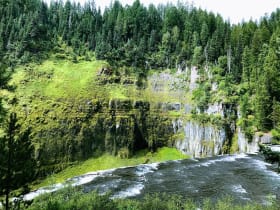
Upper Mesa Falls drops 114 feet over the edge of the Island Park Caldera rim, and the viewing boardwalk that reaches it is one of the genuinely good pieces of trail infrastructure in Idaho.

Island Park Caldera
4.6 miles away
The Island Park Caldera formed when a supervolcanic eruption approximately 1.3 million years ago ejected so much material that the overlying ground collapsed into the magma chamber.
Harriman State Park Wildlife Walk
11 miles away
Harriman State Park was the private railroad retreat of Union Pacific executives until it was donated to Idaho in 1977.

Mesa Falls
17 miles away
A big, wild waterfall on the Henrys Fork of the Snake River in eastern Idaho, one of the last major undisturbed falls in the region, dropping about 100 feet over a basalt cliff with rainbows in the mi...

Yellowstone National Park
24 miles away
The world's first national park, sitting atop a supervolcano of geysers, hot springs, and vast wildlife herds.
Grand Teton National Park
62 miles away
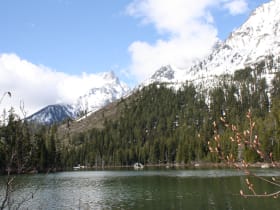
Jagged peaks rising straight from the valley floor, mirrored in the string of lakes at their base.