
Island Park Caldera
US-20
Island Park, ID
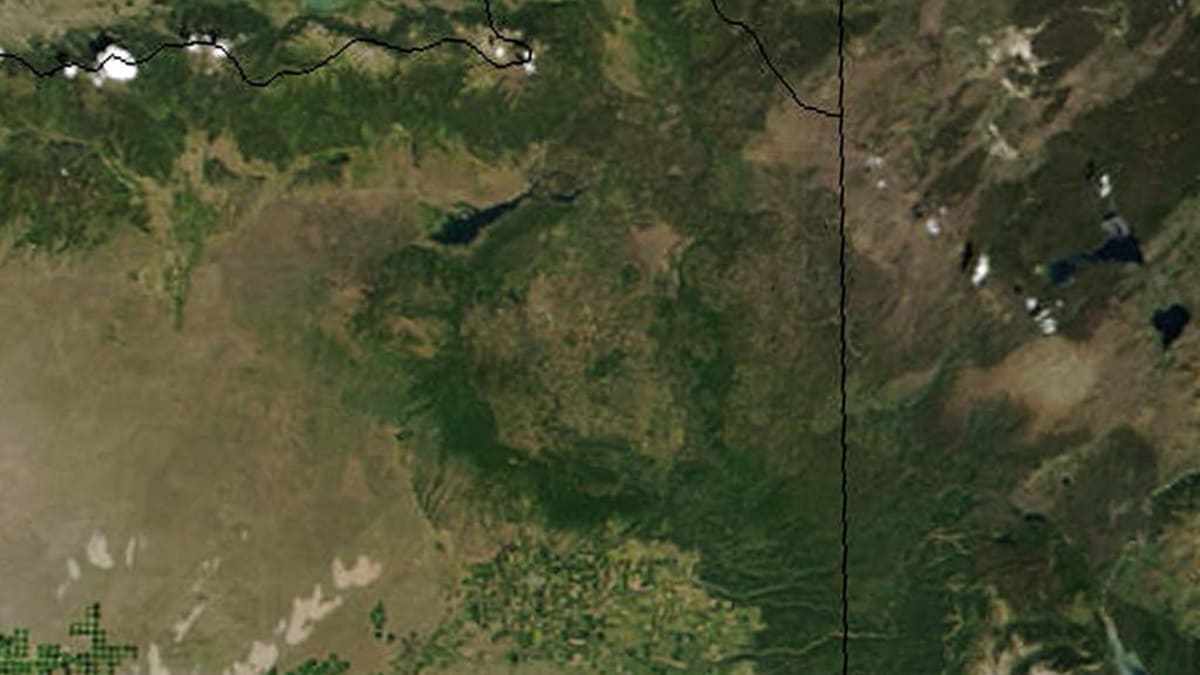
You can drive across the floor of an ancient supervolcano without realizing it, a broad forested basin ringed by low cliffs that are the rim of one of Earth's largest calderas.
Island Park is one of the strangest places you can drive through without noticing, because you are crossing the floor of an ancient supervolcano. The broad, forested basin is the Island Park Caldera, one of the largest and best-preserved volcanic calderas on Earth, and the low cliffs that edge the valley are the collapsed rim of eruptions almost beyond imagining.
The scale is hard to hold in your head. The caldera formed as the Yellowstone hotspot, the same deep heat source that now powers Yellowstone's geysers, erupted here long ago and collapsed the ground into an enormous bowl. Today that bowl is filled with lodgepole forest, spring creeks, and the headwaters of the Henry's Fork, a peaceful landscape sitting on top of a violent past.
What Travelers Love
- Standing inside one of the largest volcanic calderas on the planet, hidden in plain sight
- The Henry's Fork and Harriman State Park, storied trout water and swan habitat within the basin
- Big waterfalls, springs, and lodgepole forest across a broad, gentle landscape
- A quiet, cabin-country gateway to the west side of Yellowstone
Worth Knowing
- The caldera is so vast and low-rimmed that it is hard to perceive from the ground; the geology is the wonder, not a dramatic crater
- This is high country with a short season; deep snow closes much of it in winter, when it turns into snowmobile terrain
- Summer brings mosquitoes to the wet meadows and springs; pack repellent
- Services are spread out along US-20, so plan fuel and supplies
Learn about Island Park Caldera
A caldera on the hotspot track
The Yellowstone hotspot is a plume of heat rising from deep in the Earth. The North American plate drifts slowly southwest over it, so the hotspot has punched a chain of giant calderas across the Snake River Plain, roughly one every several hundred thousand years, like a blowtorch held under a moving sheet of metal.
Island Park is one of those calderas, formed by eruptions that ejected staggering volumes of ash and rock. Nested within the larger structure is the Henry's Fork Caldera, a younger collapse whose rim is easier to see. Yellowstone, just to the east, is simply the most recent stop on the same track, which means Island Park is a preview of a place millions of people visit without realizing they are neighbors on a geologic conveyor belt.
The Henry's Fork springs
The porous volcanic rock of the caldera acts like a giant sponge, storing snowmelt and releasing it through massive springs. The most famous is Big Springs, one of the largest spring complexes in the country, where crystal-clear water gushes from the ground fully formed to become the Henry's Fork of the Snake River.
Those steady, cold springs are why the Henry's Fork is such legendary trout water and why the meadows stay green and open even in winter. The river gathers itself here and runs south through Harriman State Park before dropping over Mesa Falls, all within the old caldera.
Wildlife of the basin
The caldera and the surrounding Greater Yellowstone Ecosystem are rich with wildlife. Moose browse the willows, elk range the forests and meadows, and trumpeter swans and sandhill cranes work the spring creeks, with a large share of the Lower 48's wintering swans centered on nearby Harriman.
Grizzly and black bears, wolves, and other Yellowstone wildlife move through this country too, part of one of the largest intact ecosystems in the temperate world. Birdlife is abundant along the rivers and lakes, and the whole basin feels like an antechamber to the park next door.
Seasons in the caldera
Summer and early fall are the seasons for fishing, paddling, and exploring the falls and springs, when the roads are open and the meadows green. Fall brings elk rut and crisp air, and the first swans down from the north.
Winter is long and deep here. Snow buries the basin and closes many roads to cars, and Island Park becomes a snowmobile and Nordic destination. If you are aiming for the springs, waterfalls, and wildlife, plan for the warm months.
Closest Boutels
The closest Boutel™ stays, so you can turn this stop into an overnight. Each is a place we chose through independent editorial review, never a paid placement.
Details
Island Park, ID
Frequently asked questions
What is the Island Park Caldera?
The Island Park Caldera, in eastern Idaho near the town of Island Park and the western edge of Yellowstone, is one of the largest volcanic calderas in the world, a vast crater formed by a colossal ancient volcanic eruption. So enormous that it is best appreciated on a map or from certain vantage points rather than seen at a glance, the caldera underlies a beautiful landscape of forests, meadows, lakes, and the Henrys Fork river country, part of the same volcanic hot spot that powers Yellowstone. The area offers fishing, wildlife, and scenic beauty atop this geologic wonder. With its immense volcanic caldera and scenic country, Island Park offers a fascinating destination in Idaho.
How big is the Island Park Caldera?
The Island Park Caldera is enormous, one of the largest calderas in the world, spanning a huge area of eastern Idaho, so vast that its curving rim stretches for miles and it is difficult to perceive its full scale from the ground, being better appreciated on a map or from high vantage points. Formed by a massive ancient volcanic eruption from the same hot spot that today powers Yellowstone, the caldera underlies a broad, scenic basin of forest and meadow. Its sheer size makes it a remarkable, if subtle, geologic feature. Understanding this immense caldera adds fascination to a visit to the Island Park area in eastern Idaho.
What can you do in the Island Park Caldera area?
You can enjoy the beautiful landscape atop the caldera, world-class fly-fishing on the Henrys Fork river, boating and fishing on the area's lakes and reservoirs, wildlife watching, hiking, camping, and, nearby, the Mesa Falls waterfalls and Harriman State Park, along with easy access to the west entrance of Yellowstone. The fishing, the scenery, and the proximity to Yellowstone are highlights. Learning the volcanic story adds depth. With its scenic caldera country, fishing, and recreation, the Island Park area offers a rewarding outdoor experience in eastern Idaho.
When is the best time to visit the Island Park Caldera?
Summer through early fall is the prime season for fishing, hiking, boating, and enjoying the caldera country, when the weather is mildest and the roads and sites open, with fall bringing beautiful color and good fishing, while the high country is snowbound in winter, when the area becomes a snowmobiling destination. Even summer nights are cool at elevation. For warm-weather recreation and fishing aim for summer through early fall, and for snow sports, winter, in the Island Park Caldera area of eastern Idaho.
What is near the Island Park Caldera?
The Island Park Caldera is in eastern Idaho near Island Park and the western edge of Yellowstone, near Harriman State Park, the Mesa Falls Scenic Area, and the Henrys Fork river country, within reach of the west entrance of Yellowstone and the Idaho Falls area. That makes the Island Park Caldera a fascinating stop to combine with Harriman State Park, Mesa Falls, and the other attractions of eastern Idaho on a visit to the state.
Nearby
Mesa Falls Scenic Area
4.6 miles away
Mesa Falls is a two-tiered waterfall on Henry's Fork of the Snake River in Fremont County, the last major undisturbed waterfall in the Columbia River drainage.
Harriman State Park Wildlife Walk
6.1 miles away
Harriman State Park was the private railroad retreat of Union Pacific executives until it was donated to Idaho in 1977.
Upper Mesa Falls
6.3 miles away
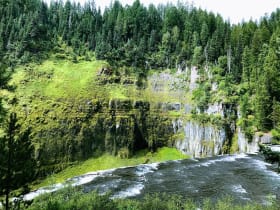
Upper Mesa Falls drops 114 feet over the edge of the Island Park Caldera rim, and the viewing boardwalk that reaches it is one of the genuinely good pieces of trail infrastructure in Idaho.

Mesa Falls
15 miles away
A big, wild waterfall on the Henrys Fork of the Snake River in eastern Idaho, one of the last major undisturbed falls in the region, dropping about 100 feet over a basalt cliff with rainbows in the mi...

Yellowstone National Park
28 miles away
The world's first national park, sitting atop a supervolcano of geysers, hot springs, and vast wildlife herds.
Grand Teton National Park
62 miles away
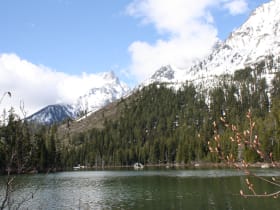
Jagged peaks rising straight from the valley floor, mirrored in the string of lakes at their base.