
Harriman State Park Wildlife Walk
3489 Green Canyon Rd
Island Park, ID
A private railroad-family retreat for most of a century, now an 11,000-acre refuge where trumpeter swans winter and the Henry's Fork glides past the old ranch buildings.
Harriman State Park is an 11,000-acre wildlife refuge wrapped around eight miles of the Henry's Fork of the Snake River, near Island Park in eastern Idaho. For most of the twentieth century it was a private working cattle ranch and family retreat, and much of its magic comes from how gently people have trodden here. The meadows, spring creeks, and lodgepole forests were protected long before they became a park.
It is best known for two things that could not be more different: trumpeter swans and trout. A large share of the trumpeter swans that winter in the contiguous United States spend the cold months on the park's spring-fed waters, and the Henry's Fork that runs through the old ranch is spoken of in reverent tones by fly anglers as some of the most challenging dry-fly water anywhere.
What Travelers Love
- Trumpeter swans and sandhill cranes on quiet meadows and spring creeks
- Walking or skiing miles of gentle trails past the preserved Railroad Ranch buildings
- Some of the most famous, and most humbling, dry-fly water in the world on the Henry's Fork
- Moose and elk moving through the willows in the early morning and evening
Worth Knowing
- This is a refuge first, so trails and access are managed to protect wildlife; stay on paths and keep your distance from swans and moose
- The fly fishing here is catch-and-release and famously technical, not a beginner's water
- Winters are long and cold; the park becomes a Nordic ski and snowshoe destination when the roads close to cars
- Summer brings mosquitoes to the wet meadows, so pack repellent
Learn about Harriman State Park Wildlife Walk
The Railroad Ranch
The land was assembled in the early 1900s by investors tied to the Union Pacific Railroad, and it became known simply as the Railroad Ranch. Among the owners were the Harriman and Guggenheim families, who ran cattle here and used the ranch as a private retreat reachable by rail.
In 1977 Roland and Averell Harriman gave the ranch to the state of Idaho outright, with the condition that it be protected as a park and wildlife refuge. It opened to the public in 1982. The old ranch buildings still stand along the river, and walking among them is a quiet lesson in a vanished way of Western life.
Home of the trumpeter swans
The trumpeter swan is the largest native waterfowl in North America, and it was hunted nearly to extinction. Harriman's spring creeks stay open through the deep freeze of an Idaho winter, and that open water makes the park one of the most important wintering grounds for the swans in the Lower 48.
They share the refuge with sandhill cranes, elk, moose, and a long list of raptors and songbirds. The park's wildlife walks are laid out so that you can see this abundance without disturbing it, which is why the swans keep coming back.
The Henry's Fork
The stretch of the Henry's Fork that slides through the old Railroad Ranch is one of the storied trout streams of the world. Its wild rainbow trout are large, wary, and educated, rising to hatches so specific that anglers travel across oceans to test themselves against them.
Even if you never pick up a rod, the river is the heart of the place, a wide, glassy spring creek moving slowly through the meadows. It is fed by the enormous springs of the Island Park country, which give it steady flows and steady temperatures that trout and swans both depend on.
Seasons at the ranch
Summer and early fall are the classic seasons for walking, wildlife watching, and fishing, when the meadows are green and the hatches are on. Fall brings elk into rut and the first swans down from the north.
Winter transforms Harriman. The roads close to cars and the park becomes a groomed Nordic-ski and snowshoe retreat, silent except for the swans. It is a different park entirely, and for many people the most beautiful one.
Closest Boutels
The closest Boutel™ stays, so you can turn this stop into an overnight. Each is a place we chose through independent editorial review, never a paid placement.
Details
Island Park, ID
Frequently asked questions
What is the Harriman State Park Wildlife Walk?
Harriman State Park, in eastern Idaho's Island Park area, is a beautiful park on a historic ranch along the Henrys Fork of the Snake River, and its wildlife walk offers wonderful opportunities to see the park's abundant wildlife amid meadows, forest, and river. The park is especially famous as a refuge for trumpeter swans, the largest waterfowl in North America, which winter along the open waters of the river here, along with elk, moose, deer, sandhill cranes, and other wildlife. Trails wind through the scenic landscape and historic ranch buildings. With its trumpeter swans, wildlife, and scenic river country, Harriman State Park offers a rewarding destination in Idaho.
Can you see trumpeter swans at Harriman State Park?
Yes, Harriman State Park is famous as an important refuge for trumpeter swans, the largest native waterfowl in North America, which are especially seen in the colder months when they gather along the open, spring-fed waters of the Henrys Fork that stay unfrozen through winter. Watching these magnificent white swans, along with other wildlife, is a highlight of the park. Bringing binoculars and viewing from a respectful distance without disturbing them is important. Seeing the majestic trumpeter swans makes Harriman State Park a special wildlife destination in eastern Idaho, especially in winter.
What can you do at Harriman State Park?
You can walk the trails through meadows, forest, and along the Henrys Fork to watch for wildlife including trumpeter swans, elk, moose, deer, and cranes, explore the historic ranch buildings, fish the renowned waters, cross-country ski in winter, and enjoy the scenic river country. Wildlife watching, especially the swans, and the historic ranch are highlights, along with world-class fly-fishing. It is a peaceful, beautiful park. With its wildlife walks, historic ranch, and river scenery, Harriman State Park offers a rewarding outdoor experience in eastern Idaho.
When is the best time to visit Harriman State Park?
The trumpeter swans and wintering wildlife are best seen in the colder months, making late fall through winter into early spring special for swan viewing, while summer and early fall offer pleasant weather for hiking, wildlife watching, fishing, and exploring the ranch, with elk and other wildlife active. Winter also brings cross-country skiing. Bringing binoculars aids wildlife viewing any season. For the trumpeter swans aim for the colder months, and for pleasant hiking and general wildlife, summer through fall, at Harriman State Park in eastern Idaho.
What is near the Harriman State Park Wildlife Walk?
Harriman State Park is in eastern Idaho's Island Park area along the Henrys Fork, near the Island Park caldera, the Mesa Falls Scenic Area, and the Henrys Fork river country, within reach of the west entrance of Yellowstone and the Idaho Falls area. That makes Harriman State Park a rewarding stop to combine with the Island Park caldera, Mesa Falls, and the other attractions of eastern Idaho on a visit to the state.
Outside the Park

Island Park Caldera
6.1 miles away
The Island Park Caldera formed when a supervolcanic eruption approximately 1.3 million years ago ejected so much material that the overlying ground collapsed into the magma chamber.
Mesa Falls Scenic Area
11 miles away
Mesa Falls is a two-tiered waterfall on Henry's Fork of the Snake River in Fremont County, the last major undisturbed waterfall in the Columbia River drainage.
Upper Mesa Falls
12 miles away
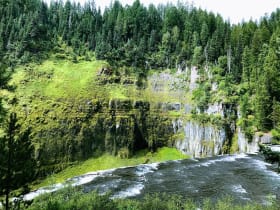
Upper Mesa Falls drops 114 feet over the edge of the Island Park Caldera rim, and the viewing boardwalk that reaches it is one of the genuinely good pieces of trail infrastructure in Idaho.

Mesa Falls
14 miles away
A big, wild waterfall on the Henrys Fork of the Snake River in eastern Idaho, one of the last major undisturbed falls in the region, dropping about 100 feet over a basalt cliff with rainbows in the mi...

Yellowstone National Park
34 miles away
The world's first national park, sitting atop a supervolcano of geysers, hot springs, and vast wildlife herds.
Grand Teton National Park
62 miles away
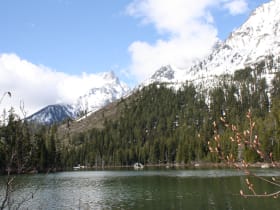
Jagged peaks rising straight from the valley floor, mirrored in the string of lakes at their base.