

Kansas Barbed Wire Museum
202 1st St, La Crosse, KS
La Crosse, KS
Hundreds of varieties of the humble wire that changed the West forever, in the small Kansas town that calls itself the Barbed Wire Capital of the world.
In the small central-Kansas town of La Crosse sits a museum devoted entirely to barbed wire, and it turns out to be far more interesting than that sounds. The invention of practical barbed wire in the 1870s was one of the quiet revolutions of American history, the thing that finally let farmers and ranchers fence the vast, treeless, timber-poor grasslands of the West, and this museum tells that story through hundreds of different wire designs.
La Crosse embraces the subject completely, calling itself the Barbed Wire Capital of the world and hosting an annual gathering of wire collectors. The museum displays a remarkable range of patterns, each the patented brainchild of some inventor hoping to build a better fence, and it connects that humble wire to the sweeping changes it brought to the land, the end of the open range and the fencing-off of the frontier.
What Travelers Love
- The astonishing variety of barbed-wire patterns, each a different inventor's design
- Learning how a simple wire quietly transformed the open range
- The town's whole-hearted embrace of its barbed-wire identity
- A genuinely offbeat museum you will not find anywhere else
Worth Knowing
- This is a small, specialized museum; its charm is in the depth of one unlikely subject
- La Crosse also holds related museums on rural life, so it makes a good half-day stop
- The town styles itself the Barbed Wire Capital and hosts a wire-collectors gathering
- It pairs well with the post-rock and round-barn sights of central Kansas
Learn about Kansas Barbed Wire Museum
The wire that closed the range
For most of the frontier era, the open grasslands of the West had no fences. There was little timber to build them, stone was labor-intensive, and cattle ranged freely across the prairie. That changed in the 1870s when inventors, most famously in Illinois, perfected cheap, mass-produced barbed wire, a twisted wire studded with sharp barbs that could turn back livestock without any wood at all.
The effect was enormous. Suddenly farmers could fence their fields against roaming cattle, and ranchers could enclose their ranges, and within a couple of decades the open range of the classic cowboy era was gone, carved up into fenced parcels. Barbed wire was cheap, effective, and transformative, and its arrival marked a real turning point in the history of the American West.
A thousand ways to make a barb
The rush to build a better fence set off a wave of invention, and the museum's great treasure is the sheer variety it displays. Inventors patented hundreds of different barbed-wire designs, twisting the strands and shaping the barbs in countless ways, each hoping to corner the market. To a collector, these patterns are as distinct and collectible as coins or stamps.
Walking the museum, you see wire after wire, each with its own name and history, some common and some rare. The collection turns what most people would dismiss as a single dull object into a whole field of study, and it draws serious collectors who trade and hunt for rare patterns much as others chase antiques.
Fencing the treeless plains
Central Kansas felt the fencing revolution acutely, because this was famously a land without wood. Early settlers here solved the fence problem in a distinctive way before wire became cheap, quarrying long posts from the region's flat-lying limestone, giving the area its enduring name of post-rock country. Those stone posts still line the roads and fields around La Crosse.
When affordable barbed wire arrived, it strung between those very posts, marrying the local stone to the new industrial wire. The museum sits in the heart of this landscape, and understanding the fencing story helps make sense of the whole region, a place shaped by the simple, urgent need to mark and hold land on a treeless prairie.
La Crosse and the country around it
La Crosse leans into its identity as the Barbed Wire Capital, and beyond the wire museum the town keeps other small museums celebrating rural life and post-rock heritage, so a stop here can easily fill a half day. The town lies in the post-rock and Smoky Hills country of central Kansas, which was long the land of Plains nations including the Kaw, or Kanza, and the Pawnee, whose peoples continue today.
The surrounding country is broad wheat and grazing land, and it connects naturally to the region's other roadside wonders, from the Fromme-Birney Round Barn to the Gypsum Hills further south. Spring and fall bring the most comfortable weather for touring the town and driving the open country around it.
Closest Boutels
The closest Boutel™ stays, so you can turn this stop into an overnight. Each is a place we chose through independent editorial review, never a paid placement.
Evergreen Inn Motel & RV Park
Honorable Mention20001 W. US Highway 54, Pratt, KS
68 miles away|Learn More ›
Prairie Lodge Motel
Honorable Mention1219 Old US Highway 56, Council Grove, KS
152 miles away|Learn More ›
Details
La Crosse, KS
Frequently asked questions
What is the Kansas Barbed Wire Museum?
The Kansas Barbed Wire Museum, in La Crosse in central Kansas, is a delightfully offbeat museum devoted entirely to barbed wire, celebrating the humble invention that helped transform the American West. La Crosse is known as the Barbed Wire Capital of the World, and the museum displays a remarkable collection of the many varieties of barbed wire, along with fencing tools, artifacts, and exhibits on the history of the invention and its enormous impact on ranching, farming, and the settlement of the open range. A quirky and surprisingly fascinating look at a small thing with a big history, it charms curious visitors. With its barbed wire collection and history, the Kansas Barbed Wire Museum offers a fascinating destination in Kansas.
What can you see at the Kansas Barbed Wire Museum?
You can see a remarkable collection of the many varieties of barbed wire, along with fencing tools, artifacts, and exhibits explaining the invention of barbed wire and its enormous impact on ranching, farming, and the closing of the open range in the American West. The extensive barbed wire collection, the fencing tools, and the surprisingly rich history are the draws, making it a fun and educational stop that reveals how a simple invention changed the West. Its quirky focus is part of the charm. With its barbed wire and history, the Kansas Barbed Wire Museum offers an engaging visit in La Crosse, Kansas.
Why is barbed wire historically important?
Barbed wire is historically important because its invention in the late nineteenth century provided a cheap, effective way to fence the vast open plains of the American West, transforming ranching and farming by allowing landowners to enclose their property, control livestock, and end the era of the open range. This seemingly simple invention had enormous consequences for settlement, land use, and conflicts over the range. The Kansas Barbed Wire Museum celebrates this outsized impact. Understanding barbed wire's role enriches a visit to the Kansas Barbed Wire Museum in Kansas.
When is the best time to visit the Kansas Barbed Wire Museum?
As an indoor museum, the Kansas Barbed Wire Museum is enjoyable year-round in any weather, making it a fun quirky stop in any season. La Crosse hosts an annual barbed wire festival and swap that is a lively time for enthusiasts. Because it is a small specialized museum, checking current hours before you go is wise. For the liveliest experience, time a visit to the annual barbed wire event, or stop by any time of year, at the Kansas Barbed Wire Museum in La Crosse, Kansas.
What is near the Kansas Barbed Wire Museum?
The Kansas Barbed Wire Museum is in La Crosse in central Kansas, within reach of the Cheyenne Bottoms wildlife area and Great Bend, Quivira National Wildlife Refuge, Hutchinson with the Kansas Cosmosphere and Strataca, and the central Kansas plains. That makes the Kansas Barbed Wire Museum a fascinating stop to combine with the Cheyenne Bottoms wildlife area and the other attractions of central Kansas on a visit to the state.
Nearby
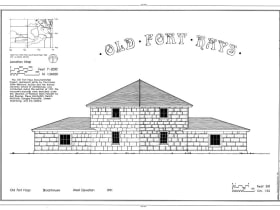
Fort Hays State Historic Site
24 miles away
Fort Hays State Historic Site: 1472 US-183 Alt, Hays (3 miles northwest of downtown). Open Tuesday-Saturday. Free admission.
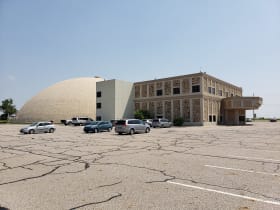
Sternberg Museum of Natural History
25 miles away
Sternberg Museum: 3000 Sternberg Dr, Hays. Open Tuesday-Saturday and Sunday afternoons. Admission is charged. Allow 2 hours.

Cheyenne Bottoms Wildlife Area
29 miles away
Cheyenne Bottoms: 6 miles northeast of Great Bend on NE 60 Rd. Free, open year-round dawn to dusk. KDWP section (east): auto tour route, 12 miles.