

Fort Hays State Historic Site
1313 230th Ave, Hays, KS
Hays, KS
Original stone buildings from a frontier army post that guarded the railroad and the wagon roads across the central plains.
Fort Hays was one of a chain of frontier army posts strung across Kansas in the years after the Civil War, built to guard the wagon roads and the advancing railroad as they pushed west across the plains. Founded in the late 1860s and active until the century's end, it stood at the center of a turbulent chapter of frontier history, and today the state preserves what remains of it.
Four original limestone buildings survive on the grounds, including the blockhouse and the guardhouse, along with a small museum that tells the fort's story. The setting is quiet now, a stretch of open prairie on the edge of a modern college town, but the stone walls and the wide sky make it easy to imagine the post as it was, a lonely outpost on a vast and contested grassland.
What Travelers Love
- Walking through the original limestone blockhouse and guardhouse that still stand
- Getting a real sense of frontier army life on the open plains
- The quiet grounds and the sweep of prairie around them
- The layered history of railroad, cavalry, and famous frontier names tied to the fort
Worth Knowing
- This is an outdoor historic site with a small museum; plan for walking and open sun
- The surviving buildings are only part of the original post; interpretive signs fill in the rest
- It pairs well with a visit to nearby Hays and the Sternberg Museum
- Grounds are exposed to prairie wind and weather, so dress for the day
Learn about Fort Hays State Historic Site
A fort on the railroad frontier
The army established Fort Hays in 1865 and moved it to its present site in 1867, positioning it to protect the Kansas Pacific Railroad and the stage and wagon roads that carried people and freight across the plains. As the rails advanced, the fort became a supply base and a staging point for troops operating across the central plains, and a town grew up alongside it that eventually became the city of Hays.
The post drew a parade of names now woven into frontier legend. George Armstrong Custer was stationed here, and figures such as Wild Bill Hickok and the scout and showman Buffalo Bill Cody passed through the fort and the rough young railroad town beside it. For a time Hays City had a reputation as one of the wildest end-of-track towns on the frontier.
The people of the plains
The fort existed because of the collision between the expanding railroad and the Native peoples whose homeland the plains had long been. The Cheyenne and Arapaho, the Kiowa and Comanche, and other Plains nations hunted and lived across this country, following the bison herds, and the coming of the rails, the soldiers, and the settlers broke apart that way of life. The Cheyenne and Arapaho Tribes and the other Plains nations continue today, most now centered in Oklahoma.
The history that the fort represents is a hard one, the story of a homeland taken and a people forced off it. The site does not shy from that context, and understanding it is part of understanding why a stone army post came to stand on this stretch of prairie at all.
Stone buildings and army life
The buildings that remain are built of the pale local limestone that gives so much of western Kansas its character, a soft stone that hardens after it is quarried. The blockhouse, an unusual hexagonal structure, served as a defensive strongpoint and headquarters, and the guardhouse held the post's prisoners. Their thick walls have outlasted the wooden barracks and stables that once surrounded them.
The small museum uses these buildings and the open grounds to tell the daily story of the soldiers who served here, their drills and duties, their boredom and hardship, and the rough frontier world just beyond the parade ground. Interpretive markers across the site show where the vanished buildings once stood, so the whole layout of the post comes back into view.
The Smoky Hills and the seasons
Fort Hays sits in the Smoky Hills, a region of low hills, mixed-grass prairie, and buff-colored stone that lies between the tallgrass country to the east and the high plains to the west. The Smoky Hill River winds through nearby, lined with cottonwoods, and the surrounding grasslands hold meadowlarks, hawks, and the deer and pheasant common across the region.
Spring and fall are the most comfortable seasons for walking the grounds, with mild air and green or golden grass. Summer on this prairie is hot and bright, with little shade, and the wind is nearly constant. Winter can be cold and stark, the stone walls standing gray against a bleached and open landscape.
Closest Boutels
The closest Boutel™ stays, so you can turn this stop into an overnight. Each is a place we chose through independent editorial review, never a paid placement.
Evergreen Inn Motel & RV Park
Honorable Mention20001 W. US Highway 54, Pratt, KS
91 miles away|Learn More ›
Prairie Lodge Motel
Honorable Mention1219 Old US Highway 56, Council Grove, KS
155 miles away|Learn More ›
Details
Hays, KS
Frequently asked questions
What is the Fort Hays State Historic Site?
The Fort Hays State Historic Site, in Hays in western Kansas, preserves the remains of a frontier-era United States Army fort that played an important role in the settlement and history of the western plains in the mid-to-late nineteenth century. Established to protect railroad construction, travelers, and settlers, the fort was connected to famous figures of the frontier West and to the complex and often tragic history of the era, including conflicts with Native peoples. Today the site preserves several original buildings, including the blockhouse and officers' quarters, along with exhibits telling the fort's story. A window into frontier and plains history, it educates visitors. With its historic buildings and heritage, the Fort Hays State Historic Site offers a fascinating destination in Kansas.
What can you do at the Fort Hays State Historic Site?
You can explore the preserved original buildings, including the blockhouse, guardhouse, and officers' quarters, view exhibits on the fort's history and the frontier era, walk the grounds, and learn about the soldiers, settlers, and Native peoples connected to the fort and the complex history of the plains. The historic buildings, the exhibits, and the frontier and plains history are the draws, offering an engaging and educational experience. The site tells its story, including its difficult chapters, with care. With its historic buildings and history, the Fort Hays State Historic Site offers an engaging experience in Kansas.
Why is the Fort Hays State Historic Site historically important?
The Fort Hays State Historic Site is historically important as a frontier Army fort that protected railroad construction, travelers, and settlers during the era of westward expansion in the mid-to-late nineteenth century, and that was tied to famous frontier figures and to the settlement of the western plains. Its history also encompasses the era's conflicts with Native peoples, whose lands were being taken, a difficult and important part of the story the site interprets. Understanding this layered frontier history, including its tragedies, enriches a thoughtful visit to the Fort Hays State Historic Site in Kansas.
When is the best time to visit the Fort Hays State Historic Site?
The mild months of spring through fall offer the most pleasant weather for exploring the outdoor grounds and historic buildings, while the indoor exhibits offer an option in various weather. Summer can be hot on the plains, so mornings help, and the site may host special events. Because hours can vary, checking the current schedule before you go is wise. For comfortable weather to explore the fort grounds, aim for spring through fall at the Fort Hays State Historic Site in Kansas.
What is near the Fort Hays State Historic Site?
The Fort Hays State Historic Site is in Hays in western Kansas, near the Sternberg Museum of Natural History, within reach of the chalk-country attractions like Monument Rocks and Castle Rock, and the western Kansas plains. That makes the Fort Hays State Historic Site a fascinating stop to combine with the Sternberg Museum of Natural History, Monument Rocks, and the other attractions of western Kansas on a visit to the state.
Nearby
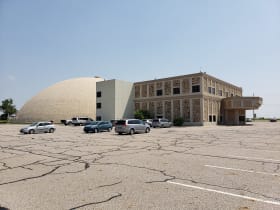
Sternberg Museum of Natural History
2.1 miles away
Sternberg Museum: 3000 Sternberg Dr, Hays. Open Tuesday-Saturday and Sunday afternoons. Admission is charged. Allow 2 hours.

Kansas Barbed Wire Museum
24 miles away
Kansas Barbed Wire Museum: 120 W 1st St, La Crosse. Displays more than 2,400 varieties of barbed wire plus fencing tools and range-war history.

Castle Rock
36 miles away
Castle Rock: approximately 16 miles south of Quinter on K-211 then south on county roads (follow posted signs). Free, always open by landowner permission. Unpaved access.