
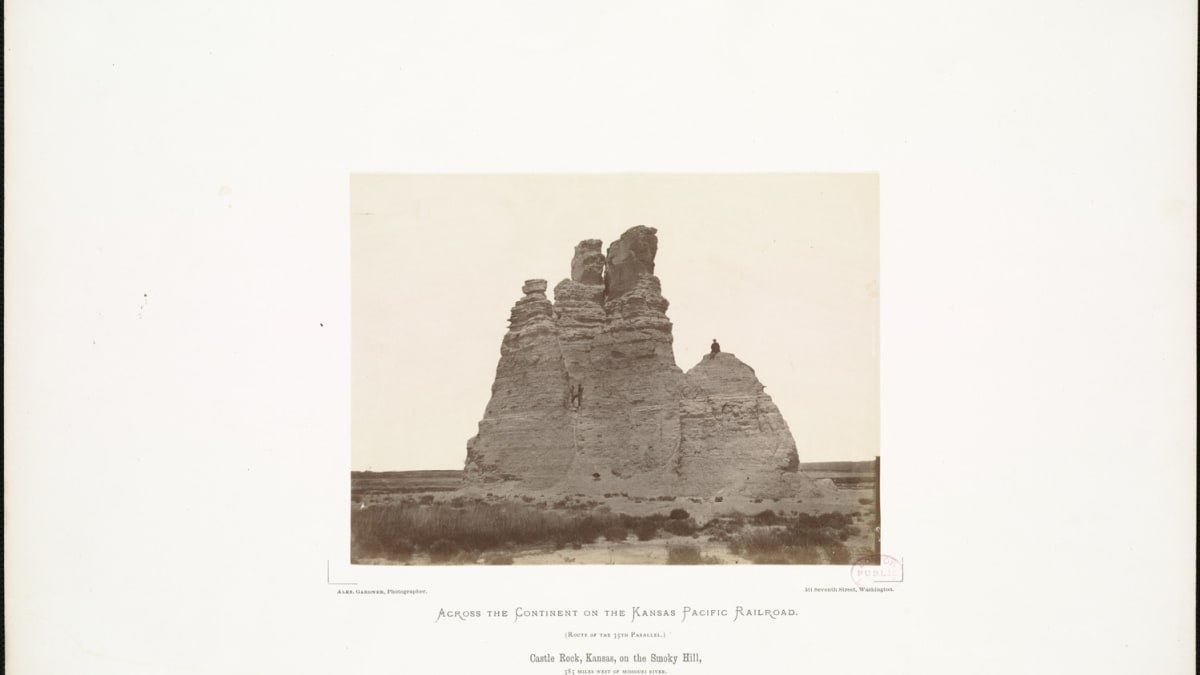
Castle Rock
V Rd, Collyer, KS
Quinter, KS
A slender chalk spire and a run of pale badland bluffs rise straight out of the western Kansas plains, the remains of a sea that covered the middle of the continent.
Castle Rock is a tall, slender pillar of chalk that rises from the western Kansas plains, backed by a run of pale, eroded bluffs known as the Castle Rock Badlands. From a distance it looks like the ruined tower of a castle standing alone on the grassland, which is exactly how it got its name and its long history as a landmark for travelers.
The chalk here was laid down at the bottom of a great inland sea that once split North America in two, and it is packed with the fossils of creatures that swam those waters. Wind and rain have since carved the soft rock into spires and hoodoos, a small pocket of badlands in a state most people picture as flat, and a reminder of a Kansas that was once underwater.
What Travelers Love
- A striking chalk spire and a line of eroded bluffs rising out of flat plains
- The sense of deep time, standing on the bed of an ancient inland sea
- Wide-open western Kansas skies and dark nights with almost no light
- The quiet remoteness, often with the whole formation to yourself
Worth Knowing
- The access roads are gravel and can turn impassable when wet, so check conditions
- The chalk is soft and crumbling, so climbing on the spire is dangerous and damages the rock
- There are no services out here, so bring water, fuel, and a downloaded map
- Watch for rattlesnakes in warm weather and keep an eye out for private-land boundaries
Learn about Castle Rock
A landmark on the plains
This high, dry country lay within the range of the Southern Plains tribes, among them the Cheyenne and Arapaho, whose descendants are federally recognized nations today, and it saw the movement of bison herds and the hunters who followed them. A tall spire visible for miles would have been a natural landmark in a country with few others.
In the days of overland travel and early ranching, Castle Rock served as a guidepost across the featureless plains, a fixed point travelers could steer by. It has slowly eroded over the years, and parts of the formation have fallen in storms, so the spire that stands today is a little changed from the one earlier travelers knew.
The chalk and the ancient sea
The pale rock of Castle Rock is Niobrara chalk, formed from the shells of countless tiny sea creatures that settled to the floor of the Western Interior Seaway, a shallow sea that covered the middle of the continent tens of millions of years ago. Layer by layer, those remains built up into thick beds of soft, white rock.
When the sea drained away and the land rose, wind and water went to work on the exposed chalk, cutting it into bluffs, columns, and the freestanding spire that gives the place its name. Because the chalk is soft, the formations keep changing, slowly worn down and reshaped with every hard storm.
Fossils in the rock
The Niobrara chalk is one of the richest fossil beds in the country, and the beds around Castle Rock have yielded the remains of the creatures that lived in the old seaway. Giant marine reptiles, huge fish, flying reptiles, and early toothed birds have all been found in these western Kansas chalk deposits.
Collecting fossils here is not something casual visitors should attempt, both because the rock is fragile and because scientifically important finds belong in careful hands. But knowing what lies in the chalk transforms a look at the spire, turning a scenic rock into a window on a lost undersea world.
Season by season
Spring and fall bring the most comfortable weather and the best light, with cooler air and often dramatic skies over the plains. Wildflowers dot the grass in spring, and the low sun of morning and evening shows off the texture of the bluffs.
Summer is hot and open, with little shade, so early or late visits are kindest. Winter can be cold and windy, and snow or mud may make the gravel roads difficult, so it pays to check conditions before heading out to this remote spot.
Closest Boutels
The closest Boutel™ stays, so you can turn this stop into an overnight. Each is a place we chose through independent editorial review, never a paid placement.
Evergreen Inn Motel & RV Park
Honorable Mention20001 W. US Highway 54, Pratt, KS
106 miles away|Learn More ›
Prairie Lodge Motel
Honorable Mention1219 Old US Highway 56, Council Grove, KS
190 miles away|Learn More ›
Details
Quinter, KS
Frequently asked questions
What is Castle Rock?
Castle Rock, in the high plains of western Kansas near Quinter, is a striking chalk formation and badland area rising from the prairie, a beloved landmark named for its castle-like spire and recognized as one of the natural wonders of Kansas. The area features a tall chalk pillar and a stretch of eroded chalk badlands, cliffs, and spires sculpted from the soft rock of an ancient inland sea, rich with fossils and glowing beautifully in the prairie light. Long a landmark for travelers on the plains, this remote and photogenic formation rewards those who seek it out. With its chalk spire and badlands, Castle Rock offers a spectacular destination in Kansas.
What can you do at Castle Rock?
You can walk among and photograph the chalk spire and the surrounding eroded badlands, cliffs, and formations, look for marine fossils in the chalk, take in the dramatic prairie scenery, and enjoy the remote, quiet setting. The castle-like formation, the badlands scenery, the fossils, and the beautiful light are the draws, making it a memorable and photogenic stop on the western plains. It pairs well with nearby Monument Rocks. With its chalk formations, Castle Rock offers a rewarding experience in Kansas.
What should I know before visiting Castle Rock?
Castle Rock is reached by unpaved roads that can become impassable and slick when wet, so checking conditions, driving carefully, and being ready to turn back are wise, and the remote site has no services, so bringing water and fuel matters. The chalk formations are fragile and can be dangerous to climb, and pieces have collapsed over time, so admiring them from the ground rather than climbing is safest and protects the formations. Watching for rattlesnakes and sun helps. Coming prepared and respecting the formations ensure a safe visit to Castle Rock in Kansas.
When is the best time to visit Castle Rock?
The mild months of spring through fall offer the most pleasant weather, with the chalk formations glowing beautifully in the golden light of sunrise and sunset, ideal for photography, while summer can be hot on the shadeless prairie, so early or late hours help, and the access roads are best when dry. The remote dark skies are excellent for stargazing at night. For the best light and comfortable weather with dry roads, aim for spring through fall at Castle Rock in Kansas.
What is near Castle Rock?
Castle Rock is in the high plains of western Kansas near Quinter, within reach of Monument Rocks, Little Jerusalem Badlands State Park, the Fick Fossil and History Museum in Oakley, and Lake Scott State Park. That makes Castle Rock a spectacular stop to combine with Monument Rocks, Little Jerusalem Badlands State Park, and the other chalk-country attractions of western Kansas on a visit to the state.
Nearby
Fort Hays State Historic Site
36 miles away
Fort Hays State Historic Site: 1472 US-183 Alt, Hays (3 miles northwest of downtown). Open Tuesday-Saturday. Free admission.
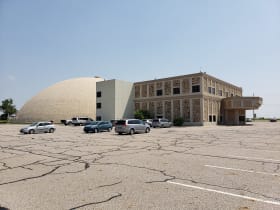
Sternberg Museum of Natural History
38 miles away
Sternberg Museum: 3000 Sternberg Dr, Hays. Open Tuesday-Saturday and Sunday afternoons. Admission is charged. Allow 2 hours.

Kansas Barbed Wire Museum
44 miles away
Kansas Barbed Wire Museum: 120 W 1st St, La Crosse. Displays more than 2,400 varieties of barbed wire plus fencing tools and range-war history.