Kaimu Black Sand Beach at Kalapana
Kalapana, HI
A famous black sand beach was buried by lava in 1990, and where it once lay a brand-new beach is slowly being born.
Kaimū, near the village of Kalapana, was once home to one of the most famous black sand beaches in Hawaii, a palm-fringed crescent that drew visitors from around the world. Then, between 1990 and 1991, lava from Kīlauea's long Puʻu ʻŌʻō eruption flowed down and buried it, along with much of Kalapana village, under many feet of black rock. The old beach vanished entirely, the shoreline pushed hundreds of yards seaward by new land.
What makes Kaimū extraordinary today is what is happening now. Where the celebrated beach once lay, a new black sand beach is slowly forming as the ocean grinds the fresh lava into sand. A short walk over the hardened flow leads to it, past young coconut palms that returning residents have planted in the rock. It is one of the few places you can stand on land younger than you are and watch a beach being born.
What Travelers Love
- Walking across hardened lava to a new black sand beach that is quite literally still forming
- The powerful, humbling story of a whole village and beach buried by lava within living memory
- Young coconut palms planted in the lava, marking a community's return
- The raw, elemental feel of fresh land meeting the open Pacific
Worth Knowing
- A short trail crosses uneven, sometimes sharp lava rock, so wear closed sturdy shoes
- The surf here is rough and the shore steep, so this is a beach to walk, not to swim
- There is little shade and strong sun on the black rock, so bring water and sun protection
- This is a living local community, so visit respectfully and follow any posted guidance
Learn about Kaimu Black Sand Beach at Kalapana
The beach that was buried
The original Kaimū beach was a broad, curving black sand strand backed by coconut palms, and for generations it was a treasured gathering place and a landmark of the Puna coast. Its fame reached far beyond Hawaii.
Beginning in 1990, lava from Kīlauea's Puʻu ʻŌʻō vent, part of an eruption that had begun in 1983, advanced through Kalapana. Over the following months it destroyed homes, a church, and the beach itself, burying Kaimū under a thick blanket of new rock and extending the coastline well out into the sea. Residents could only watch as a place woven into their lives disappeared.
The loss is recent enough that many people in the community remember the old beach firsthand, which gives the site a weight that goes beyond geology. This is not ancient history but a wound and a renewal within a single lifetime.
A new beach being born
Black sand forms fast in Hawaii. When molten lava pours into the ocean it shatters and is ground by the waves into coarse black grains, so a black beach can begin to appear within years rather than the eons a light-colored beach might take.
At Kaimū that process is under way right now. Where the old beach was buried, the sea is slowly building a new pocket of black sand against the fresh lava shore. It is small and rough compared with what was lost, but it is unmistakably a beach in the making, growing grain by grain.
The surf that builds the beach also makes it dangerous to enter. Strong waves, currents, and a steep shore mean this is a place to witness the ocean's power, not to swim in it.
A community's return
After the flows cooled, residents of Kalapana began to come back to their land. One of the most visible signs of that return is the young coconut palms planted directly into the lava along the trail to the new beach, a quiet, hopeful act of reclaiming a place the volcano took.
The lava here is part of Kīlauea's Puʻu ʻŌʻō eruption, which continued in various forms for decades, one of the longest-running eruptions of modern times. For the people of Puna, Kīlauea is not an abstraction but a constant presence that gives and takes land.
In Hawaiian tradition this creative and destructive force is embodied by Pele, the goddess of the volcano, whose home is Kīlauea. The lava that buried Kaimū is, in that understanding, Pele reshaping her own land, and the respect many locals show the volcano reflects that living belief.
The Puna coast
Kaimū sits at the end of the road in Puna, one of the most rural and rugged districts on Hawaii Island. The landscape is a patchwork of old and new lava flows, dense with vegetation where the rock is older and stark where it is fresh.
This coast has been repeatedly reshaped by eruptions, including a major flow in 2018 farther up the shore, so its map is never truly settled. It is a place to feel how young and restless the island really is.
The area remains quiet, local, and off the main tourist track, which is part of its appeal. Visitors are guests in a community that has weathered a great deal, and a respectful, low-key presence goes a long way.
Closest Boutels
The closest Boutel™ stays, so you can turn this stop into an overnight. Each is a place we chose through independent editorial review, never a paid placement.
Frequently asked questions
What is the Kaimu black sand beach at Kalapana?
The Kaimu black sand beach at Kalapana, in the Puna district on the Big Island of Hawaii, is a striking new black sand beach created by volcanic activity, a powerful reminder of the island's living, ever-changing landscape. In the early 1990s, lava flows from the volcano buried the old town of Kalapana and its beloved former black sand beach, and over time a new black sand beach has formed at Kaimu from the fresh lava, where the community has planted coconut palms, creating a moving symbol of renewal. Reached by a short walk over old lava, the dramatic black beach and its story make it a fascinating destination. A dramatic and moving volcanic beach, it fascinates visitors. With its black sand, the beach offers a compelling destination in Hawaii.
How was the Kaimu black sand beach formed?
The Kaimu black sand beach was formed by volcanic activity, when lava flows from the Big Island's volcano in the early 1990s buried the old town of Kalapana and its former black sand beach, and over time, as the ocean broke down the fresh lava, a new black sand beach formed at Kaimu. The black sand comes from the volcanic lava, and the community has planted coconut palms as a symbol of renewal, making the beach a powerful testament to the island's living landscape. Understanding this history enriches a visit to the Kaimu black sand beach in Hawaii.
What can you do at the Kaimu black sand beach at Kalapana?
You can walk the short path over old hardened lava to reach the new black sand beach, take in the dramatic scene of black sand and coastline, see the planted coconut palms symbolizing renewal, and reflect on the story of the buried town and the island's volcanic power. The striking black sand beach, the walk over lava, the coconut palms, and the moving story are the draws, making it a fascinating and reflective stop. The black beach and its story are highlights. With its black sand, the beach offers a rewarding experience in Hawaii.
Is it safe to swim at the Kaimu black sand beach, and what should I know?
The Kaimu black sand beach often has powerful surf, strong currents, and rugged conditions, and swimming is generally dangerous and not recommended, so admiring the dramatic beach rather than entering the water is the wise, safe choice. The walk to the beach crosses old lava, so sturdy footwear and sun protection help, as there is little shade, and treating the area, a place of renewal for the community, with respect matters. Staying out of the dangerous water and enjoying the beach safely ensure a rewarding visit to the Kaimu black sand beach in Hawaii.
What is near the Kaimu black sand beach at Kalapana?
The Kaimu black sand beach at Kalapana is in the Puna district on the Big Island of Hawaii, within reach of Lava Tree State Monument, the Puna area's volcanic sites, Hilo to the north, and the other attractions of the eastern Big Island. That makes the Kaimu black sand beach a compelling stop to combine with Lava Tree State Monument and the other attractions of the Puna and Hilo area on a visit to Hawaii.
Nearby

Chain of Craters Road
7.9 miles away
Chain of Craters Road winds nearly 20 miles from the summit of Kilauea down to the sea, dropping some 3,700 feet past craters, old lava flows, and sweeping coastal views.
Lava Tree State Monument
10 miles away
This is one of the strangest short walks in Hawaii, and hardly anyone outside Puna knows it.
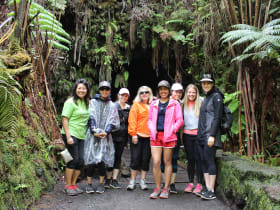
Thurston Lava Tube
17 miles away
Thurston Lava Tube, known in Hawaiian as Nahuku, is a walkable lava tube near the Kilauea summit, a natural tunnel formed when the outer crust of a lava river hardened while molten lava drained away i...
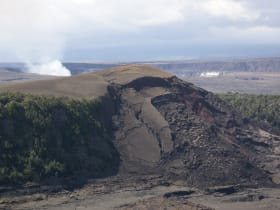
Kilauea Iki Trail
18 miles away
The Kilauea Iki Trail descends through rainforest to the floor of a crater that held a churning lava lake during a 1959 eruption, letting hikers walk straight across the now-solid but still-steaming l...
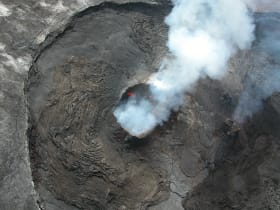
Hawaii Volcanoes National Park
21 miles away
Two of the world's most active volcanoes, Kilauea and Mauna Loa, still building the island of Hawaii.