
Horseshoe Curve National Historic Landmark
2400 Veterans Memorial Hwy, Altoona, PA
Altoona, PA
A great sweeping bend of track carved into the mountainside in 1854, still carrying heavy trains around the Alleghenies where you can stand and watch them curve past.
Horseshoe Curve is one of the great feats of nineteenth-century American engineering, a place where the Pennsylvania Railroad solved the problem of getting a train over the steep Allegheny Mountains. Rather than climb the ridge head-on, which no locomotive of the 1850s could manage, the railroad's engineers curved the track back on itself in a long, graceful horseshoe wrapped around the head of a valley, stretching the climb out so gradually that trains could make the grade.
Opened in 1854 and dug largely by hand by immigrant laborers, the curve turned a mountain barrier into a passable route and helped make Pennsylvania a railroad powerhouse. What makes it a destination rather than a relic is that it still works. This is a busy freight main line, and from a viewing area set right at the apex you can stand and watch heavy trains lean into the bend, bending around you so close and so long that the front and the rear of a train seem to be passing at the same time.
What Travelers Love
- Standing at the apex as long freight trains bend around the curve close enough to feel
- The near-constant rail traffic, so a wait for the next train is usually short
- The funicular incline that carries you up to the viewing area, or the stairway alongside it
- The sheer scale of a mid-1800s cut carved into the mountain by hand
Worth Knowing
- This is a working main line with active freight traffic, so stay behind the barriers and off the tracks
- The viewing area sits above a stairway or a short funicular ride, so plan for the climb
- Trains run at all hours but arrive on no set schedule, so patience rewards you with the best show
- The visitor center below tells the engineering story and is worth time before you head up
Learn about Horseshoe Curve National Historic Landmark
The story of the Curve
In the early 1800s the Allegheny Mountains stood as a wall between the settled East and the growing West, and getting freight and travelers across them was slow and costly. The Pennsylvania Railroad, chartered to build a rail line clear across the state, faced its hardest stretch in the steep climb over the Alleghenies west of Altoona, a grade too severe for the locomotives of the day. The railroad's chief engineer, John Edgar Thomson, devised an elegant solution. By running the track deep into a side valley, curving it around the head of the ravine, and bringing it back out on the far side, he could lengthen the route enough to soften the grade to something trains could climb. Crews of laborers, many of them Irish immigrants, cut the great curve into the mountainside largely with picks, shovels, and black powder, and it opened to traffic in 1854. The curve became a symbol of American engineering and a strategic artery so important that during the Second World War German saboteurs, landed by submarine, listed it among their targets in a failed plot.
It carried the mightiest railroad in the country through its glory years, and though the Pennsylvania Railroad is long gone, the line it built still carries freight over the mountains today, more than a century and a half after the first train rounded the bend.
How it works
The genius of the curve is simple once you see it: the mountain is too steep to climb straight up, so the railroad wraps the track around a valley to make the distance longer and the slope gentler. From the viewing area at the apex you can look across the ravine and see the tracks on the far side, the same line you are standing beside, curved around so that a long train appears to be facing itself as it rounds the bend.
Because this is a heavily used freight main line, the show is close to continuous. Locomotives lean into the curve hauling long strings of cars, sometimes with helper engines pushing from the rear to get up the grade, and the wheels squeal and the ground rumbles as they pass. A short funicular incline, or a stairway beside it, carries visitors from the visitor center up to the apex, where a barrier lets you stand safely just yards from the moving trains.
Altoona, the railroad city
The Pennsylvania Railroad did not just build a curve here, it built a city. Altoona grew from almost nothing into a major railroad town, home to enormous shops where the company built and repaired its locomotives and cars, employing thousands and drawing immigrants from across Europe. The city's identity, its neighborhoods, and its fortunes rose and fell with the railroad, and its story is told at the nearby Railroaders Memorial Museum.
The mountains the curve climbs were long the homeland of Native peoples, including the Lenape and, in these western ridges, the Shawnee and Haudenosaunee nations, before displacement in the colonial and early national periods. None are federally recognized in Pennsylvania today, and descendant nations continue elsewhere. The great cut in the mountainside is a young mark on a very old landscape.
Season by season
Spring and summer are the easiest times to visit, with green mountainsides framing the trains and comfortable weather for the climb to the apex. Summer brings the most visitors, though the rail traffic is steady enough that crowds rarely spoil the show.
Autumn is the most beautiful, when the hardwood forest that blankets the curve turns gold and red and the trains wind through a wall of color, a favorite of railroad photographers. Winter is quiet and stark, the trains dark against snow, though the funicular and some facilities may run a reduced schedule, so check ahead in the cold months.
Closest Boutels
The closest Boutel™ stays, so you can turn this stop into an overnight. Each is a place we chose through independent editorial review, never a paid placement.
Details
Altoona, PA
Frequently asked questions
What is Horseshoe Curve?
Horseshoe Curve, near Altoona, is a world-famous railroad engineering marvel completed in 1854, where the tracks bend in a dramatic horseshoe shape to climb the steep Allegheny Mountains at a manageable grade. This ingenious solution first allowed trains to cross the mountains and remains an active mainline today, so visitors can watch real freight trains snake around the curve. A National Historic Landmark, it is a must-see for railroad enthusiasts and a fascinating slice of American transportation history.
What can you do at Horseshoe Curve?
The main attraction is watching trains navigate the sharp curve from the trackside viewing area, an impressive spectacle, especially when long freight trains bend around the tracks. You reach the viewing area by climbing a set of steps or riding the funicular incline car when it is operating. A small museum, orientation film, and gift shop help tell the story. Note that you cannot ride a train here, though you can view the curve from an Amtrak train.
What should I know before visiting Horseshoe Curve?
Because it is an active railroad rather than a scheduled attraction, you may need to wait for a train to pass, which is part of the experience, so bring patience and enjoy the setting. The funicular incline car has had operational issues at times, so it is wise to check its availability before you go, and be ready to use the steps up to the viewing area if needed. Combo tickets with the Railroaders Memorial Museum in Altoona are available.
When is the best time to visit Horseshoe Curve?
Spring through fall offers the most pleasant weather for the outdoor viewing area, and a clear day is ideal for watching and photographing trains rounding the curve. Since train frequency varies, there is no guaranteed schedule, but the busy mainline sees regular traffic. Checking funicular status ahead of time helps you plan. Railfans will find any visit rewarding, while casual visitors may want to time it hoping to catch a passing train.
Who will enjoy Horseshoe Curve?
Railroad enthusiasts will love it most, since the chance to watch trains round a famous historic curve on an active mainline is a genuine thrill, and history buffs appreciate the engineering achievement. Families with train-loving kids enjoy it too. Reviews note the appeal is more limited for those without a specific interest in railroads, so it is best suited to those drawn to trains, history, or a scenic mountain overlook of an ingenious feat of engineering.
Nearby
Lincoln Caverns
21 miles away
A cave tour that is easy enough for younger kids and run by the same family for generations.

Raystown Lake
23 miles away
Raystown is the biggest lake entirely inside Pennsylvania, a long, deep, remarkably clear reservoir that winds 28 miles through steep forested ridges near Huntingdon.
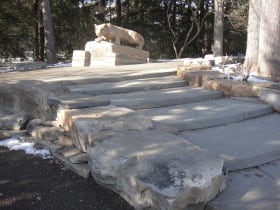
Nittany Lion Shrine
39 miles away
A quick, free, quintessentially Penn State stop that kids enjoy.