


Grand Canyon South Rim
14 Apache St, Grand Canyon Village, AZ
Grand Canyon Village, AZ
The rim the whole world pictures when it hears the words Grand Canyon, open every day of the year and lined with viewpoints that never quite stop stunning.
The South Rim is the Grand Canyon most people mean when they say they are going to the canyon. It is open every day of the year, easy to reach, and lined with a string of overlooks that deliver the classic view again and again, each a little different. From the rim you look out over a chasm a mile deep and, on a clear day, all the way across to the forested North Rim many miles away.
Grand Canyon Village anchors it all, a historic community of stone-and-timber buildings set right at the edge, several of them designed by the architect Mary Colter to look as if they grew out of the canyon itself. A paved Rim Trail runs for miles along the edge, so you can walk from viewpoint to viewpoint with the whole canyon falling away beside you, and a free shuttle carries you out to the quieter overlooks to the west.
What Travelers Love
- The long, walkable Rim Trail linking one grand overlook to the next
- Sunrise and sunset from Mather Point, Yavapai Point, or Hopi Point
- The cluster of historic buildings in the village, from El Tovar to Mary Colter's stone landmarks
- Riding the free shuttle out to the western viewpoints along Hermit Road
Worth Knowing
- The village and viewpoints get very busy in summer, so ride the shuttle and come early or late for the best light and fewest people
- This is high desert at about 7,000 feet, so it is cooler than Phoenix and can be cold or snowy in winter
- Stay behind railings and off soft rim edges, which are the real danger here
- Carry water and sun protection even for short rim walks, since the air is dry and the sun strong
Learn about Grand Canyon South Rim
A rim shaped by many hands
The canyon has been home to Native peoples for thousands of years, and eleven tribes hold ties to it, among them the Havasupai, Hualapai, Hopi, Navajo (Diné), Zuni, and Southern Paiute. Ancestral Puebloan peoples farmed and built along the rims long ago, and Tusayan Ruin, a small pueblo site near the east end of the South Rim, preserves the outline of one of their villages.
The South Rim's built landmarks tell the newer chapter. In the early twentieth century the railroad reached the rim, El Tovar Hotel opened above the canyon, and the architect Mary Colter designed Hopi House, Hermit's Rest, Lookout Studio, and the Desert View Watchtower, drawing on Native and regional building traditions. Those stone buildings, weathered into the rim, are now historic landmarks in their own right and much of what gives Grand Canyon Village its character.
Reading the layered walls
From the South Rim you look straight into roughly two billion years of Earth's history, stacked in bands. The pale limestone at the top was laid down under an ancient sea, and the layers step down through sandstones and shales to the dark, ancient rock at the bottom near the river. The Colorado River cut all of it over the last several million years as the plateau slowly rose and the running water ground steadily downward.
Because the South Rim sits lower and drier than the North Rim, and slopes gently away from the gorge, it stays warmer and gets far less snow, which is why it can stay open all year. The overlooks here reach out over the widest, most open stretch of the canyon, so the layered walls spread before you in their full range of color, shifting from rose to gold to deep violet as the sun crosses the sky.
Wildlife along the edge
The South Rim is ponderosa pine and pinyon-juniper country, and its most visible residents are the elk and mule deer that wander right through the village, along with bold ravens and the tassel-eared Abert's squirrel. Watch the open air along the rim for California condors, huge black birds with numbered wing tags, brought back from the brink of extinction and now nesting in the canyon.
Below the rim the country turns quickly to desert, home to bighorn sheep on the ledges, lizards, and rattlesnakes, including the pinkish Grand Canyon rattlesnake found only here. Coyotes trot the rim at dawn and dusk, and after dark ringtails, shy relatives of the raccoon, come out around the historic buildings. Even a short walk down a trail moves you into a warmer, wilder world.
Season by season
Spring and fall are the finest times on the South Rim, with mild days, cool nights, and thinner crowds than midsummer. These shoulder seasons are also the best window for a hike below the rim, when the inner canyon is warm without turning dangerous.
Summer is the peak season, busy and warm on the rim and genuinely hot down in the gorge, with monsoon thunderstorms building on July and August afternoons. Winter is the South Rim's quiet secret, when snow settles on the red rock and the crowds vanish, leaving one of the most beautiful and peaceful versions of the canyon there is, all of it still open and reachable.
Closest Boutels
The closest Boutel™ stays, so you can turn this stop into an overnight. Each is a place we chose through independent editorial review, never a paid placement.
Details
Grand Canyon Village, AZ
Frequently asked questions
What is the Grand Canyon South Rim?
The South Rim is the most visited and accessible part of Grand Canyon National Park, open year-round and home to the historic Grand Canyon Village, the greatest concentration of viewpoints, lodges, restaurants, and visitor services. From its overlooks, visitors take in the canyon's most famous panoramas across the vast, colorful gorge. With shuttle buses, scenic drives, the Rim Trail, and trailheads into the canyon, the South Rim offers the classic Grand Canyon experience and is the ideal introduction for most first-time visitors.
What can you do at the South Rim?
You can take in iconic viewpoints like Mather Point and those along Hermit Road and Desert View Drive, walk the mostly flat and partly paved Rim Trail, ride the free shuttle buses to overlooks, visit the historic village and its lodges, and learn at the visitor center. Adventurous visitors can hike below the rim on the Bright Angel or South Kaibab trails. Sunrise, sunset, and evening stargazing are spectacular. The South Rim packs in scenery and activities for every level of visitor.
How do you get around the South Rim?
During the busy seasons, free shuttle buses serve many of the viewpoints and parts of the village, and some areas like Hermit Road are accessible only by shuttle during peak times, which helps reduce traffic and parking headaches. The Rim Trail also lets you walk between many overlooks, hopping on the shuttle when you like. Parking fills up quickly at popular spots, so arriving early and using the shuttle system is the easiest way to explore the South Rim.
When is the best time to visit the South Rim?
Spring and fall bring pleasant temperatures and thinner crowds, while summer is the busiest and hottest, so early arrivals and shuttle use are key then. Winter offers snow-dusted views, solitude, and open (if limited) services, since the South Rim stays open year-round. Sunrise and sunset paint the canyon in stunning color and are worth planning around. Whenever you go, arriving early in the day helps with parking and lets you enjoy the viewpoints before the crowds build.
What is near the Grand Canyon South Rim?
The South Rim is near the gateway towns of Tusayan just outside the park and, farther out, Williams and Flagstaff, with the Grand Canyon Railway offering a scenic train ride from Williams. The Desert View area at the east end connects toward Cameron, the Navajo lands, and Page. That makes the South Rim an easy anchor for a northern Arizona trip, combining the canyon with historic Route 66 towns, Flagstaff, and the wonders around Page and Sedona.
Nearby

El Tovar Hotel, Grand Canyon South Rim
0.2 miles away
El Tovar (1905) is a National Historic Landmark and was the premiere tourist hotel in the American West when it opened.
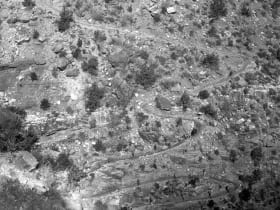
Bright Angel Trail
0.3 miles away
Bright Angel Trail is the most accessible canyon trail, built along an ancient Havasupai route. The first rest house (3 miles, 2,120-foot drop) is the safe turnaround for day hikers.

Grand Canyon
3.9 miles away
The Grand Canyon is 277 miles long, up to 18 miles wide, and more than a mile deep, cut by the Colorado River through the Colorado Plateau.

Cape Royal
10 miles away
Cape Royal Road on the North Rim goes to several overlooks including Walhalla Glades (Ancestral Puebloan ruins), Angel's Window (a natural arch in the canyon rim), and the Cape Royal overlook itself.

Grand Canyon North Rim
12 miles away
The North Rim is 10 miles across the canyon from the South Rim but 220 miles by road.
Desert View Watchtower
18 miles away
The Desert View Watchtower at Grand Canyon's east entrance was designed by architect Mary Colter in 1932 to mimic ancestral Puebloan towers.