
Grand Canyon North Rim
44 NPS Service Rd, North Rim, AZ
North Rim, AZ
The high, cool, forested face of the Grand Canyon, reached through aspen and spruce and holding only a small share of the crowds that fill the South Rim.
The North Rim is the Grand Canyon's other face, and only a small fraction of the canyon's visitors ever make it here. It sits high on the Kaibab Plateau, more than a thousand feet above the South Rim across the gorge, and the extra elevation changes everything. You reach it not through desert but through cool forests of spruce, fir, and quaking aspen, past green meadows where deer graze in the early morning.
Because it is remote and open only part of the year, the North Rim keeps a hush the busier South Rim can never quite hold. The heart of it is Bright Angel Point, where a stone trail leads out to a narrow prow of rock with the canyon falling away on both sides, and the historic Grand Canyon Lodge perched at the edge. Standing here, you look across many miles of open air to the very rim most visitors are standing on instead.
What Travelers Love
- The rim view from Bright Angel Point and the historic stone Grand Canyon Lodge
- Cool, spruce-and-aspen forest and green summer meadows on the drive in
- A fraction of the crowds that pack the South Rim, and a slower pace
- The overlook at Cape Royal and the long views from Point Imperial, the canyon's highest overlook
Worth Knowing
- The North Rim is open only in the warm months and closes for winter, when heavy snow shuts the road
- It is a long, remote drive with few services, so fuel up and stock up before the final stretch
- The rim sits above 8,000 feet, so the air is thin and nights are cold even in summer
- Rim-to-rim by car is a long way around, so it is best planned as its own trip rather than a day hop from the South Rim
Learn about Grand Canyon North Rim
The Kaibab Plateau and its people
The forested highland the North Rim rides on is the Kaibab Plateau, and the name comes from a Southern Paiute word often given as mountain lying down. The Southern Paiute, along with the Havasupai, Hualapai, Hopi, Navajo (Diné), and Zuni, hold long ties to the canyon and its rims, and the Kaibab Band of Paiute Indians live in the country to the north.
The Ancestral Puebloan peoples used the rims and inner canyon long ago, and the whole gorge remains a sacred landscape to the tribes connected to it. The high plateau was hunting and gathering country, its forests and meadows a very different resource from the deserts below, and that contrast between cool highland and hot depths still defines a visit to the North Rim today.
Why this rim stands higher
The North Rim is higher than the South Rim for a simple reason of tilt. The whole Colorado Plateau leans gently, so the layers of rock rise toward the north, lifting this rim well above its counterpart. That extra height means more snow, more rain, and a cooler, wetter climate, which is why forest grows thick here where the South Rim stays dry.
That same tilt sends water the other way. Rain and snowmelt on the North Rim run south, toward and into the canyon, cutting the long side canyons that make this rim so deeply scalloped and giving the North Rim its dramatic, far-flung viewpoints. The South Rim, sloping away from the gorge, sheds much of its water in the opposite direction, which is one reason the two rims feel so different to stand on.
Forest, meadow, and wildlife
The North Rim is a pocket of high country stranded above the desert, and its wildlife reflects that. The forests hold mule deer, wild turkeys, and the striking Kaibab squirrel, a tassel-eared squirrel with a black belly and a bright white tail found only on this plateau and nowhere else on Earth. California condors, brought back from near extinction, sometimes ride the thermals along the rim.
In summer the meadows bloom and the aspen shimmer, and by day's end deer drift out to graze at the forest edges. Mountain lions range through the woods, mostly unseen, and the plateau is quiet, dark-sky country where the stars come out in force. It is a landscape that feels closer to the Rocky Mountains than to the Sonoran Desert baking a mile below.
Season by season
The North Rim keeps a short season. It opens in late spring, once the deep snow clears, and closes again in autumn when winter storms return. Summer is the heart of a visit, with warm days, cool nights, and green meadows, though even then the high elevation keeps the air crisp after dark.
Late summer brings the monsoon and its afternoon thunderstorms rolling across the plateau, and early fall is a quiet, golden time when the aspen turn and the crowds thin further. Once the road closes for winter the rim belongs to snow and silence, reachable only by those willing to ski or snowshoe many miles in, which is a large part of its mystique.
Closest Boutels
The closest Boutel™ stays, so you can turn this stop into an overnight. Each is a place we chose through independent editorial review, never a paid placement.
Details
North Rim, AZ
Frequently asked questions
What is the Grand Canyon North Rim?
The North Rim is the higher, cooler, and far less visited side of Grand Canyon National Park, sitting more than a thousand feet above the South Rim amid lush forests of pine, spruce, and aspen. Remote and tranquil, it receives only a small fraction of the park's visitors, offering a quieter, more intimate canyon experience with stunning overlooks like Bright Angel Point and Point Imperial. Open only seasonally due to heavy winter snow, the North Rim rewards those who make the journey with solitude and spectacular, uncrowded views.
When is the North Rim open?
Because of its high elevation and heavy snowfall, the North Rim is open only seasonally, roughly from mid-spring through fall, typically mid-May into late October, after which its facilities close and the road in is not maintained through winter. This limited season is the single most important thing to plan around, so always check the current opening and closing dates before you go. Outside that window, the North Rim is inaccessible to typical visitors, unlike the year-round South Rim.
What can you do at the North Rim?
You can take in breathtaking viewpoints like Bright Angel Point, reached by a short paved walk, and drive to Point Imperial, the highest overlook in the park, and Cape Royal for sweeping vistas. Hiking trails like the North Kaibab lead below the rim for the ambitious, and the historic Grand Canyon Lodge offers rim-side dining and lodging. With cool forests, wildflower meadows, and abundant solitude, the North Rim is ideal for those seeking scenery and quiet over crowds and services.
How is the North Rim different from the South Rim?
The North Rim is higher, cooler, greener, and much less crowded than the South Rim, with a forested, alpine feel and only seasonal access, while the South Rim is lower, warmer, open year-round, and has far more services, viewpoints, and visitors. Though the two rims face each other across the canyon, driving between them takes several hours around the gorge. The North Rim suits travelers wanting tranquility and a different, cooler perspective, while the South Rim offers the classic, accessible experience.
What is near the Grand Canyon North Rim?
The North Rim is reached through the small waystation of Jacob Lake to the north, near the Kaibab National Forest, and within reach of the Vermilion Cliffs, the House Rock Valley, and the route via US 89A toward Page, with Horseshoe Bend, Antelope Canyon, and Lake Powell. The Utah national parks like Zion and Bryce lie to the north. That makes the North Rim a rewarding stop on a quieter loop through the remote and beautiful canyon country of the Arizona Strip.
Nearby

Cape Royal
1.6 miles away
Cape Royal Road on the North Rim goes to several overlooks including Walhalla Glades (Ancestral Puebloan ruins), Angel's Window (a natural arch in the canyon rim), and the Cape Royal overlook itself.

Grand Canyon
7.6 miles away
The Grand Canyon is 277 miles long, up to 18 miles wide, and more than a mile deep, cut by the Colorado River through the Colorado Plateau.
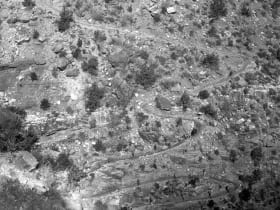
Bright Angel Trail
12 miles away
Bright Angel Trail is the most accessible canyon trail, built along an ancient Havasupai route. The first rest house (3 miles, 2,120-foot drop) is the safe turnaround for day hikers.

El Tovar Hotel, Grand Canyon South Rim
12 miles away
El Tovar (1905) is a National Historic Landmark and was the premiere tourist hotel in the American West when it opened.

Grand Canyon South Rim
12 miles away
The South Rim of the Grand Canyon receives about 5 million visitors per year and is accessible year-round. The Rim Trail runs 13 miles along the canyon edge with free shuttle access to viewpoints.
Desert View Watchtower
19 miles away
The Desert View Watchtower at Grand Canyon's east entrance was designed by architect Mary Colter in 1932 to mimic ancestral Puebloan towers.