Desert View Watchtower
Desert View Watchtower, Grand Canyon Village, AZ
Grand Canyon Village, AZ
A stone tower rising at the far eastern edge of the South Rim, designed to echo the ancient towers of the Ancestral Puebloans, with Hopi murals inside and a view that reaches to the Colorado River far below.
Desert View Watchtower is a stone tower rising sixty-some feet above the far eastern edge of the Grand Canyon's South Rim. Designed by the architect Mary Colter and completed in 1932, it was built to echo the ancient stone towers of the Ancestral Puebloans, whose ruins dot the Southwest, and it blends so naturally into the rim that many visitors mistake it for a much older structure.
The tower is more than a viewpoint. Inside, its walls are covered with murals and paintings, the centerpiece being work by the celebrated Hopi artist Fred Kabotie depicting Hopi legends and ceremonies. From the top, and from the rim around it, the view reaches across the canyon to the Painted Desert and down to the Colorado River, making Desert View one of the great overlooks along the entire South Rim.
What Travelers Love
- Climbing the tower for one of the widest views on the entire South Rim
- The murals inside, painted by Hopi artist Fred Kabotie
- A quieter, less crowded stretch of rim at the canyon's eastern edge
- Seeing the Colorado River and the Painted Desert from one spot
Worth Knowing
- This is the far eastern end of the South Rim, so it is a drive from the main village
- The tower involves stairs and can feel tight when busy, so time your climb
- The rim sits high and cold, so dress warmly, especially in the cooler months
- Stay behind railings and back from the edge, as the drop is sheer
Learn about Desert View Watchtower
Mary Colter and a tower built to belong
Mary Colter was one of the most influential architects of the American Southwest, and she designed several of the Grand Canyon's most beloved buildings. For Desert View, she wanted a structure that would honor and echo the ancient towers built by the Ancestral Puebloans across the Four Corners region, some of which she studied closely before drawing her plans.
Completed in 1932, the tower was built of local stone laid to look weathered and ancient, and Colter oversaw every detail to make it feel rooted in the land and its human history. The result is a work of architecture that pays deep respect to the region's first builders, standing at the canyon's edge as if it had always been there.
Hopi art and the peoples of the canyon
The interior of the watchtower is a canvas for Native art. The renowned Hopi artist Fred Kabotie painted the murals in the main upper room, depicting Hopi legends, ceremonies, and the sacred story of the people's emergence, while other painted and reproduced designs draw on rock art and pottery motifs from across the Southwest.
The Grand Canyon is a place of deep meaning to many tribes, including the Hopi, Havasupai, Hualapai, Navajo, Zuni, and Southern Paiute, several of whom trace ancestral and spiritual ties to the canyon and the Colorado River within it. Desert View has become a place where that living Native connection is honored, and the National Park Service works with those tribes to interpret the site and support Native cultural programs there.
The view from the eastern rim
Desert View sits at the far eastern edge of the South Rim, where the character of the canyon shifts. Here the walls open toward the Painted Desert to the east, and the Colorado River, so often hidden from the main viewpoints, comes clearly into sight as it curves through the canyon far below, having just been joined by the Little Colorado upstream.
From the top of the tower the view is especially vast, taking in the layered rock of the canyon, the distant North Rim, the river below, and the colored badlands of the desert beyond. Because it is well removed from the main village, this stretch of rim is often quieter, a calmer place to take in the immensity of the canyon.
Season by season on the rim
The South Rim is open all year, and the seasons change the mood dramatically at this high, exposed edge. Spring brings mild days and thinner crowds, though the rim can still see cold snaps and even late snow at this elevation, and summer is the busiest season, warm and pleasant on the rim compared to the desert below, with dramatic afternoon monsoon storms building over the canyon in July and August.
Fall offers crisp air, golden light, and easing crowds, one of the finest times to visit. Winter is cold and often snowy, and the sight of the canyon and the tower dusted in snow is unforgettable, though visitors should dress warmly and watch for icy paths.
Closest Boutels
The closest Boutel™ stays, so you can turn this stop into an overnight. Each is a place we chose through independent editorial review, never a paid placement.
Lantern Light Inn & Wedding Gardens
Boutel+3085 W State Rte 89A, Sedona, AZ
78 miles away|Learn More ›
Details
Grand Canyon Village, AZ
Frequently asked questions
What is the Desert View Watchtower?
The Desert View Watchtower is a striking stone tower perched at the eastern end of the Grand Canyon's South Rim, designed by architect Mary Colter and completed in 1932. Inspired by ancestral Puebloan structures, its four-story tower rises dramatically above the canyon rim, offering some of the most sweeping views in the park, including a look at the Colorado River far below. Adorned inside with murals and Native-inspired art, it is both an architectural landmark and a spectacular viewpoint at the quieter Desert View area.
Can you go inside the Desert View Watchtower?
Yes, visitors can typically enter the tower and climb its interior stairs past levels decorated with murals and Native American-inspired artwork to upper viewing areas with panoramic windows overlooking the canyon. The climb involves stairs, and the space can be small and busy at times. From the top and the surrounding rim, the views stretch across the eastern Grand Canyon and toward the Painted Desert. Checking current hours and access before you go is wise, as availability can vary by season.
Why is the Desert View area worth visiting?
Desert View, at the eastern edge of the South Rim, offers a quieter, less crowded alternative to the main Grand Canyon Village, with spectacular views that include a rare glimpse of the Colorado River winding through the canyon below. The historic watchtower, a general store, and the surrounding overlooks make it a rewarding stop. It also serves as the eastern gateway to the park, connecting toward the Navajo lands and Page, so it is a scenic and convenient place to enter or exit.
When is the best time to visit the Desert View Watchtower?
Spring and fall bring pleasant weather and fewer crowds, while summer is busiest and hottest, so early or later in the day is best then. Because Desert View is less crowded than the central village, it can be enjoyable even in peak season. Sunrise and sunset cast beautiful light across the canyon and Painted Desert. Checking the tower's current open hours before you go ensures you can climb inside, and arriving earlier helps with parking at this popular eastern viewpoint.
What is near the Desert View Watchtower?
The watchtower is at the eastern end of the Grand Canyon's South Rim along Desert View Drive, which connects the main Grand Canyon Village and its viewpoints to the park's east entrance near Cameron and the Navajo lands. From there, the Page area with Horseshoe Bend, Antelope Canyon, and Lake Powell lies within reach. That makes Desert View a scenic stop or gateway linking the Grand Canyon's South Rim to the wonders of the eastern canyon country and northern Arizona.
Nearby

Grand Canyon
17 miles away
The Grand Canyon is 277 miles long, up to 18 miles wide, and more than a mile deep, cut by the Colorado River through the Colorado Plateau.

Grand Canyon South Rim
18 miles away
The South Rim of the Grand Canyon receives about 5 million visitors per year and is accessible year-round. The Rim Trail runs 13 miles along the canyon edge with free shuttle access to viewpoints.
Bright Angel Trail
18 miles away
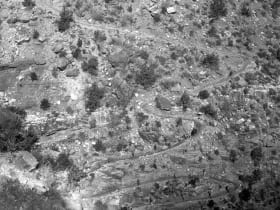
Bright Angel Trail is the most accessible canyon trail, built along an ancient Havasupai route. The first rest house (3 miles, 2,120-foot drop) is the safe turnaround for day hikers.

El Tovar Hotel, Grand Canyon South Rim
18 miles away
El Tovar (1905) is a National Historic Landmark and was the premiere tourist hotel in the American West when it opened.

Grand Canyon North Rim
19 miles away
The North Rim is 10 miles across the canyon from the South Rim but 220 miles by road.

Cape Royal
20 miles away
Cape Royal Road on the North Rim goes to several overlooks including Walhalla Glades (Ancestral Puebloan ruins), Angel's Window (a natural arch in the canyon rim), and the Cape Royal overlook itself.